
"That sweet feeling that we were great turned out to be contagious..."
At the time of writing books of about my great-grandfather Former Tomsk resident Alexander Makeyev, who has written about Pastor Wagner—"NKVD Siblag. The Last Letters of Pastor Wagner. Personal Experience in Searching for the Repressed"—decided that the material he had collected was enough for another book. Only this time, it would be about the executioners, not the victims. About the people who carried out the repressions in the German Volga region. NeMoskva discussed Makeyev's new book, the nature of Stalin's repressions, and whether it would ever be published in Russia, as the author currently lives in Germany.

Why did you decide to write a second book dedicated to family history? What was left out?
I started writing it in the spring of 2020, when the pandemic began, because I had time. Many parts of my research for the first book remained unseen. I started reviewing the materials and realized I had a number of interconnected documents, and that more could be done than I had. They remained unexamined. These documents are two fragments from two criminal cases against my distant relatives from the Volga German region. The troika's decision convicting them and sentencing them to death. Orders and reports. A chain of documents from the beginning of the trial to the final point. The new book is called "A Match for the Position: Faces of the Great Terror in the Volga German Republic."
— Are you talking about distant relatives of your great-grandfather?
"Yes, his wife, Paulina. Her maiden name was Arnst: a fairly old family name in this region. They moved to the Volga region among the first colonists. They were wealthy, each owning four hundred dessiatines of land. The repressions against them began in In the late 20s and early 30s, they were dispossessed. Then, finally, in 37, two people were shot.
— Was it difficult to obtain the necessary documents?
"No, I received all the documents back when I was working on my first book. That was 2017. I had a well-established process, and in this case, it worked. But even then, it was like this: some departments would redact names, others wouldn't. But in this case, I was lucky to receive unblemished ones."
— Is everything you need as a researcher reliably documented, or do you have to guess at some things?
— All the documents were very simple. The decision of the "troika" is very simple: such-and-such person is sentenced. Nothing to assume. And the decision of the "troika" is "I order to execute." The execution report is the same. We, such-and-such, on such-and-such a date, by decision of the "troika", on such-and-such an order, executed such-and-such persons. Date and signature. Like accounting documents, there is nothing to assume. Everything is obvious.

— Are there any denunciations in this case, or did everything happen solely on orders?
— There are no denunciations in the files themselves. Speaking generally about the Great Terror period, it was a clearly planned operation by state and party organs. It officially began in August 1937 and ended in October 1938. The so-called Great Terror consisted of several separate orders. Its characteristic feature was an excessive surge of violence. In less than a year and a half, approximately 1.5 million people were convicted under these several operations. Of these, approximately 700,000 were executed. Each region had a quota. This quota included executions and sentences to prison camps. The sentence limits were divided into two categories in the orders: 1st—execution; 2nd—prison camps.
And the limits were constantly being revised, both from above and below. From below, they kept saying that we hadn't rooted out enough enemies yet, so let's raise the limit. And from above, they confirmed it. All this documentation has been studied and rechecked a hundred times over. And it's perfectly clear that this was a planned state operation against its own population.
— Was anyone punished or convicted of those who participated in the execution of your family?
— In my case, yes. In my book, I examine 11 biographies of specific people who left their signatures. The "troika" consisted of one chairman, one member of the "troika," and two people who were simply present. Those two present were not official members of the "troika." And a secretary. A total of five people—five signatures. The chairman of that "troika," Ilya Zalmanovich Ressin, was shot. Another member, Vladimir Dalinger, as an ethnic German, was deported and sent to a labor army. But he survived, lived until the 80s, and even became an honorary pensioner. Yakov Popok, one of those present, was also shot and buried in Kommunarka. The deputy prosecutor for special cases, Adolf Kremer, also survived and lived in Krasnoturinsk. As a German, he was also deported and sent to a labor army. Until the last days of his life, he spoke to the Young Pioneers and talked about his past. His biography was very interesting. He served as a sailor in Kronstadt and was caught up in the revolution, meeting Lenin at the Finland Station.


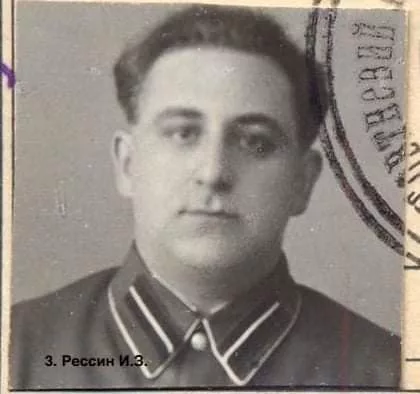
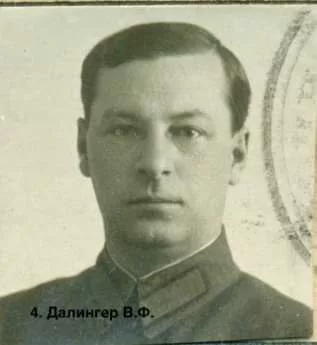
All those convicted were not convicted for what they actually did. All of them, like their victims, were convicted under Article 58, that is, for counterrevolution in one of its forms. None of them were actually punished for what they did.

— What surprised you most in your investigation of your family history?
— In fact, everything there is astonishing. But the most astonishing thing is that these are ordinary people. I specifically took a quote from Erich Fromm for the book and will quote it here: “For some reason, we believe that a vicious, destructive person must be the devil himself and look like the devil. We are convinced that he cannot have any virtues and that the mark of Cain lying on him must be obvious and discernible to everyone. Such devilish natures exist, but they are extremely rare. As we have already seen, a destructive personality demonstrates virtue to the world: politeness, consideration, love for family, love for children, love for animals. But that’s not even the point. It’s unlikely that you’ll find a person completely devoid of virtues or at least good impulses. Until we abandon the popular notion of vice, we will not learn to recognize real evil.” This is a very important point, because if you look at the biographies of these people, they are ordinary people trying to adapt to changing conditions. And it turns out that this line between good and evil is very easy to cross. When you read the biography of a man who directly carried out the executions, you see he was an ordinary mechanic. He worked first in one place, then in another, then through connections got him a job as a guard at an NKVD prison, and after that, he began participating in executions. And then he went to war, received numerous awards, because he stood out for certain qualities, his determination, for example. And he became a soldier. And then you read the document he signed: “We, such-and-such, executed 103 people.” And the dissonance is terrible.
I'd like to add that my second book isn't just about biographies. Because through these biographies, I've tried to provide a cross-section of the state of memory of the events of the Great Terror in the Volga region. The final chapters of the book are about what's currently known about that period. It contains a lot of statistical information that I was able to obtain from the FSB for the Saratov region. I compared it with current data, and it seems to me that this is a telling example of how virtually nothing remains unknown. The point is that approximately one-third of the people convicted during that period are known. One-third. In the small town of Engels, the capital of the German republic—I don't know how many people live there now, but even then it was small—about four thousand people were executed in six months. And no one still knows where these people are buried. Even approximately. People haven't even come up with a single guess. These facts have been confirmed by the FSB for the Saratov region; I have an official letter from them. Over the course of two days, February 14 and 15, 1938, two sessions of the "troika" were held, and almost a thousand people were sentenced to death. Not a single sentence to a prison camp. Not a single one. Almost a thousand death sentences in two days. And in a small town, no one knew anything about it.

Your first book, "NKVD Siblag: The Last Letters of Pastor Wagner: A Personal Experience in Searching for the Repressed," was translated into German. How was it received there?
— I haven't heard any feedback yet. There's a presentation on January 25th in the city where I live in Germany. The book is just starting to sell. It wasn't published by a major publisher. It's not a particularly commercial project, and the topic isn't particularly commercial. It's more relevant to Russian Germans, not Germany.

— Do you hope to publish the second book in Russia?
— I already said that I started writing it during the pandemic and almost finished it by February 2022. When the war began, I couldn't touch the text for six months because I no longer saw any meaning in it. I thought the violence was extraordinary. And that we would never see anything like it again, and we needed to understand how it happened, to spot any seeds of trouble in time. But it turned out that it was there. It's all here, right before our eyes. I wondered who would care, what was happening then, when it's unfolding again now. But then, together with my editor, we decided to return to the project. And to finish it, taking into account current realities. I wrote an introduction that provides the right perspective on this story. That the people who lived through the First World War and the Civil War, the people who lived in the atmosphere of these wars, are precisely the people who participated in this terror. And what's happening now is the same thing, because people will return from war. And they won't have moral compass, because they've seen things that people don't see in everyday life. I realized that the book was relevant from this perspective. I wrote the introduction, but the rest of the text remained the same.
I have some offers for publishing in Russia, but they require editing. But we consulted with the editor again and decided we don't want that. Then why write it? If we're going to publish, we'll do it the way we planned. We're currently trying to find Russian-language publishers in the West.
— What prompted you to start studying your family history?
I wanted to form my own opinion. Not based on someone else's experience, but on my own. I wanted to understand what happened back then. When I encountered real documents, sources from that time, it made an indelible impression. Then you come across interpretations of this history and realize that in most cases there's a gulf between them. Between reality and interpretation. This is very touching, because it becomes obvious to you how much some things are hushed up. How much they are not spoken about. I started reading a lot about it and realized that such topics need not only to be discussed, but also to be uncovered and understood. Otherwise, you'll be running in circles, and you'll never escape it.
I hope there are universal values in human society. These are values in interaction with one another. In the normal sense, this is the law. A law that is equal for everyone, which attempts to equalize the lawbreaker and the victim, rich or poor. It is the universal core around which the foundation is built. But when everything is completely eroded, as happened a hundred years ago, when it was not a matter of law, but of loyalty. The same case could be handled differently if representatives of different groups were involved. If a former kulak peasant committed something, he was sentenced to death by firing squad, but if an NKVD agent did the same, everything was hushed up. And this inequality creates shaky ground that cannot last.
— Did studying your family change you in any way?
"I've begun to understand some guidelines. Previously, I assumed that good and evil were relative, but now I know for sure that society can't exist by relative concepts. There must be certain criteria that are equal for everyone, otherwise nothing works. I've begun to see some pillars, so to speak. They can't be abandoned, otherwise everything begins to crumble into bloody chaos."
— A question for a writer: at what age should we start talking to children about repression?
"I don't know yet, I haven't talked to mine about it yet. My son knows there were bad people once. But he's eight, and he doesn't really understand it yet. More precisely, he doesn't understand the meaning: why it happened. I can't explain it to him. But I think it's time, starting in his early teens. Take him to a museum, show him everything, and answer his questions. Not impose any point of view, but look at the questions and try to explain.
Art Spiegelman wrote the comic book "Maus" as a way to talk to children about the Holocaust, as it's a very traumatic topic. Is this an acceptable way to discuss it? "Maus" is a very traumatic topic. Is this an acceptable way to discuss it?
"Because I'm 45, I initially thought comics were a bit much. Then I started reading about it and thinking about it, and I realized I'd probably missed some stage of development that had already taken place. Graphic novels are a fairly common form of information. Comics aren't just entertainment; they truly exist as works of art."
Why, despite thousands of publications about the Soviet terror, does Stalin remain one of the most popular historical figures in Russia?
"It's difficult. You have to take a serious step within yourself and understand that your relatives were treated badly and unfairly, or that your relatives treated someone unfairly. This injustice must have consequences. It must be voiced and punished. But when this doesn't happen, the question arises: maybe it was necessary? Maybe it all had a purpose? And the Great Terror had no purpose. I mean, for the country. It only made sense for those in power, so they could stay in power. And when you realize this, you experience dissonance in your head. And to overcome this dissonance, you have to take a big step and understand that it was wrong. Apparently, this step is difficult to take, because then the entire picture of the world collapses. And you have to reassemble it. And then there's this sweet feeling that we were great, everyone was afraid of us. It turned out to be contagious."
Photos courtesy of Alexander Makeev