
Yakutia Outsourced: A Brief History of Creative Yakutia in Exile
From the early 2000s until February 2022, a distinct social strata existed in Yakutsk, very similar to a hypothetical "Moscow inside the Garden Ring." About a thousand people launched businesses, regularly traveled abroad, and worked at several of the region's leading IT companies. However, after February 2022, most of them left Yakutia. However, they created a kind of "virtual Yakutia" in exile, which operates according to its own rules and, of course, is now very different from the "real" one. We explain how these pockets of the republic are structured and function in different countries.
Pattaya Ulus
The early 2000s saw the heyday of the website Dikari.Ykt.Ru (now unavailable). Initially, it was conceived as a resource for publishing "Savage in [country name]"-style posts. But the site quickly began to reflect reality, and the lion's share of its content came to be comprised of posts reporting on residents of the "Pattaya Ulus" (the word "ulus" means "district" in Yakut)—a large community of Yakuts permanently residing in Thailand.
A vivid reflection of that era - post From May 31, 2011, in which Mikhail Grigoriev, a Yakut businessman who has lived in Asia for many years, talks about selling his business (a guesthouse in Thailand) to other Yakuts. Phrases like "The Pattaya Ulus is expanding" are not just a few in the comments, but a lot.

"One of the main destinations where young, bright, and creative people from Yakutsk have begun to move en masse is Thailand. This very destination was mentioned as one of the key ones during the emergency relocation of large Yakut IT companies in early 2022. However, it quickly became clear abroad that the unit economy outside of Yakutia doesn't work out that way. began mass layoffs. Emotional public video-appeal "The former head of the narrative department at MyTona, Sergei Gres, is one of the testaments to the unhealthy atmosphere within all companies," a former MyTona employee, fired in 2022 and returning to Yakutsk, told Govorit NeMoskva.
There are also a number of well-known failures in Thailand that are not usually discussed publicly. For example, several Yakut residents attempted to open marijuana shops in Thailand, but almost all were forced to close their operations at significant losses after local "helpers" cheated them out of money and documents. The most striking example is shop marijuana from the Yakuts, who existed just three months.
"In Thailand, extorting money from foreigners for supposedly marijuana-related businesses is relatively legal and has become a standard practice. And many have been burned by this, and continue to be. After studying the market, I came to the conclusion that it's better not to try and regret it than to try and regret it," a Yakut resident living in Thailand and planning to open such a business told Govorit NeMoskva.
Also in Thailand passes The annual Thai Ysyakh (Yakut New Year) is quite a sight—a national holiday in the Yakut language, set against tropical backdrops on the sand. In Yakutia, it always takes place on large grassy fields. This is necessary for the traditional sports games and other traditional physical activities of this holiday.
Global Ysyakh-safespace
In general, the phenomenon of "Ysyakh outside of Yakutia and Russia" is a phenomenon that has been around for many years and began long before the war with Ukraine. For example, Ysyakh in California, Turkey, Japan, New Zealand and many other countries. But over the past two years, the number of people in each country attending this festival has increased significantly, and it has transformed from something intimate into something therapeutic, uniting, and providing a point of support in the modern world. Of all these Ysyakhs held abroad, the most significant, large-scale, and unifying event has been the Ysyakh in Kazakhstan.
"That's why the very concept of this Yhyakh was unique and the first of its kind anywhere—a Sakha-Kazakh ethnic festival. Such a large event comes with a great responsibility, both for the guests and for each other. It's crucial to understand what we're communicating. For us, culture is a way to create. We're creating a safe space. And what's happening in Almaty with our diaspora right now is a unique diaspora experience that will be studied in the future, if not now. We hope our efforts have a positive and beneficial effect on our community and society as a whole. This is an investment in the future." they say organizers.
The thoroughness of the event can be assessed by the website. You can buy it here merch, and also states, "We'll be happy to help the Sakha diaspora in other countries organize Ysyakh by providing a brand book and organizational consultations." And about Ysyakh Almaty 2023, it says, "90+ Positive Reviews, 2000+ Visitors, 100+ Organizers." Stories from the celebration are still being published on the official account.

InDiscrimination
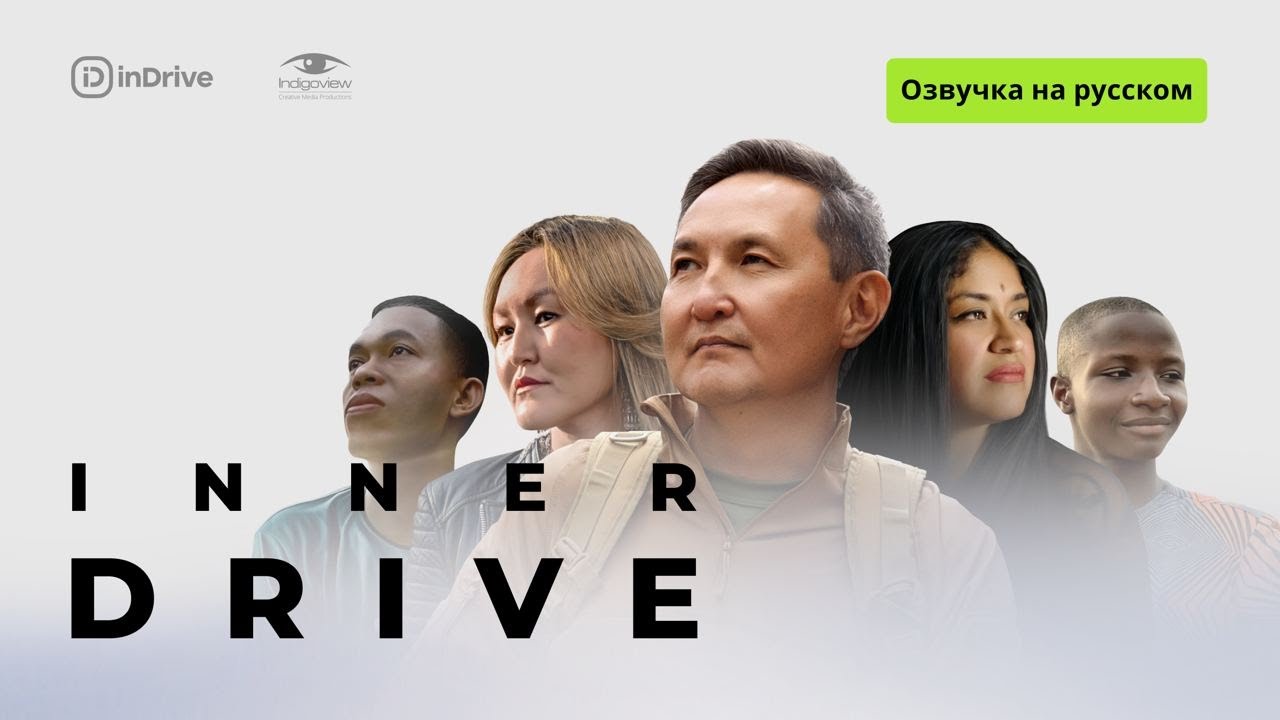
The core of the Yakut community in Kazakhstan is the InDrive company, which previously operated in Yakutia. The company's founder, Arsen Tomsky, officially accepted the Kazakh citizenship (and renounced Russian citizenship). In Kazakhstan, the company is developing not only its core service, but also a bunch of non-profit initiatives. For example, debut film Alternativa Film Project, which is managed by the company hired Former KinoPoisk editor-in-chief Liza Surganova. Overall, Arsen Tomsky describes his work as follows: "My team and I will continue to challenge injustice and help more communities like inDrive grow. We have big plans."
"There's a clear sense from Kazakhstan that this place can and should become our home. Yakutians in Kazakhstan are investing a lot of effort into this. And there's a sense that this is a two-way process that helps everyone build something better and more beautiful," an InDrive employee told Govorit NeMoskva.
"In general, the phrase "Living in two cities/countries" was popular in Yakutia for many years. In one form or another, this was the "Yakut dream," if you can call it that. At some point, this dream came true for many people. The question is at what cost, but that's just a matter of detail," another InDrive employee told Govorit NeMoskva.
In the spring of 2023, InDrive employee Svetlana Samoilova has created In the Telegram channel InDiscrimination, she shared her perspective on the company's processes. According to her, the company's management actively exploits the fact that employees from Yakutia are effectively "locked in" within InDrive and are afraid to damage their relationship with Arsen Tomsky. Because of this, their pay is significantly lower than that of the well-known celebrity employees hired from Moscow and St. Petersburg. In private conversations, employees hired by InDrive from these cities said they were always offered above-market salaries, and the relocation process to Kazakhstan was organized "as smoothly and as smoothly as possible." A year after these events, InDrive released A documentary about how "a company is changing the world for the better."
But what's also interesting is that an incredible number of small businesses originating from Yakutia have opened in Kazakhstan. IT schools, communications agencies, educational initiatives, public catering and much more.
"Overall, there's a real sense that 'all of creative Yakutia' has moved to Kazakhstan, and it's in the air. You regularly run into people on the street who you used to meet in downtown Yakutsk. And there's a sense that 'we,' in the broadest sense of the word, truly have enough energy to create something beautiful," one employee of an IT school founded by Yakutians told Govorit NeMoskva.
USA
Another major hub for Yakutians is the United States. The following situation has arisen spontaneously (or not so spontaneously). Those former residents of the republic who, for whatever reason, need to get as far away from their native shores as possible, and who require enhanced security guarantees, are flocking here.
It's an unspoken but well-known fact that LGBT couples from Yakutia often choose the United States for relocation. "Within our community, we've formed, so to speak, a full-fledged 'support service' for such couples. Thanks to our collective consultations, many people who would have faced grave danger in their home countries have been evacuated from Yakutia (and therefore from Russia). And we're very happy that we were able to win at least one person back from the system," a New York-based LGBT representative told Govorit NeMoskva.
In the U.S. moved and well-known Yakut political blogger Igor Nazarov. "We left everything we had. It was hard for us to make this decision, but this way we will be safe. I wanted my people to live better, to contribute to their future development. The system oppresses, accuses us of fabricated charges, and paints us as traitors. I am a Sakha and will remain one, remaining loyal to my people and my republic," he said. In Yakutia, he was an entrepreneur; in the United States, he works as a worker in a pastry shop.
If one were to find a true and vibrant symbol of the departed creative energy of Yakutia, it would be the Portal business center in the center of Yakutsk, in which life was in full swing before the war, hosting various hackathons, competitions, and other fun events, and where all the region's major IT companies rented offices. In the early 2000s, this building was an abandoned production facility that was breathed new life into by a multitude of bright and creative entrepreneurs. Today, however, there's no life left. there isn'tAll the tenants have moved away, and the building is falling into disrepair once again. Real life and energy are now located somewhere far away.


