
Tourism in a gas mask
Why will visitors to Volzhsky, whose residents are suffocating from emissions, be taxed? Report

Starting January 1, 2025, Russian regions will begin charging visitors a tourist tax. Even in those regions where the existence of tourist attractions is highly questionable, and the very word "tourism" is at best perplexing.
One of such cities is Volga, is located 30 kilometers from Volgograd.
The chemical complex that smokes here all year round provides him with durable positions in the rankings of dirty cities are on par with Cherepovets и Norilsk.
Due to the emissions, local environmentalists regularly advise residents to leave the city.
A NeMoskva correspondent visited Volzhsky as a tourist to find out how local residents live and what the new tax on city visitors will be charged for.

As of January 1, 2025, Russian regions have been granted the right to introduce a tourist tax within their territories. The corresponding amendments were made to the Russian Tax Code in the summer of 2024.
Tax rates will increase gradually - from 1% from the price of accommodation in 2025 to 5% in 2029 year.
The tax will be assessed on the entire cost of hotel or inn accommodation. The minimum tax amount is 100 rubles, multiplied by the number of nights of stay. Furthermore, tax rates may vary based on seasonality and the category of accommodation.
Hotels and rental properties will pay the tax, and tourists will collect it.
Three reasons why you should come to Volzhsky (by version Mayor Igor Voronin):
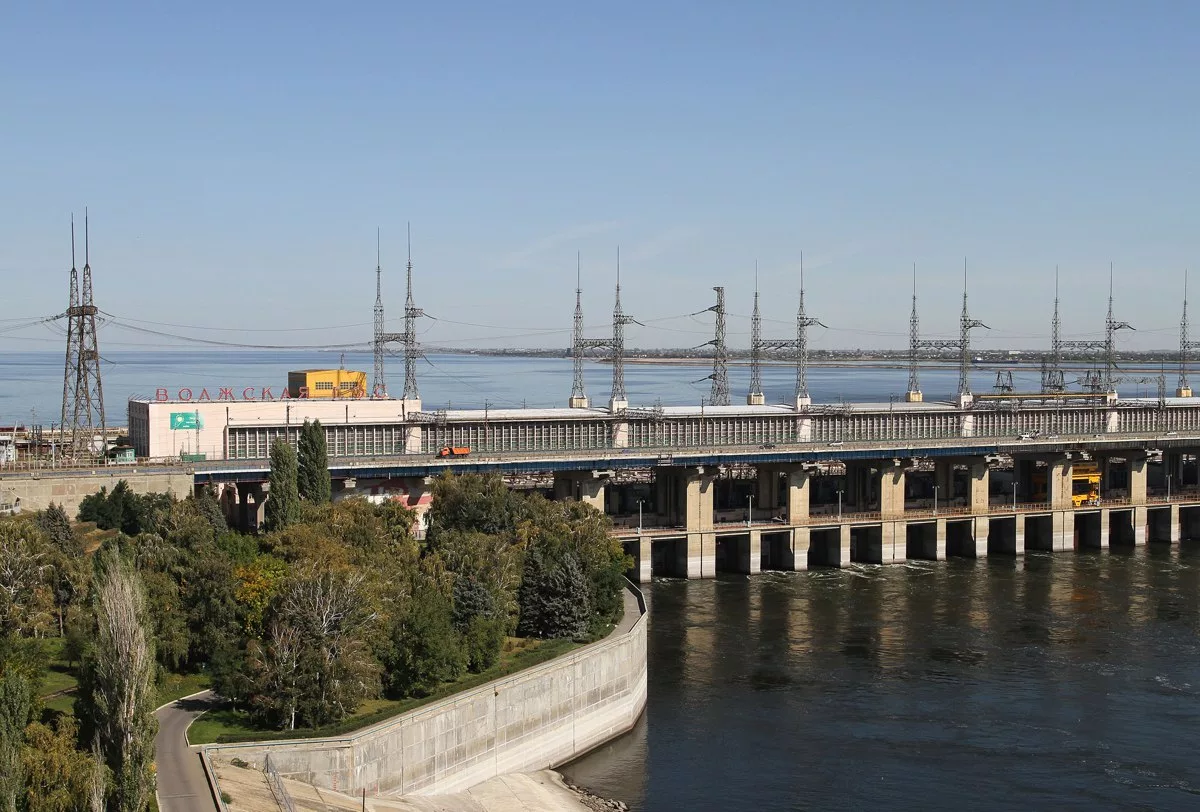
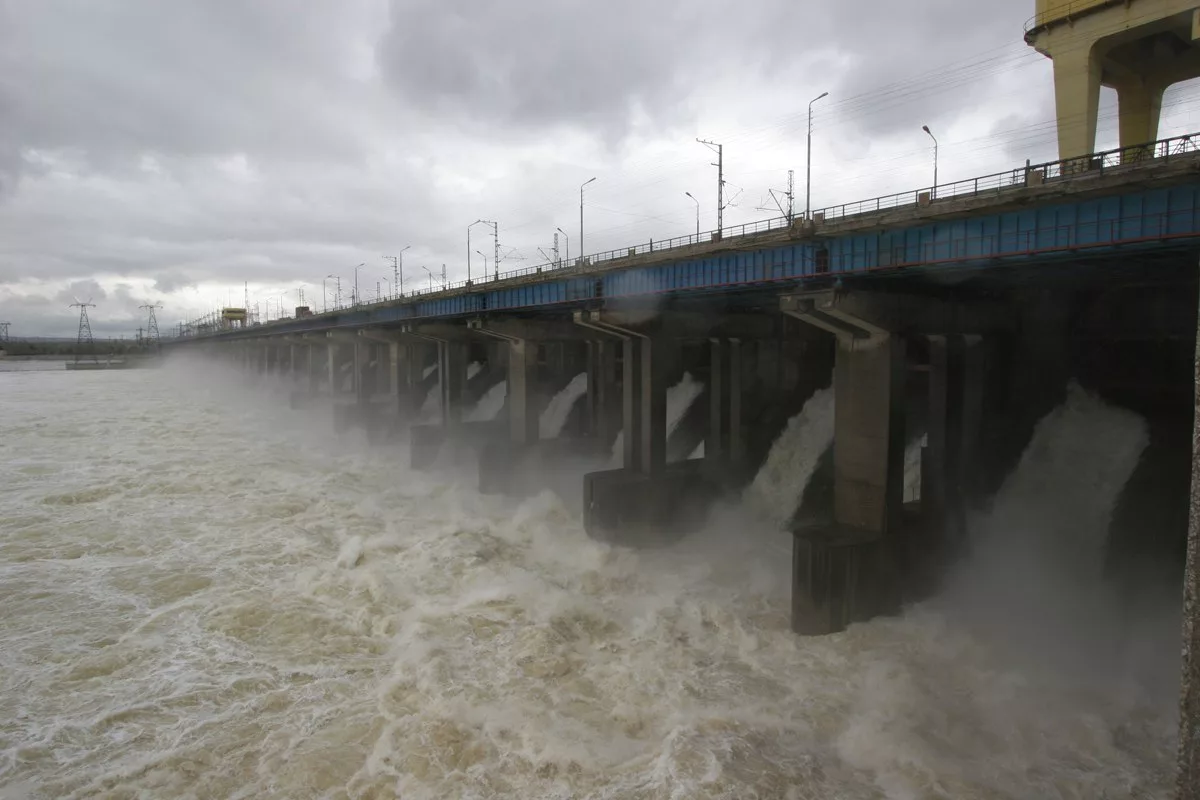
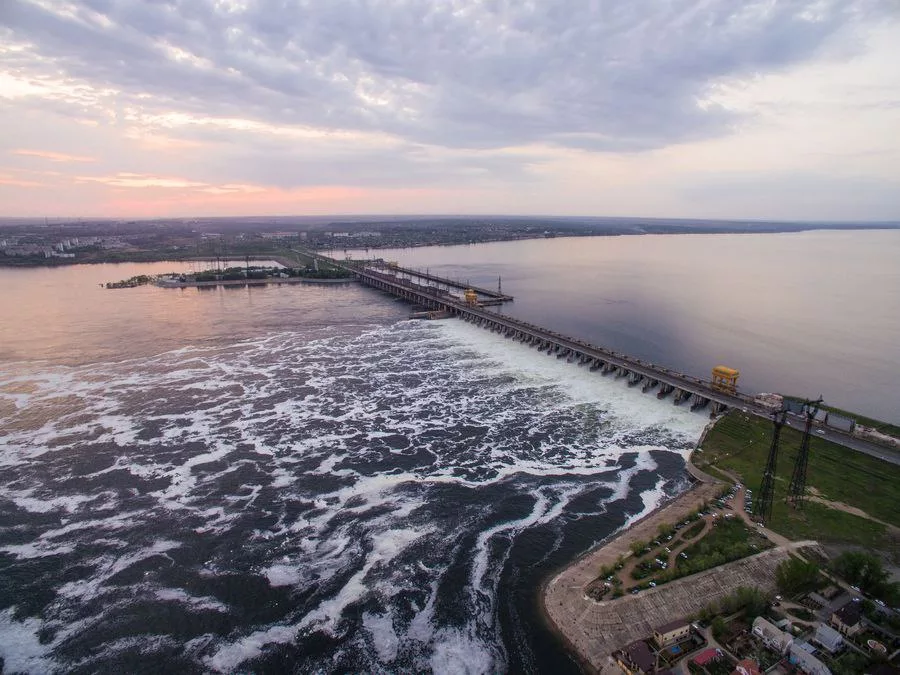
1. See the Volga Hydroelectric Power Station ("See how our pioneers, fathers, and grandfathers harnessed the power of the great river")
2. See the “green” city (“City with”green" program — this is the city of the future")
3. See the most beautiful girls

Spoiler:
1. The Volga Hydroelectric Power Station can only be seen from afar – for example, from a car window.
This is a restricted area: you can't get close to it, much less take a photo up close. There's a federal border crossing nearby, at the entrance to the city. museum The history of the Volga-Don Canal and local shipping, with exhibits and films; group tours are also available.
2. No longer. In 2004, the city was recognized as the most well-maintained in Russia among cities with a population of up to 500. In 2006, it took second place. Since then, it has appeared more frequently in rankings. poor ecology or with low quality of life.
3. If the sights are over, then of course, yes!


There are no planes flying and no trains running.
On a weekday afternoon in November, Volzhsky is sparsely populated: like any other city, everyone is at work.
But here the city streets are deserted in a special way.
This is because most Volzhans work at chemical plants. While it's only a few kilometers from the city's residential area, it's still cut off.
«Are you going to town at lunchtime?"—the factory workers ask each other. They also answer only in a language they understand: “No, I’m at the ‘chemistry’ [near the industrial zone] until the evening.”
Trams transport residents of Volzhsky to their factories. They run primarily from residential areas and microdistricts to the factories and back; it's impossible to reach the city's central square by tram.
On the tram stop stand, above the schedule, are leaflets recruiting contract soldiers for the Special Military Operations, contact information for hair buying and assistance for drug addicts.


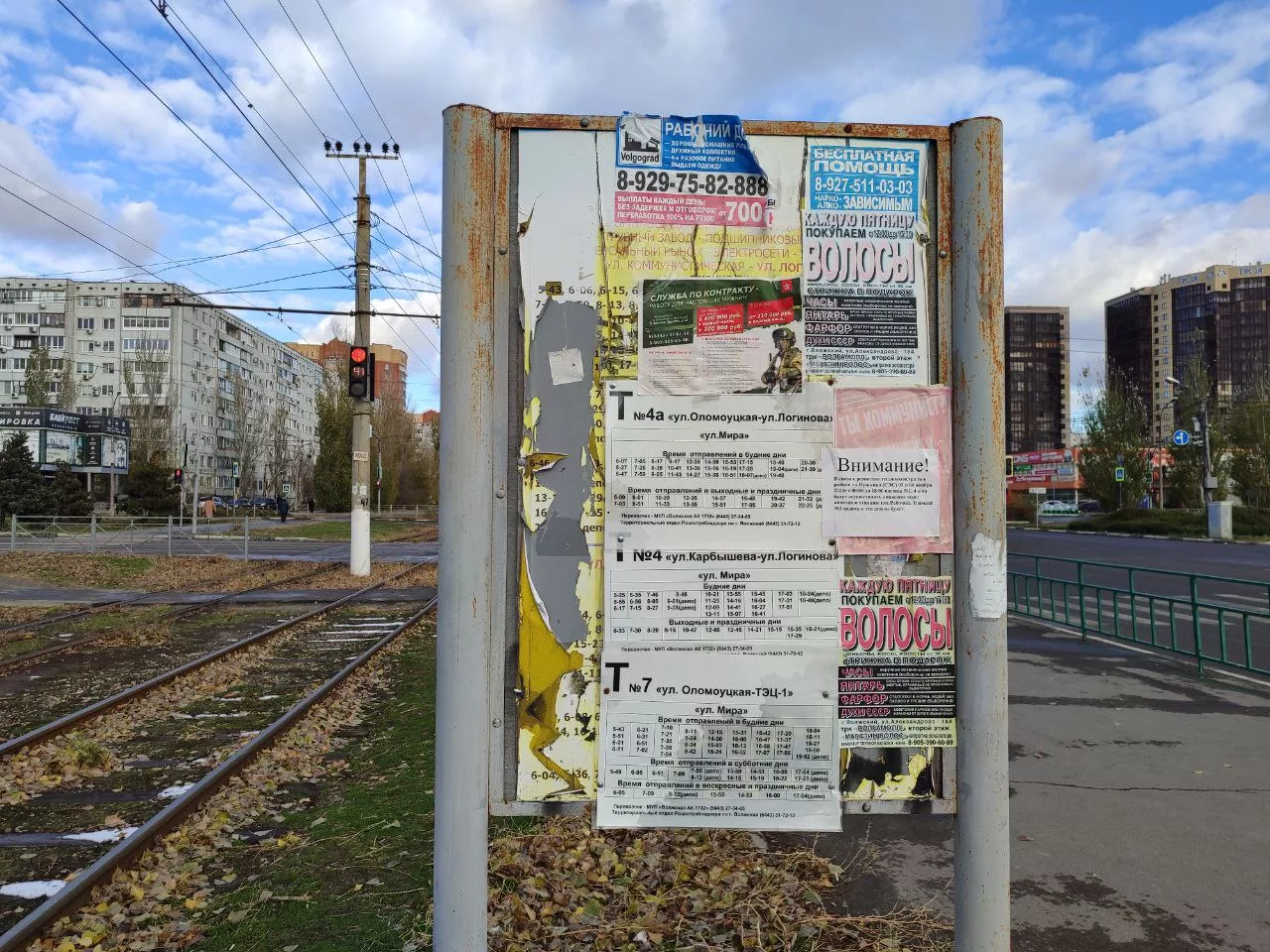
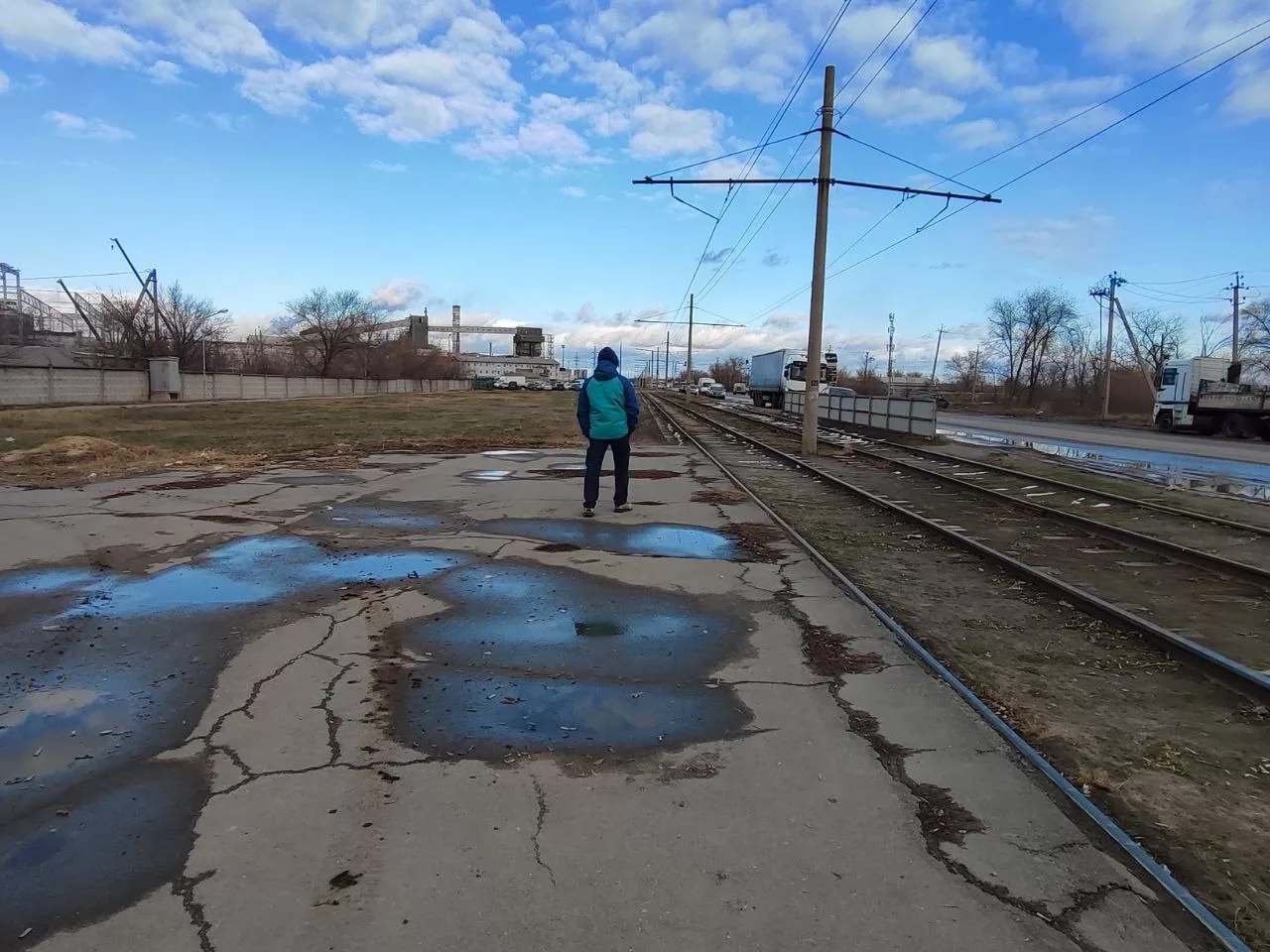
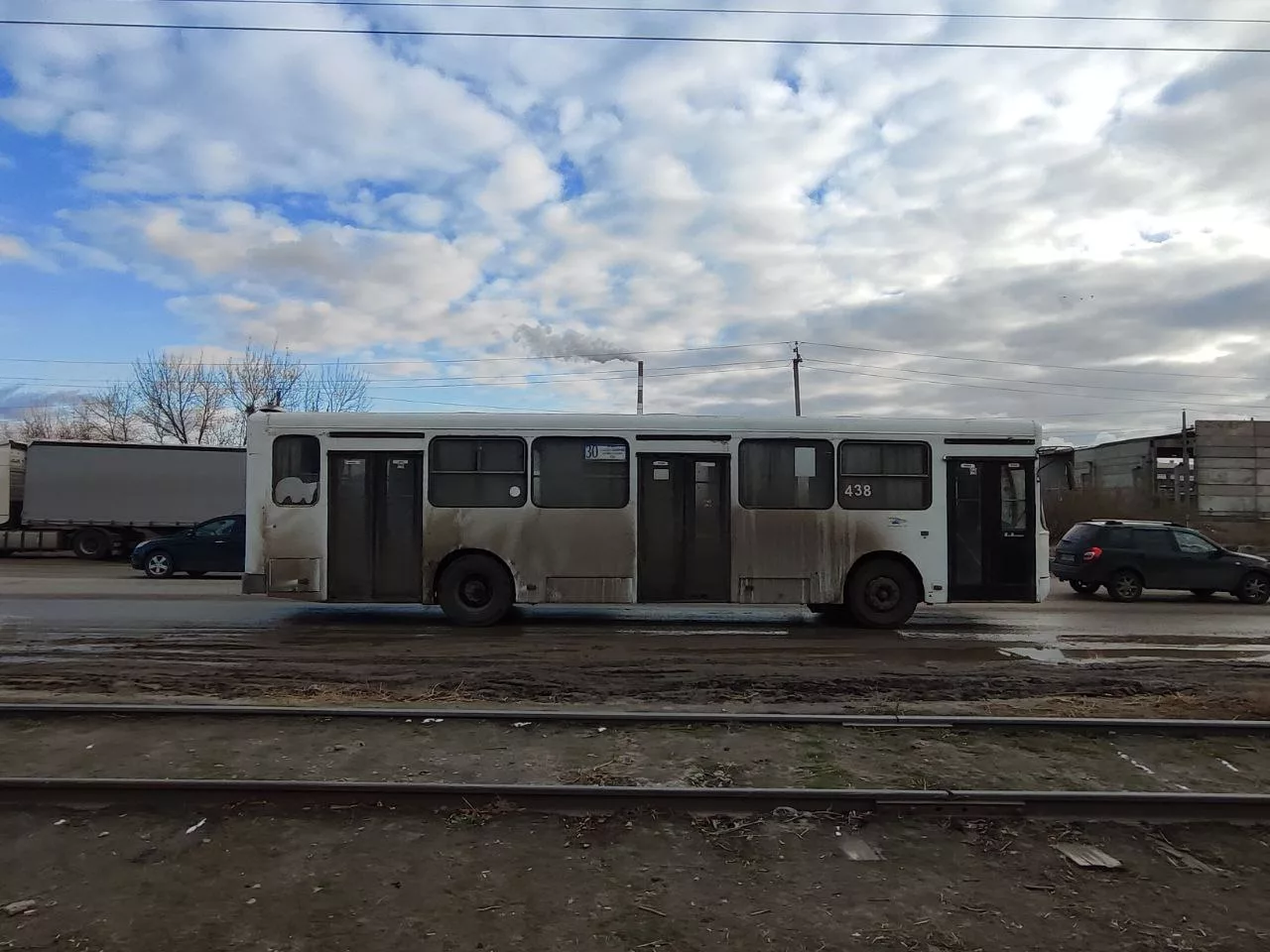
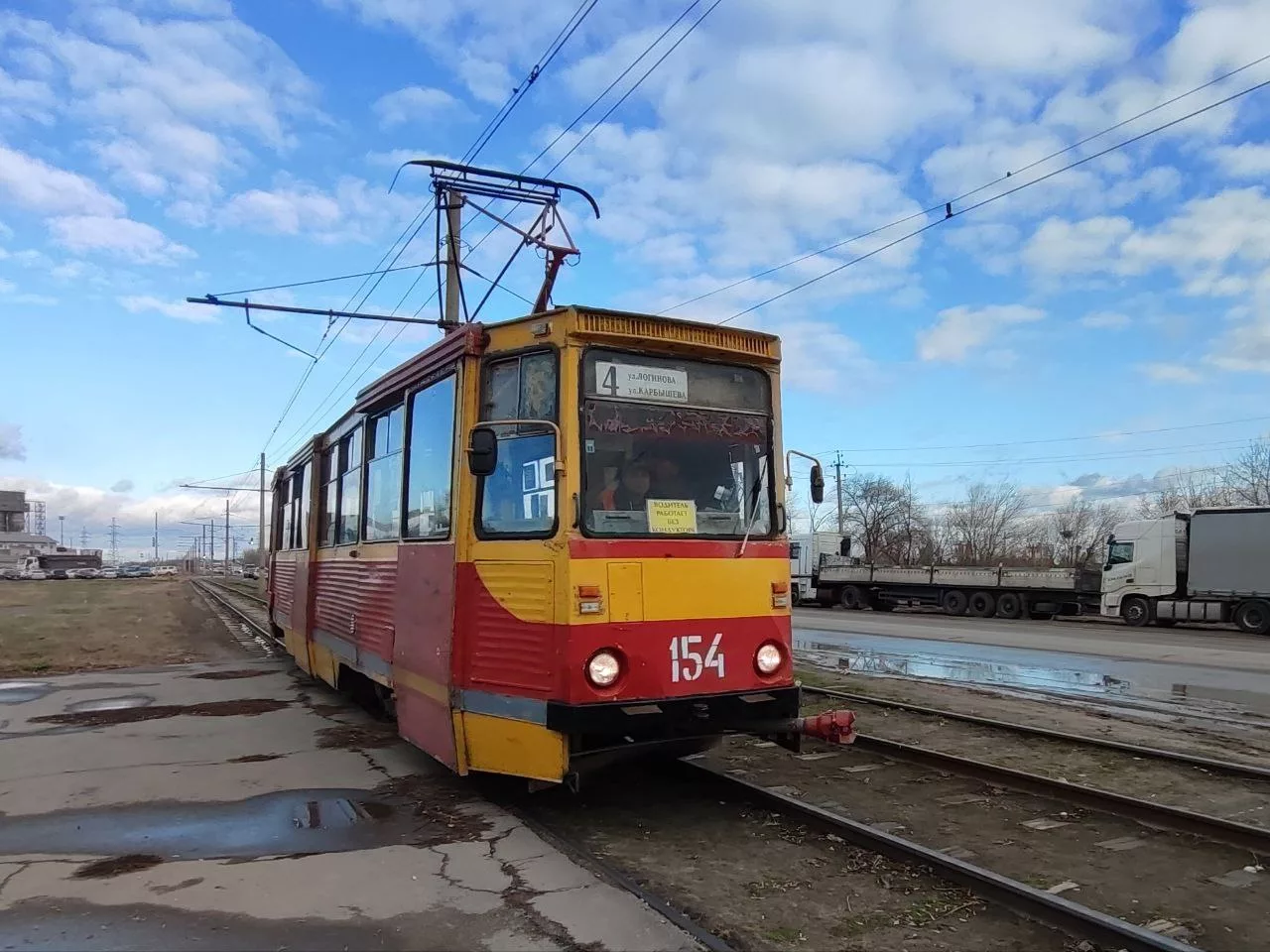
There's a bus stop next to the tram stop. Minibuses depart from there to Volgograd's train station, which is most frequently used by residents and visitors to the city. Volzhsky also has its own train station, but trains run there very infrequently.
A middle-aged man and woman are rolling suitcases, each carrying their own. When asked if they liked the city, the couple with the suitcases laughs: they're going on vacation to Adler.
«Like it or not, we'll be back in three weeks.— says the man. — Work is work, no one will bring home any money."
They hadn't heard that visitors to Volzhsky would soon be paying a tourist tax: "Is this some kind of joke?"

"Smells are normal"
Volzhsky is the second largest city in the Volgograd region. Its name has been variously referred to as Elektrograd and Gidrograd.
It appeared in the post-war years, when workers from all over the Union flocked to the construction site of the Stalingrad Hydroelectric Power Station and chemical industry enterprises.
The city currently has a population of just over 320. Volzhans dislike being called a "satellite city."
Firstly, economically it is part of the Volgograd agglomeration, and the regional center has been discussing the possibility of annexing Volzhsky to Volgograd for many years, but locals are against it: they want to live in a separate city.
Secondly, there's a certain proud, local patriotism to it. The city has its own history (the village of Bezrodnoye used to be on its site), its own bank of the Volga (Volgograd has the right bank, Volzhsky has the left), its own jobs and industry.
According to city administration data, the average salary in the city exceeded 48 rubles in 2023.

The mayor of Volzhsky, United Russia member Igor Voronin, is almost as irreplaceable as the president.
Having come to power thanks to the support of the Communist Party of the Russian Federation, in 20 years he left his post only once, in 2009, when he lost to a rival from the A Just Russia party. To Marina Afanasyeva.
He returned in 2013, this time with United Russia, and never left his seat.
Him the best Telegram channel heads of municipalities in the region, regularly outgoing humanitarian convoys to the SVO zone and the role of a local patriot.
Voronin is a big fan of inventing new things slogans for the city and "show off" them during public speaking.
The penultimate one is "Volzhsky - a city where everyone is important" - Volzhsky residents продолжают like this: “...where every taxpayer matters.”
In 2024, for the city's 70th anniversary, a new slogan was introduced: "Don't look for a better city—love yours." Volzhans immediately rewrote it as "the best poor city."
Slogans are especially useful when discussing uncomfortable topics, such as harmful emissions from chemical plants.
However, the presence of odors for an industrial city is generally считает normal.




Source: Igor Voronin's Telegram channel
A city with closed windows
It's warm and above zero in Volzhsky in early November. But there's something odd in the air.
As it turns out later, in those days the Volga residents smelled of “chemicals,” “burning,” and “sauerkraut,” but environmentalists not found violations.
Local media reports with gas masks They appear regularly in the city as illustrations. In the summer, they appear every few days. Because of this, from May to October, many Volzhans sleep with their windows tightly closed.
During the perestroika of the 90s, some enterprises operated intermittently or closed.
— The stench was probably less. But at night, I still often had to close the windows, — recalls a Volzhanka resident who asked NeMoskva to remain anonymous.

However, the spring and in winter, emissions of harmful gases are also not uncommon.
The spectrum of “organoleptic impressions” of city residents is extremely diverse.
В ecological bulletin, which the administration publishes daily, contains complaints about the following smells: "rotten fish and rotten eggs," "rotten rag," "sauerkraut," "sewage," "burnt garbage," "manure," "feces," "droppings," "rot," "chemicals," "hydrogen sulfide," "burnt smoke," "bleach," "ammonia," "half-gas, half-chlorine," "sulfur with potassium permanganate," "melted plastic," "phenol," and "industrial odor."
"I left my apartment this morning, and the stench from the street had accumulated in the entryway. It was suffocating. It was impossible." — the Volzhanka wrote Natalia Varchenko under one of of posts about emissions in March.
It's no surprise: every year, businesses emit into the atmosphere more 50 thousand tons of harmful substances.
The main pollutants are carbon monoxide, hydrogen sulfide, sulfur dioxide, nitrogen oxide, and ammonia. The main polluters are the Volzhsky Abrasive Plant and Volzhsky Orgsintez, which are part of top pollutants.
Along with them, among the enterprises, littering atmosphere, are called the Volzhsky Plant of Asbestos Technical Products, the Volzhsky Pipe Plant and EPK-Volzhsky.
The optimistic mayor evaluates the growth of complaints about "gas attacks" as a result of the growth of citizen activity and distributes The main city awards were given to the plant directors.
The city has its own municipal environmental protection service, which has a laboratory and stations for collecting air samples.
But Volzhans call this service a "thermometer without authority." Because local environmentalists can only fix Exceeding the limits—municipalities have had no authority to fine violating enterprises since 2008. Regions are also often powerless: the largest polluters are federal facilities.
However, local environmentalists don't always record exceedances either. For example, in 2023, they took about 224 samples, but there were no exceedances. found only 687 times.
Or, the source of the stench is established, but hide from residents.
Volzhans often smell odors, but there are no speed limits because the law establishes overpriced MAC (maximum permissible concentrations) harmful substances: the nose detects them, the laboratory does not.
But environmentalists, like Volga residents, record maximum excess levels in the summer.
For example, in August 2022, the amount of hydrogen sulfide in the air jumped so much that exceeded MAC is as much as 22 times higher.
The situation gets worse during the summer months and regularly burning dumps. Even closed windows don't help.

Life according to the winds
When Volzhsky was first built in the 50s, the chemical complex was moved outside the city limits—at the time, it was only a few blocks long.
Although the residential area, several five-story buildings, was also on the “chemistry” (now they are located offices).
With the emergence of new microdistricts, industrial "amber" began to flow from factories directly into residential areas.
The situation is exacerbated by haphazard development: the walls of high-rise buildings block the flow of air and prevent natural ventilation of city streets.
According to Volzhsky residents and experts, the wind direction does indeed have a significant impact on odors in the city. If the wind is northerly, emissions from factories are carried into residential areas (however, if there's no wind at all, the city is also "covered").
“I have relatives living in the village of Pogromnoye [10 km from the city, within its borders], and depending on how the wind blows, you can see how [air masses] are carried to the village from the pipes and the chemical plant,” a pensioner told NeMoskva Galina Tikhenko, which often out to protest rallies.
For example, she tried, together with Volgograd residents, to stop the felling of oak trees in the floodplain near Volzhsky for the construction of a new road.

But, Galina admits, she's never protested against the factories—and no one has. Volzhans don't dare hold protest rallies: one of the proposals in comments I was met with dislikes on the city website.
Local activists sometimes go They tour factories with officials—they give them tours of the plants. But this doesn't produce any results either.
At the same time, it is the chemical industry that makes Volzhsky one of the largest industrial centers in Europe. If the factories close, Volzhsky residents argue, there will be no jobs, and social depression and hopelessness will intensify.
Companies, in turn, spend millions of rubles on environmental measures, but Volzhsky residents see no benefit from them.
For example, the main air polluter, the Volga Abrasive, which is included in the “black eco-list” of the top 300 enterprises, in 2022 invested about 50 million rubles.
One of his "innovative" solutions is to simply dump and disperse the waste at a higher altitude, while the plant's environmentalists try to shift the blame for the emissions onto a steppe volcano, which allegedly emits hydrogen sulfide.
«It is impossible to reduce harmful emissions- argues There's one of the Volga residents on the site. “Ancient equipment, outdated technologies, lack of industrial filters and reagents, since it is imported.”
The only solution, many city residents believe, is to move the smelting furnaces far outside the city limits.
They wanted to do this in the 80s, when they realized the scale of the negative impact of emissions. But then perestroika hit, officials in power changed, and the factories' owners changed. And the chemical complex remained in place.
Air with the periodic table

The news that deputies have decided to introduce a tourist tax in Volzhsky—local officials will implement it as early as 2025 plan attract more than 5 million rubles in the city perceived with bewilderment.
They joked that the last tourist was here back in the days of the village of Bezrodnoye and that a resort fee should be added: "Why should tourists be able to inhale our hydrogen sulfide and other periodic table gases for free?"
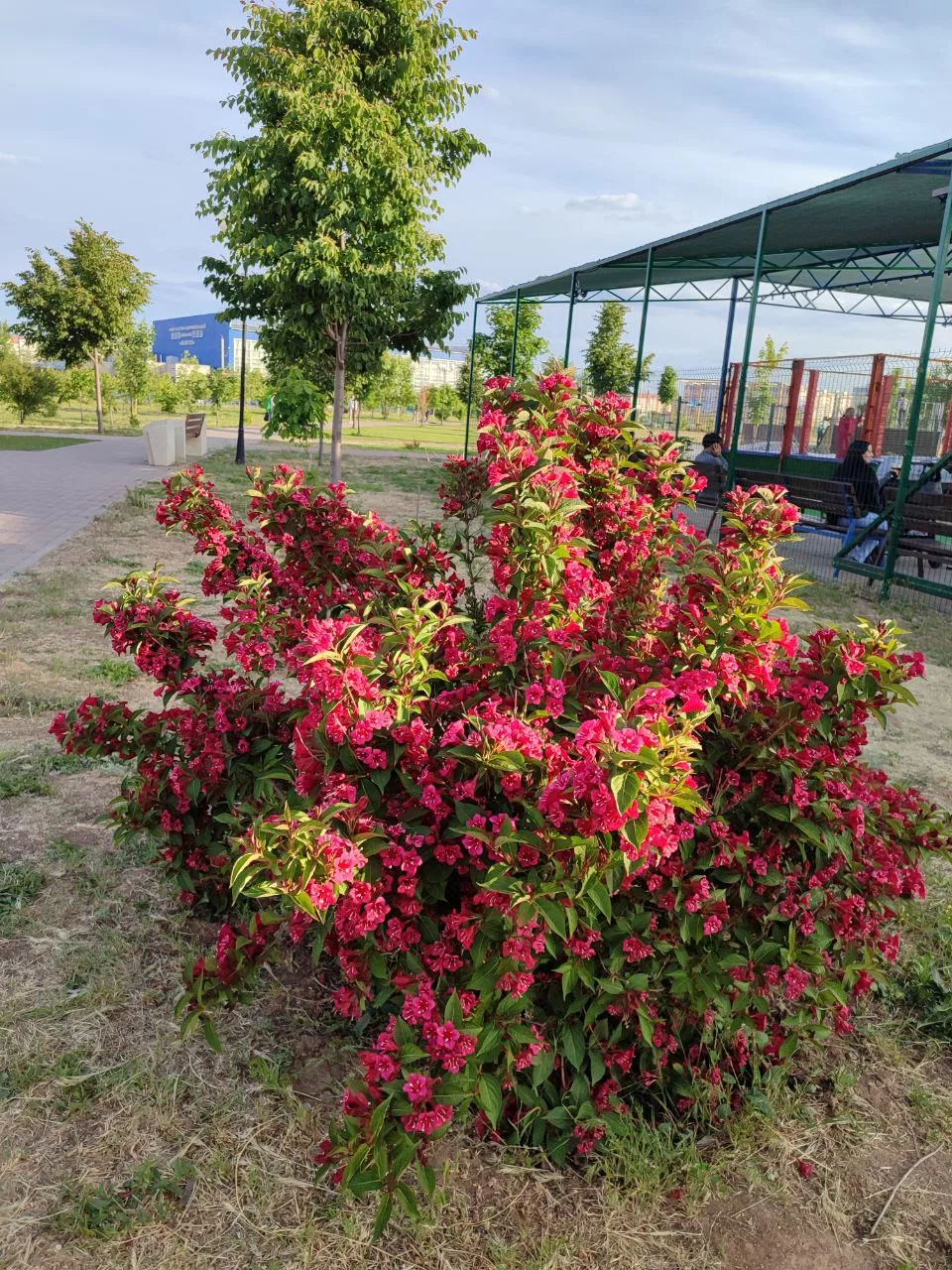
If you close your eyes (and noses) to the emissions, then in the summer Volzhsky is a southern town with its own charm.
People always came to Volzhsky to eat fresh fruits and vegetables, bask on the hot sand, fish, and swim in the cool Akhtuba River.
During Soviet times, Galina Tikhenko recalls, people with lung disease and tuberculosis came here for treatment.
— People came to us especially from St. Petersburg with its humid climate to be treated with goat milk—goats were kept by local residents in urban settlements, — she recalls.


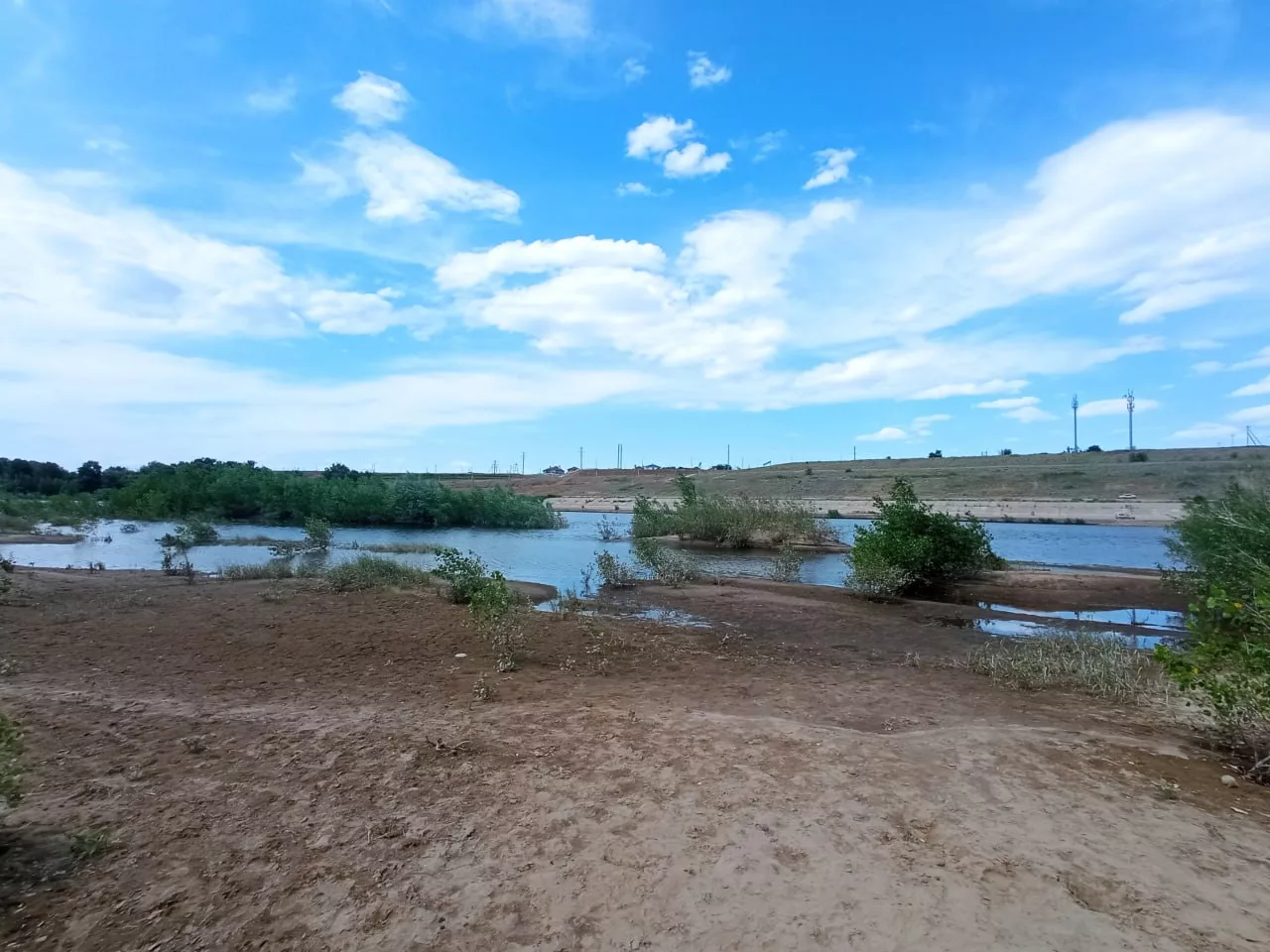
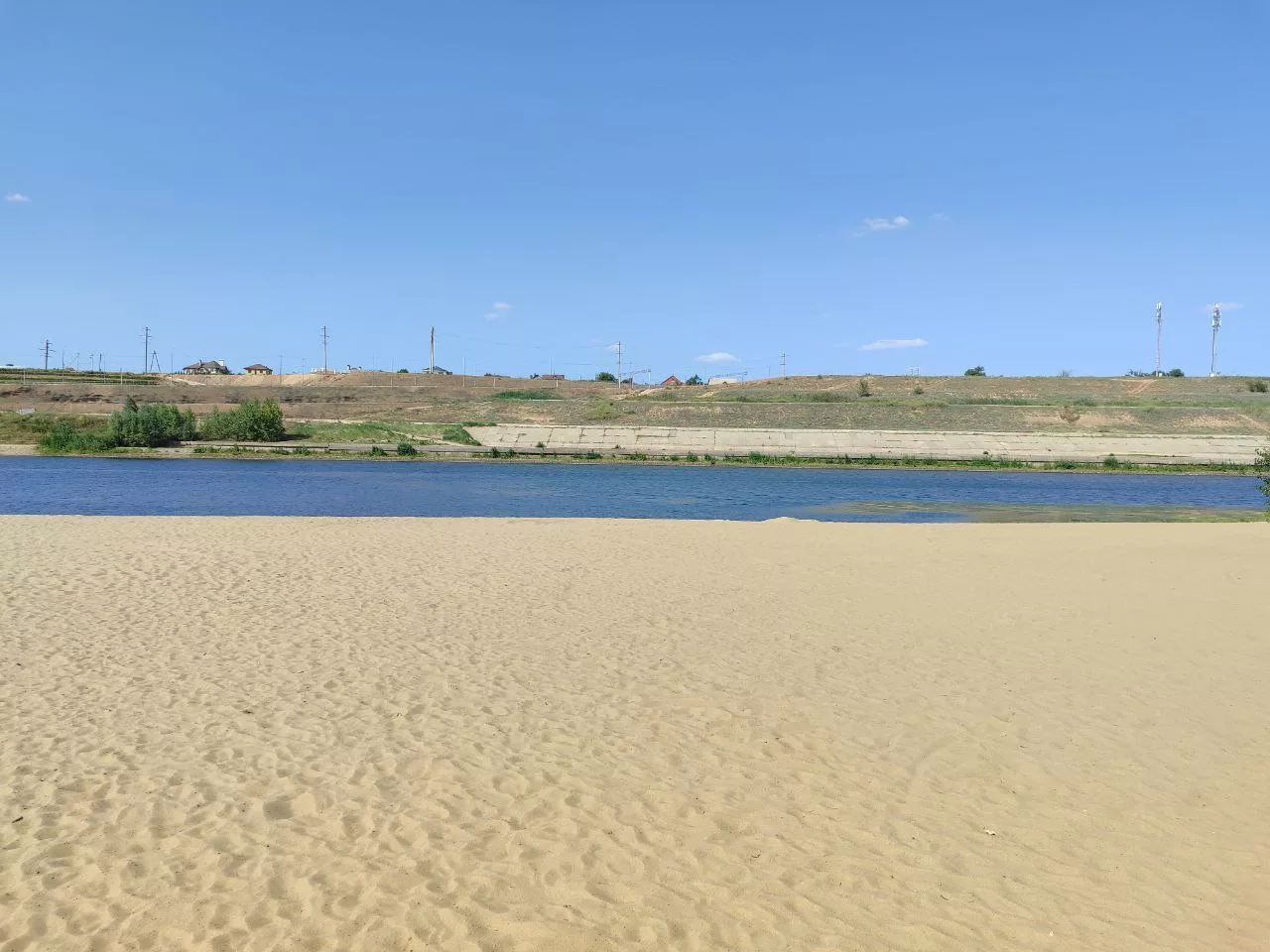
Nowadays, tourists mostly pass through the Volzhsky River in transit—to the sea or, at most, to the Volga-Akhtuba floodplain.
It's also located outside the city limits, about 20 kilometers away. People stay at tourist camps there, and go to see the local lotuses or visit wineries.
During the rest of the year, both Volgograd residents and tourists prefer to have fun in Volgograd.
Volzhsky itself doesn't have many sights: the cityscape is made up of standard panel buildings and pipes.
"You go out anywhere in the city and just start filming everything around you. And if you go to an industrial area, you'll find ready-made steampunk and post-apocalyptic sets."», - write Volzhans in the comments.
Of the attractions (in the strict sense of the word) here is the only one in the country dilapidated mortuary, the country's first monument to a guide dog for blind owners, an old park with Soviet-era carousels and similar sculptures.

In 2019, the mosaic panel "People in White Coats" was dismantled in the building of the Fischer City Hospital. It was created in 1977 by a Volzhsky native and Honored Artist of Russia. Gennady ChernoskutovDespite public protests and the conclusions of art historians, the panel was taken down, and the blogger Ilya Varlamov call dismantling one of the terrible architectural losses of the year.
The city is currently rebranding another cultural heritage site: the Volgogradgidrostroy Palace of Culture, built in the 50s.
Initially, the studio's designer, Artemy Lebedev, was even brought in to work on the project. Ruslan Poklonsky, but he, in the end, refused because in Volzhsky they wanted “get some publicity at the studio».
The claim to the country's once-greenest city status has long been disputed. Compensatory plantings on the sites of new shopping centers, gas stations, and beer halls are no substitute for large trees.
And the survival rate of new seedlings, due to the steppe climate, is one of the main headaches for local officials.
Volzhsky doesn't have the largest selection of hotels: there are no more than ten operating ones.
The editorial staff of NeMoskva wrote to the largest of them - the top rated hotels on Trip Advisor - the 22-story Soviet hotel Akhtuba, the hotels Alex Residence, Villa, Art-Volzhsky Hotel, XXI Century, and the new eco-hotel with camping in the city park from the organizers of the Ultra-100 festival.
We asked their opinion on the new tourist tax, but at the time of publication, no response had been received from any of the hotels.
"Equating the emission to treason"
"Honestly, I'm in shock. I'm a guest in your city. I fell asleep with the window open and woke up to a terrible stench, a sore throat, and nausea. I can't figure out what it smells like: gas or sewage. I go to the window and realize it's coming from the street, so I close it. The whole room reeked of this pungent odor, and I fell asleep in the morning.
How much do you have to hate your city and its residents to kill people like that? This alone makes me not want to move to your wonderful city. After my trip, I was finally convinced of this.
Due to unfavorable weather conditions (harmful substances actively accumulate in the ground layer of air), the environmental protection service often recommends that Volzhans leave the city. And in summerand in winter.
«If the maximum permissible concentration exceeds the norm by 2 times for 90 days a year, it is better to leave the city altogether.", residents responded in the comments.
Volzhans love their city very much. You can tell when you talk to them: when criticizing, they always add this caveat.

They love to make fun of themselves and local officials. But when it comes to health, no one's in the mood for jokes.
Since the 80s, in the city is growing The number of cancer cases in the first half of the 2010s fell slightly below Soviet levels. But the rise hasn't stopped.
Oncologists associate it primarily with unfavorable environmental conditions and emissions from factories.
Back in the early 2000s, regional officials recognizedthat air pollution in Volzhsky has a detrimental effect on the health of residents.
According to the study "To be precise", in 2021 the Volgograd region treated to the yellow zone (average level) of cancer growth.
Volzhans are so tired of suffocating from harmful gases that—apparently no longer just as a joke—they are even proposing to equate emissions with treason.
Otherwise, the main symbol of the city where they decided to introduce a tourist tax may remain only the mortuary.