
"To answer the question, who are you, you need to know how they lived."

What's wrong with 40 women in kokoshniks? How can you raise over three million on traditions? How does traditional culture in Siberia differ from that of other regions? And why study ethnography at all?
We spoke with Novosibirsk ethnographer, ethno blogger, and junior researcher at the Institute of Archaeology and Ethnography of the Siberian Branch of the Russian Academy of Sciences, Nastasya Rubleva, and gathered answers to all these questions.
Such a family history
Novosibirsk Nastasia Rublev She couldn't help but become an ethnographer. Her interest in folklore and her native culture was passed down directly from her parents, and ethnography has accompanied her throughout her life, from early childhood.


During their student years, my parents immersed themselves in Russian traditional culture from various angles. My father studied Russian fist fighting, and my mother One day, she was walking down the university corridor and heard traditional singing, and it moved her so much that she wanted to study folklore from a musical point of view, - says Nastasia. My parents met at one of Novosibirsk's folklore parties in the nineties.
Soon after the wedding Anatoly и Tatyana Rublevs moved to a small town Bolotnoye, which is located 120 kilometers away NovosibirskThe question of additional development for children arose. But it turned out that at that time, there were no clubs at all in Bolotnoye related to traditional Russian culture. They decided to take action themselves.
At the local Children and Youth Center, parents created the “School of Russian Traditional Culture,” and I and other kids from Bolotnoye We were students there. We traveled to perform at international festivals, won grand prizes, and celebrated Trinity, Easter, Maslenitsa, and Krasnaya Gorka together and joyfully. We lived the traditional culture because our parents and teachers created a wonderful, organic environment for us and, in essence, reconstructed traditional rural society.


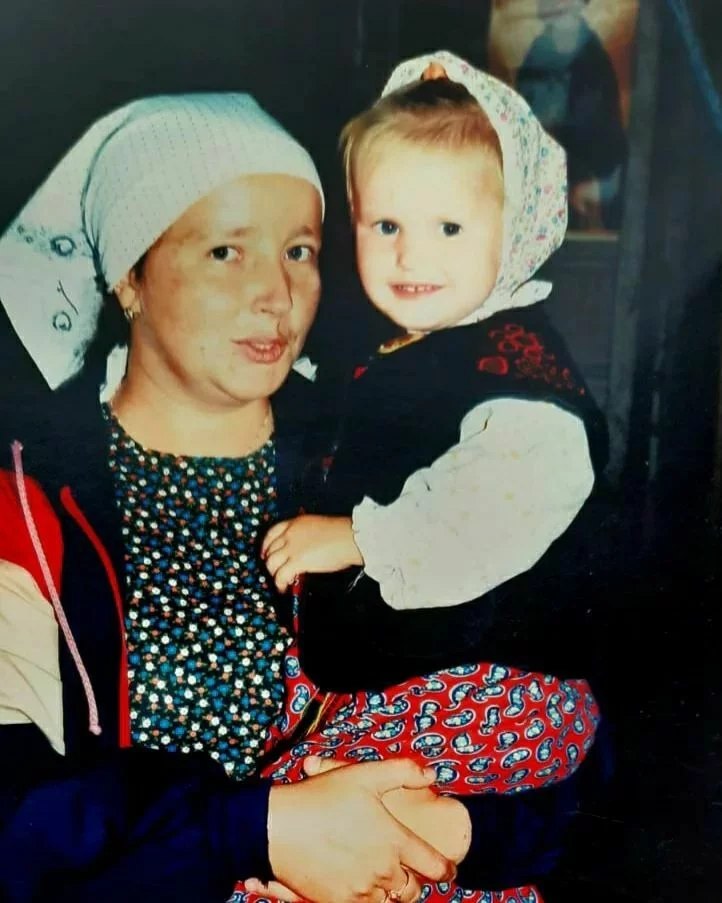
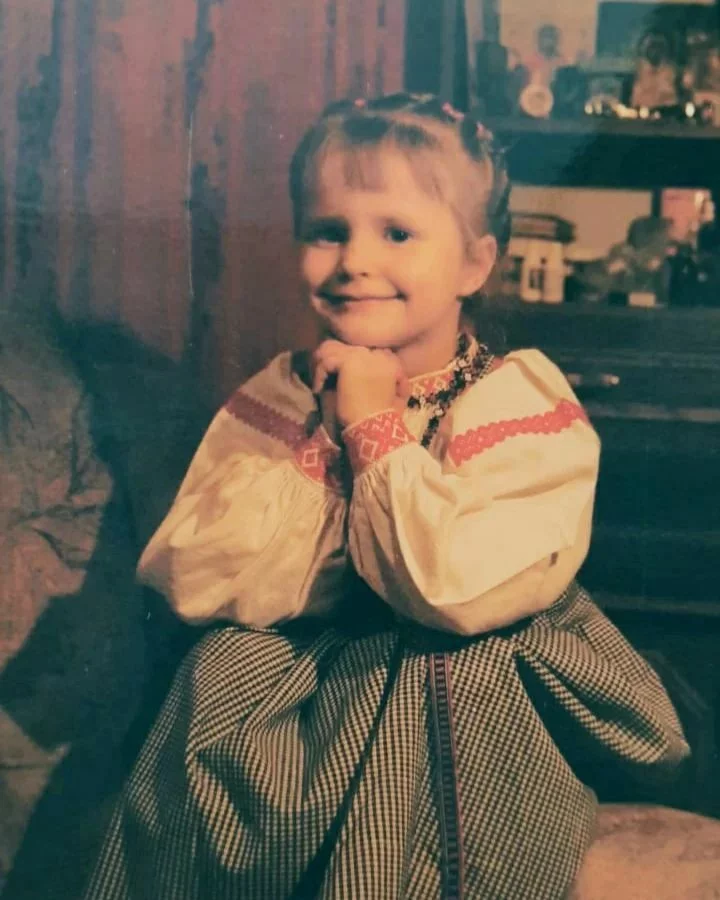
Childhood Nastasya passed in the 2000s Back when pink flip-flops, tank tops, and miniskirts were fashionable, and Britney Spears and the Spice Girls were considered her main idols. So, when she appeared on stage in a traditional sarafan and sang traditional songs, she often encountered misunderstanding from her peers.
What helped me was that I wasn't alone in my passion. Firstly, my entire family and everyone close to me were completely immersed in folklore. Secondly, I always understood how wonderful and interesting it is, how much culture unites and strengthens people.
After ten years ago Rublevs We moved to Novosibirsk, and the school was transformed. Now my mother Nastasya, Tatyana, runs the traditional education center "Domostroy," which educates children from one year to adolescence, acquiring a comprehensive knowledge of their native culture throughout their development. She worked there as a teacher for five years and Nastasia.
У Anatolia и Tatyana Rubles Five children—each of whom attended either their parents' school or the Domostroy center. The four eldest children have, in one way or another, devoted their lives to studying the traditional culture of the Eastern Slavs, but each in their own field. The fifth, the youngest brother, Nastasya He still studies at his mother's center.
Mama A professional teacher of the highest qualification category. Although she is a mathematician by training, she has always taught in the field of supplementary education. explains Nastasia. Besides teaching, my mother is also passionate about the history of traditional Russian costume and creates it herself. She even receives orders from America. She also makes my own clothes.
“Everyone is interested in understanding something about themselves.”
When before Ruble The question of choosing a future profession arose - everything was clear by itself.
I'm interested in history and ethnography because it's the culture of our ancestors. To answer the question, "Who are you?" you need to know how they lived. - thinks Nastasia. - What does science do? It studies what surrounds us. Ethnography studies a person. After all, everyone is interested in understanding something about themselves.
I easily identified it Nastasia and the scope of scientific interests:
In terms of my ethnocultural affiliation, I belong to the Eastern Slavs. I have Belarusian and Ukrainian roots, and among my ancestors are various Russian settlers and long-time Siberians. And, of course, I'm originally from Siberia. So, essentially, I'm studying the culture of my ancestors and their difficult fates. Although, in general, I believe that all peoples have difficult fates, because so much has happened, is happening, and will happen.


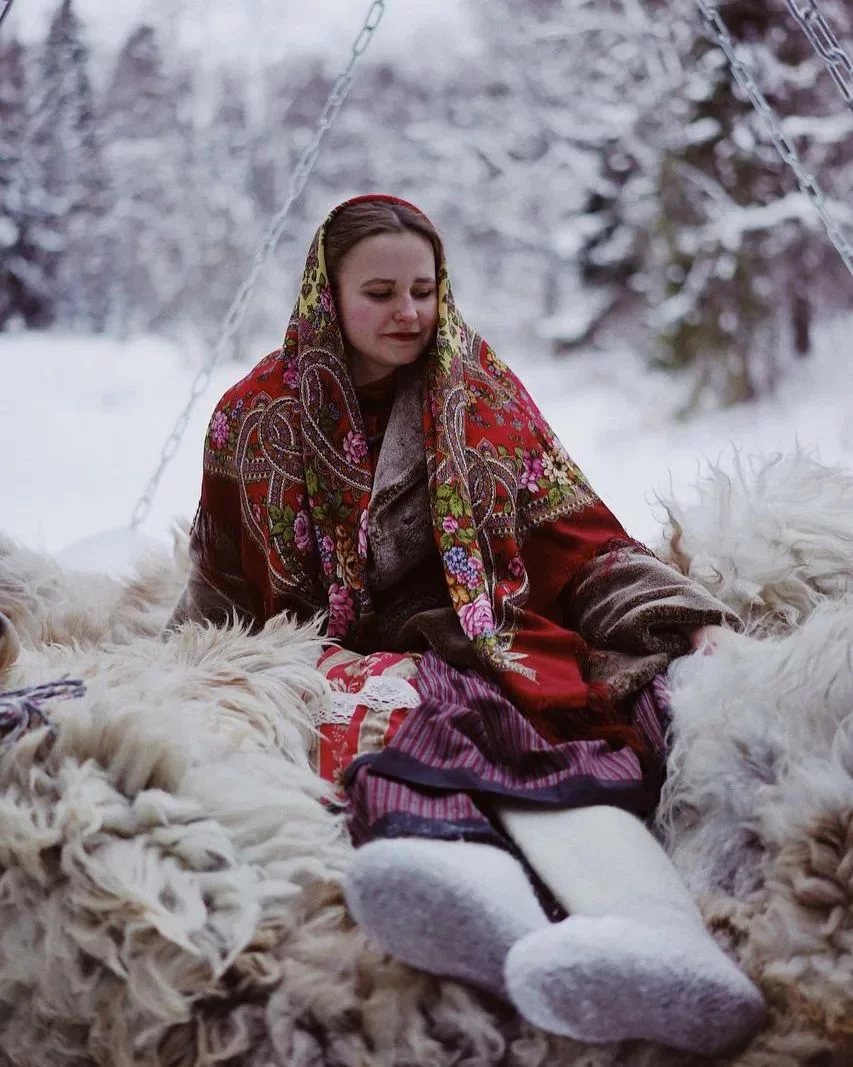
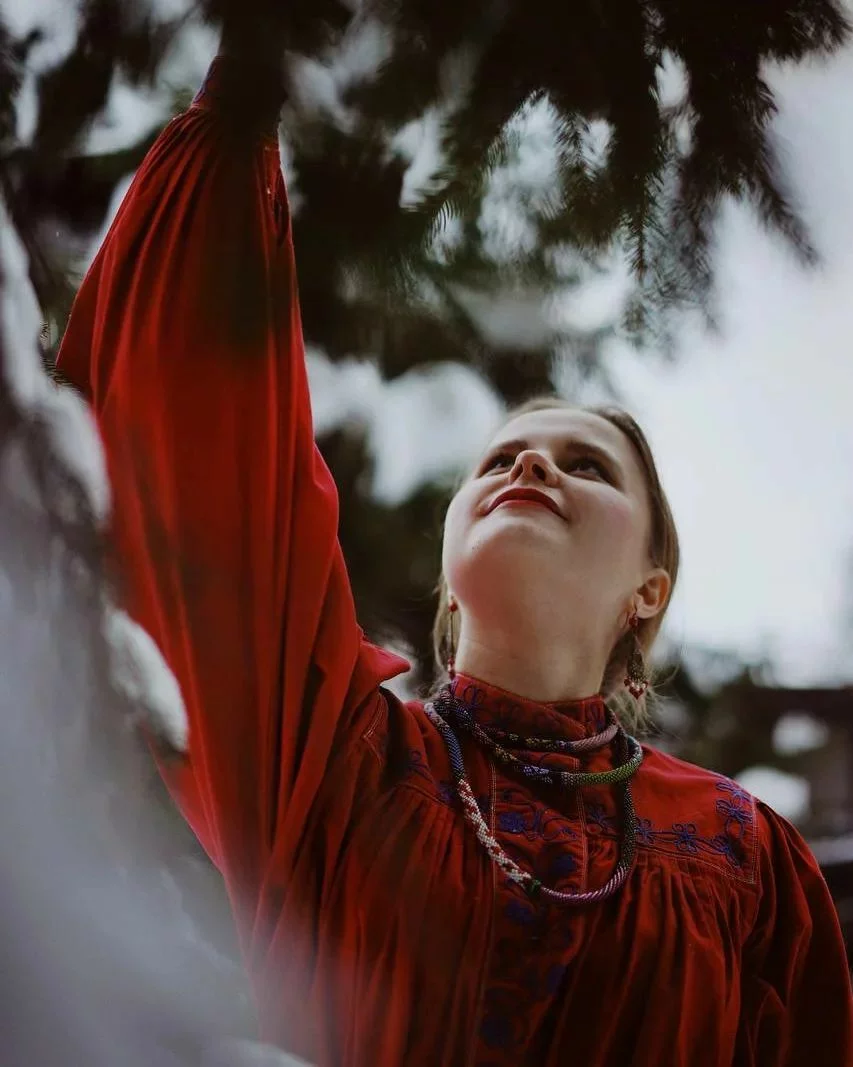
In 2020 year Nastasia She graduated from the Department of Archaeology and Ethnography at Novosibirsk State University and is now studying for a master's degree at the Center for Social Anthropology at the Russian State University for the Humanities. She is also working for the third year at the Institute of Archaeology and Ethnography of the Siberian Branch of the Russian Academy of Sciences.
Ethnic life
Now ethnography for Nastasya A way of life. It's a hobby, a profession, a job, and a blog that people find interesting and enjoyable.
While I was studying at NSU, I was constantly going on expeditions. It's clear that you're gathering material for your student and research papers, but not everything makes it into the articles. A lot of information just ended up in a drawer. This made me sad. I decided to start a blog and post what didn't make it into the article. Over time, it evolved into the format we have today.
In the blog Nastasia She not only talks about traditions, customs, costumes, and everyday life, but also about her life, which is infused with traditional Russian culture in one way or another. For example, her everyday clothing includes elements of traditional attire, she sings or listens to traditional songs to herself depending on her mood, and her social circle These are guys who are into the same things she is.
Ethnic Instagram page Nastasia She started it five years ago, but it only started seeing significant growth in audience last spring, when she first released a video about the traditional Siberian outfit of the late 19th century. early 20th century. The second reel that "flew in" was a story about the traditional braids of married girls.
This was the first wave of growth. The second It happened in the fall when my friend and I sang a lyrical song of the Old Believers of Altai. It's very specific, but what's surprising People liked it. Now it has almost 500 thousand views, — says the ethnographer. — And I realized that the videos about costumes and videos with singing were the most popular, and this format has basically remained.
At the time of writing this material on Instagram Nastasya She has 38,5 subscribers, and her reels get up to 800 views. She doesn't currently have a TikTok account. The developers banned Russian users from posting videos there, but while this was possible, Rubleva managed to post five videos. One of them received 3,7 million views and brought almost 60 thousand subscribers to the blog.
In the comments under all publications Nastasya rave reviews: some thank you for the enlightenment, others Someone wants such outfits to be worn today simply admires.
Actually, I was lucky 95% of my audience responds positively and with interest to my content. It turns out that most people don't even know everything I'm talking about. Sometimes I'm invited to speak to people who aren't versed in ethnography, and I use the most obscure costumes for my presentations. For example, a Voronezh complex with a very beautiful headdress, which is definitely not a kokoshnik. I ask people to choose a traditional Russian costume. and they bypass this complex, completely unaware that it also directly fits this definition.
40 women in kokoshniks and archives
According to official statistics, almost 81% of Russian residents Russians. But at the same time, it is precisely the culture of this people that is least talked about in the country, believes Nastasia.
For example, a typical scene: a festival of national cultures in Novosibirsk, with tents dedicated to Kazakh, Tuvan, and German cultures… It's all actively broadcast, journalists have arrived and are filming. But there are either no tents dedicated to Russian culture at all, or they are very limited. I have a feeling that, due to various processes in the 20th century, national Russian culture has somehow disappeared, been replaced. Only a small part of the diversity, complexity, and richness that once existed remains.
According to Nastasya, small nations preserve their culture more carefully, while the Russian It's already become a gray background, something natural and ordinary. But this, Nastasya clarifies, is a question for the bearers of Russian culture: why aren't we interested? Why have we lost it and not preserved it?
Traditional Russian culture This is not a choir of 40 grandmothers in kokoshniks and garish sarafans. This is a phenomenon A completely Soviet product, created to replace authentic culture with one that was convenient for the state. Even Soviet songs, which are made in an ethnic style, also an artificially created product for substitution, — Rubleva assures. — In the 19th century, it was customary to know your ancestors back at least seven generations. Grandmother, great-grandmother, great-great-grandmother, great-great-great-grandmother, and so on. But what do we have now? I go on an expedition to visit my grandmother, born in the 1930s, and ask, "Where was your grandmother from?" She replies, "Listen, dear, I don't know, and I never asked." That's how much our worldview changed during the Soviet years.
Previously, he explains NastasiaIn peasant circles, an elderly person was considered respected, experienced, and authoritative. During the Soviet era, however, the paradigm shifted: even in fiction, elders began to be portrayed in a rather negative light. as those who defend old values and hinder the development of society.
The Soviet state no longer needed people of the old school. New people were needed. With new thinking and new perspectives. Everything old was fought and destroyed as much as possible, to end continuity. Now it turns out we don't know what to do with Russian culture, where to find it, what it's all about. All we have left are 40 women in kokoshniks.
But, he hopes Nastasia, not all is lost.
In the 80s and 90s, people who no longer believed in the communist and socialist ideals of a bright future turned to the legacy of their ancestors, began to study and transmit it. This contributed to the preservation of culture. And today, many young people are turning to traditional culture, specifically with a question of their identity. Interest in folklore is growing every year. It becomes cool to know your roots and ancient traditions.
What should researchers and those who want to learn more do now? Dig, search, extract, and study. because there is enough information, it is in the public domain and anyone can find it, he assures Nastasia.
Even my blog exists to make people understand that traditional culture It's good because it contains all the experience of our ancestors, passed down from generation to generation. Yes, times change, but universal human problems exist, have always existed, and will always exist; they are eternal. betrayal, love, family, longing. Therefore, traditional culture It's like a chest of things. Some things need to be taken out and thrown away. For example, domestic violence, which was considered normal. And some store, carry and use with care.
"All traditions in Siberia take on harsh and vigorous features."
Now the field of research Ruble Kemerovo regionBecause it's not very well studied and still contains many interesting blind spots, she's been traveling there on ethnographic expeditions for the past four years, studying the culture of the Eastern Slavs of Western Siberia and the small indigenous population.
In the cities, people have all become mixed up, while in the countryside, authenticity remains. I talk to grandmothers; unfortunately, men live shorter lives and there are almost no grandfathers left. I'm lucky if I meet someone born in the 20s; more often than not, It's the 30s. I ask how they lived, what holidays they celebrated, and what rituals they performed. It's also important how people identify themselves. Because most These are the descendants of settlers and long-time residents. It's interesting to talk with the indigenous population and analyze how they adopted the culture of those who migrated to them.
Nastasia believes that Siberia It's a real "cultural hodgepodge." A single small village could combine different traditions. even within the framework of a single event.
- This is due to the fact that people They migrated to Siberia from completely different regions and exchanged experiences and traditions with old-timers and the indigenous population. But what I always note All traditions and rituals here became more severe, more vigorous. This is due to the fact that the region is cold and cruel. The fact that Siberia was still a place of exile also played a role, which is why prison folklore is strong here. But at the same time, Siberians kind, friendly and hardworking, otherwise you won’t survive here.
For example, the Maslenitsa tradition of capturing a snow fort was very common in Siberia. And only in Siberian regions, according to researchers, was it celebrated on such a grand scale and vibrantly.
Siberians built a high wall of snow. At first, they tried to simply take it, then on horseback. The first one who succeeded was caught and rolled in the snow until he lost consciousness. Or Maslenitsa procession: it was so widespread in Siberia that settlers from Belarus were literally stunned. For weddings, people lit bonfires, jumped over them, smeared their faces with soot, and ran after each other. I already wrote this down myself from the words of those who witnessed it.
Another harsh wedding tradition, the ethnographer says, is that in order for the bride and groom to call each other's parents "mom" and "dad," guests would drag the parents into the fire until the newlyweds shouted, "Don't touch mom and dad."
Save and adapt
The problem is that my parents' generation still saw the direct bearers of traditional culture, while we are already seeing people from the Soviet era, so all that remains is to collect bits and pieces and preserve them, — he reasons Rublev. - But we do have access to the legacy that was preserved before us. In the internet age, there are wonderful platforms The same Kultura.RF portal, which displays ethnographic samples and descriptions of holidays, also has excellent video materials, and in large cities entire folklore communities of interest.
According to Nastasya, traditional Russian culture is currently only 3-10% researched. A huge amount of information is either still to be discovered, or has already gone into oblivion forever.
Now my generation faces the challenge of adaptation. Culture lives and changes; it doesn't stand still and can't be static. Naturally, when we learn a song from our grandmothers, who had completely different life experiences and circumstances, we physically won't be able to sing it the same way they did. Therefore, we must ensure that what we've collected isn't just a museum piece, but an integral part of contemporary culture. It continues to live and inspire interest.
*The interview was conducted in April 2023. All photographs are from Nastasya Rubleva's personal archive.

