
Schrödinger Bridge, or How Our Homeland Lives in Isolation

According to the latest census, this Siberian village in the northern Kemerovo region has a population of sixty. The village is home to not only pensioners, but also young people and schoolchildren. However, there is no store, no village council, no first-aid post. A pedestrian suspension bridge connects Nasha Rodina, the regional center where life takes place, to the village.
The GPS showed that the village of Nasha Rodina in the northern Kemerovo region was just a couple of kilometers away. But we were already at the edge of the Zolotoy Kitat River, and there was no road. I opened one map, then another—everywhere they showed a road bridge. In reality, all I could see was a suspension bridge for pedestrians. And, frankly, even for a pedestrian, if you weren't from around here, it would be a bit scary to step onto it. Nearby, there were some metal slabs, and a man with a grinder was jumping across them.
"The bridge here is a pontoon. We're currently repairing it. But if you want to get to Our Homeland, you need to return to the highway and then go through the Antonovsky Mine. It's about 50 kilometers," the mechanic explains. "In the spring, when the flooding starts, the pontoon bridge is removed. This time, it was dismantled in early April, and it's unknown when they'll put it back."
"Can I walk on this overhang? Is it safe?" I ask the mechanic.
— People are walking.
As if to prove this, a Lada 12 stops next to the bridge. A man jumps out, grabs several bags of groceries, and darting up onto the bridge.
— Are you going to Our Homeland? Can I come with you, otherwise I'm really scared to go.
The stranger grins but waits. As we walk, he explains: the 60-meter-long bridge, the largest suspension bridge in Kuzbass, was built over 60 years ago. No one even remembers exactly when. Everyone calls it Schrödinger's Bridge. Like Schrödinger's cat, it's sort of there, but sort of not there. Officially closed to traffic, the authorities promise to dismantle it any minute now. For now, for lack of a better option, people walk across it. Traffic is quite heavy. Several men, a couple of schoolchildren, and a woman of retirement age pass us by. No one but me is holding onto the railings, or rather the metal bars. With every gust of wind, I practically cling to them with my teeth: the bridge sways back and forth. It feels like it's about to tip over like a swing—a sun. People smile. Some encourage us: "Don't worry, even motorcycles ride here."
Everything here is held together by a huge amount of wire of varying thickness, and there are gaping holes underfoot and between the pieces of wood.

"Do you live here?" I ask the guide.
"No, I visit my grandmother once every few days. I bring groceries. They don't have any stores or pharmacies here."
— Why is the village called Our Homeland?
"Nobody knows. I've searched the internet and asked old-timers, but to no avail."
The man told us where to look for the old-timers. And so they parted ways.
The village has only one street—Rechnaya. The name only appeared a couple of decades ago. Before that, house numbers were used.
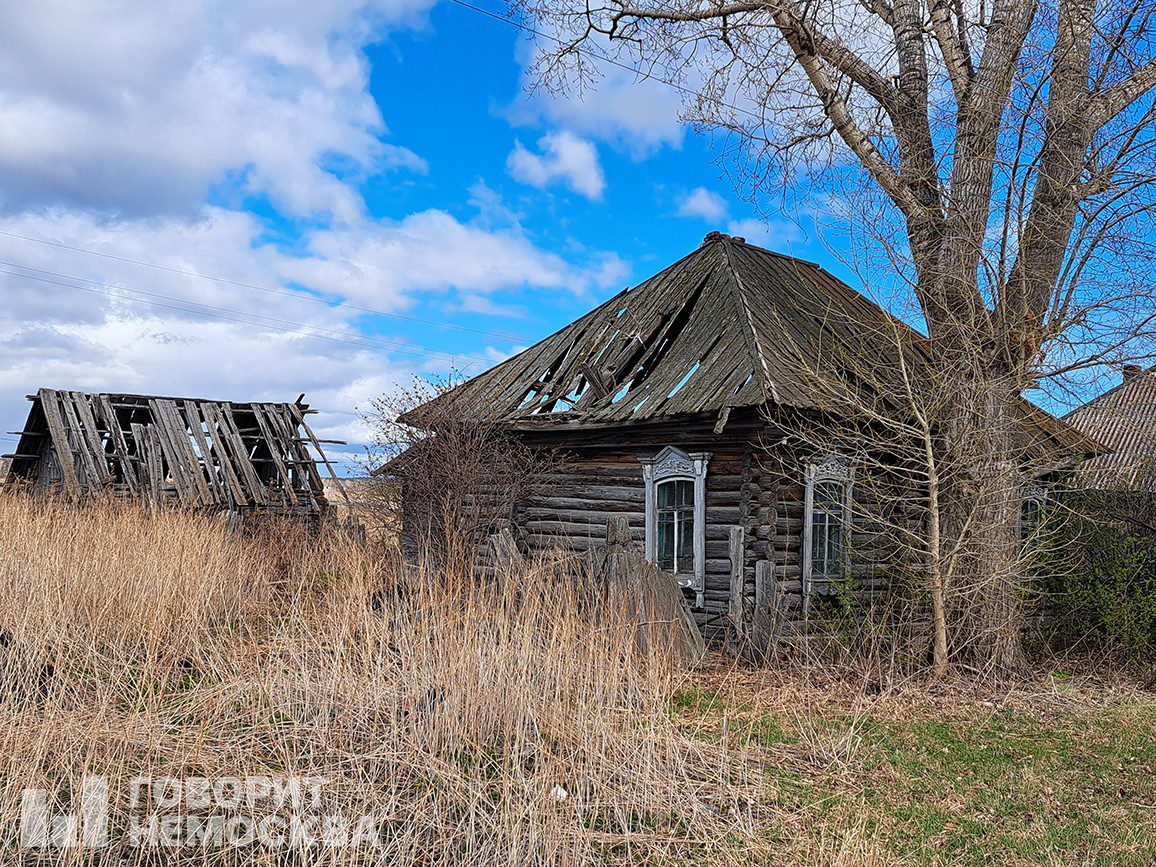
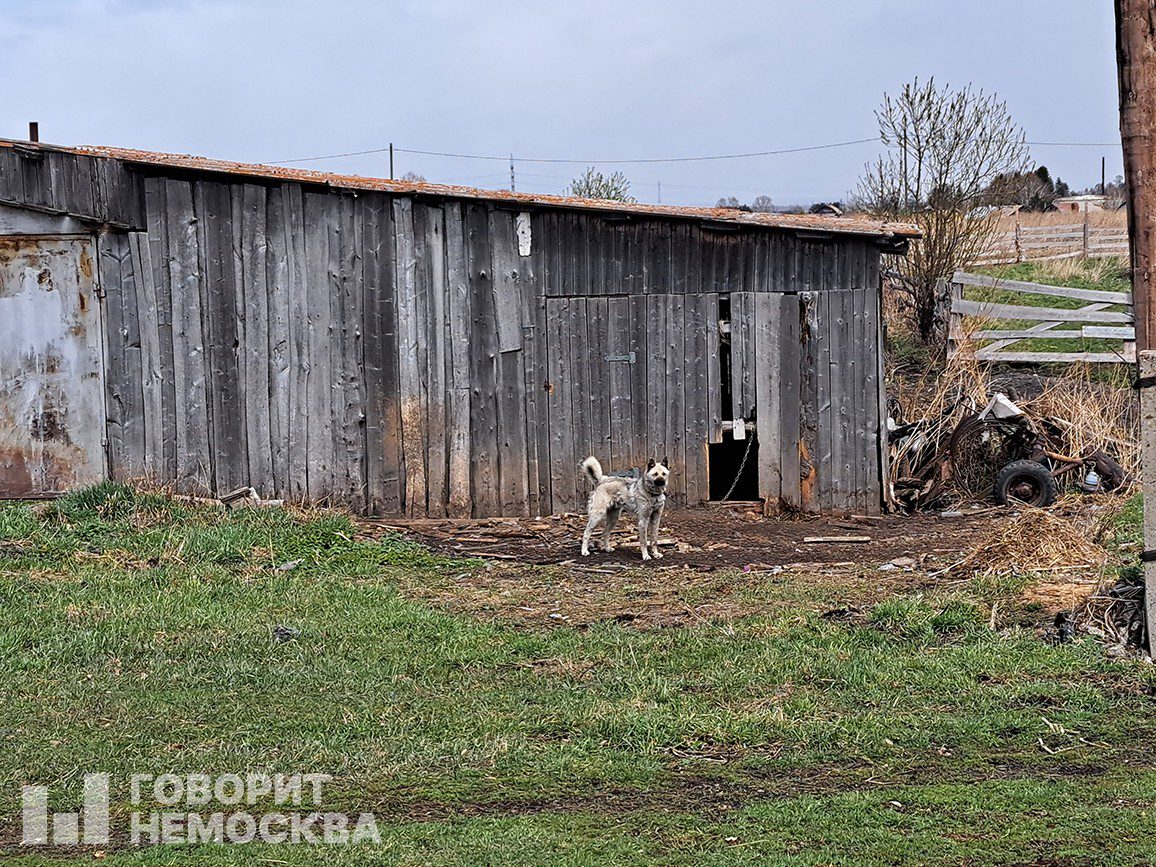
Half an hour won't be enough to walk from one end of the village to the other. The distances between houses are vast—sometimes as long as several dozen meters. Many abandoned houses stand with boarded-up shutters and padlocks still hanging on the doors. Some of the wooden buildings have already been dismantled for their planks, which lie in piles along the road. No one has doorbells or even bells. I knock first on the fence, then on the windows, shouting, "Owners! Is anyone home?" The dogs on their leashes bark hysterically, but no one comes out.

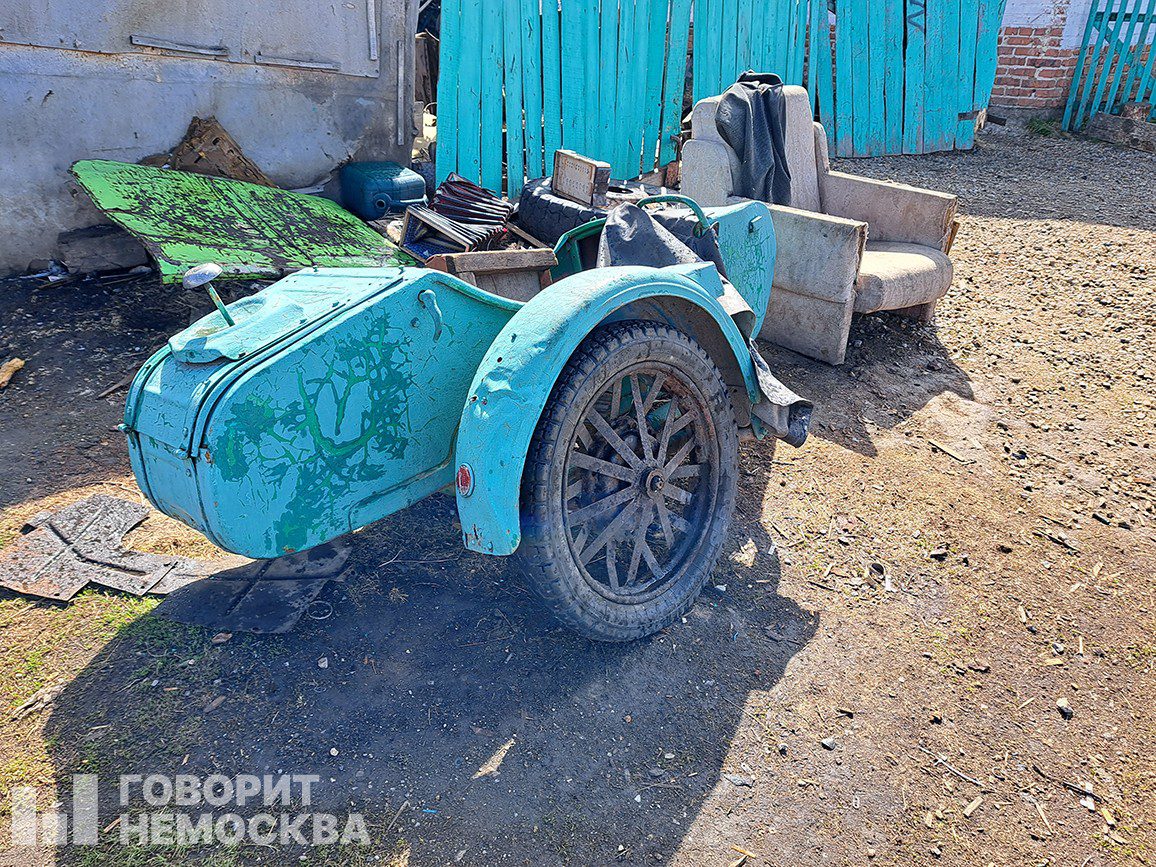
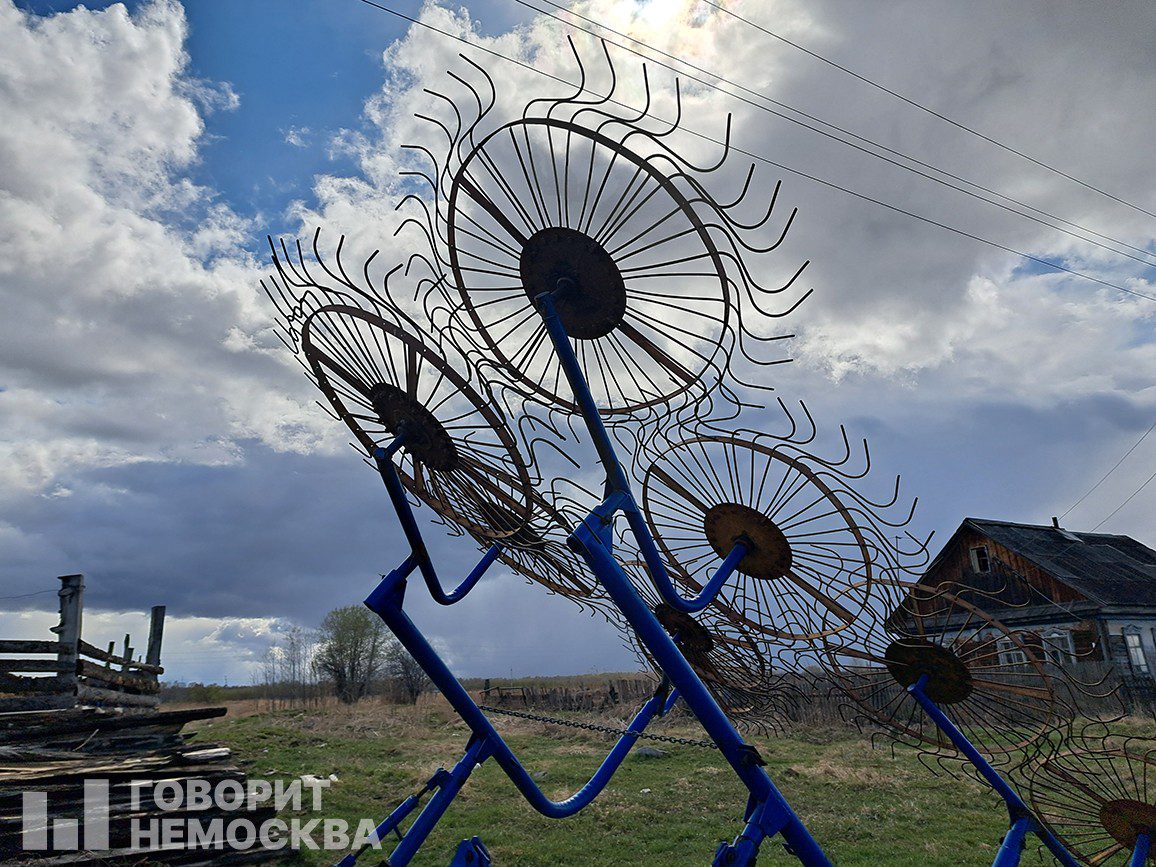
If it weren't for the agricultural machinery parked near the yards and the cows grazing there, one might think the village had long since died out.
"What are you photographing here?" a woman finally emerges from one of the courtyards, holding a log. She was either carrying firewood or using it for self-defense.
Having made sure that I posed no danger, Natalya, as she introduced herself, opened up: she has been living in Our Homeland for 20 years. She moved here from the city to be with her husband.
— It's nice here. The air is clean. I have three kids. I can let them go outside without any worries. There are no strangers here, and cars hardly ever drive by. And the grass is great! Do you know how much milk my cows give?! The only bad thing is there's no proper bridge. When they removed the pontoon bridge, the teacher called me. She said the school bus wouldn't be coming to pick up the kids anymore. If I want the kids to go to school, I have to sign a document saying I'm responsible for the kids and that if anything happens on the suspension bridge, I won't hold them accountable. I refused. I've switched the kids to distance learning. I'm afraid to walk on that bridge myself, and I don't let the kids go on it.

According to Natalia, the village residents have already written to all the authorities, but nothing has changed. The bridge across the river is used not only by residents of Nasha Rodina, but also by the neighboring village of Maltsevo. According to the 2010 census, only 150 people live in these two villages. However, locals say the population is higher: there are about 30 schoolchildren alone.
"It's okay if we have a car. But the village is full of pensioners who can barely walk. And the store, the hospital, the social security office—they're all across the river. Just look at that house that burned down the other day, and they didn't even call the fire department. What's the point? By the time they get to the county office, everything here will be gone. We saved the house from the fire ourselves," Natalya continues. "And how did you end up here?"
— By chance. We saw that there was such a village and decided to go check it out. We liked the name.




— That's true. My brother moved to Sakhalin, got married. He brought his wife here to meet his family. His wife asked him where we were going. He said, "To our homeland!"
And she: “I understand that we are going to see your small homeland, what is the name of the place?” He again: “Our Homeland!” He explained for a long time.
— Where does this name come from?
"You'd better find out from Grandma Masha and Grandpa Petya. They've been here the longest."
The pensioners were home and delighted to have uninvited guests. Maria Kuzminichna and Pyotr Aksenovich Kozlov live alone. Their children, grandchildren, and great-grandchildren live in Kemerovo. In the summer, the vegetable garden is a relief from boredom. Every window sill in the house is filled with tomato and pepper seedlings. In the winter, their only entertainment is playing cards and watching TV.

“Every day is war, war, war. They keep showing these houses. Why do they tear them down every day and build new ones every day or something? They show Zelensky. He walks here and there. But why do they show him to us? I have a grandson serving in Ukraine. He’s not a soldier. He probably left on his own. He’s single. He was born in 1999. I worry about my grandson, of course. But he doesn’t call much. I turn on the TV at eight o’clock and at nine o’clock on channel one. They don’t show him. I think they show everyone else, but my grandson. He (the grandson) should be home soon. The one he fought with left. What’s his last name? I forgot. The main one of them. Prigozhin! He’s done fighting anymore. That’s how it is. I wish this war would end soon,” sighs Marya Kuzminichna.
Grandma Masha and Grandpa Pyotr are from Minsk. Their parents moved to Siberia as special settlers. Maria Kuzminichna, however, initially lived in Krasnoyarsk Krai. After the Great Patriotic War, she moved to Kuzbass and got a job in logging, where she met her future husband. In June, they will have been married for 60 years.
— You need to trust each other, then there will be life. Stick together. When we got married, there was only one cashier at work. He came to the cashier and said, "Starting today, you will be giving my salary to my wife." And I received both an advance and a salary. And a pension, too. Before, I would go to work at 6 o'clock. And he would clean everything out with the pigs and cows. And I would come home, milk the cow, feed the pigs, cook food. That's my job. And already in retirement, I would get up, clean up, cook food, and he would take out the bucket and do everything. And everything was one and the same for us. Someone once asked me, "Why did you leave Kansk?" And I said, "But I knew my little fool lived here." (Laughs.)
Three years ago, Pyotr Aksyonovich had his leg amputated. Now he rarely ventures beyond the yard. He can't even get a wheelchair down the road, much less across the bridge.

"I used to go to sanatoriums. As a veteran of the Great Patriotic War, they gave me a free voucher. But now I can't go without someone to see me off. I called, and they told me to pay for an escort and go," Pyotr Aksyonovich recounts sadly. "That's how I saw the world. I served in the Far East and even reached Brest. When I worked on a collective farm, my cows yielded 16 kilograms of milk. I was even awarded a trip to Leningrad for that. And I went to Moscow's Vorobyovy Gory."
Despite his age—he's almost 94—Pyotr Aksyonovich is very active, and it's clear that being confined within four walls is a great challenge for him. He has almost no friends in the village. And those who do are bedridden.
"We used to talk to our neighbors. But now, young people... Where can you go to them? One comes to me: 'Auntie Masha, lend me some money.' And I say: 'I'd borrow it, but I don't have any.' And I know they don't want to pay it back," Marya Kuzminichna continues.
She may be leaving the house, but she still misses socializing. Like a hospitable hostess, she began setting the table for the uninvited guests. She even decided to crawl into the cellar to offer them some jam.

The elderly sigh as they recall their former life. There were several villages nearby. The largest was Maltsevo (there was a store and a club there), the nearest were Lomovitsa, Moskva (also a village), and Vydrinka. Their new homeland was located elsewhere, about three to five kilometers from Kozlovy. According to the pensioners, the village where they live has had many names: Isayevka, Rusayevka, Frunze, Blucher. It belonged to the Tomsk region, then to the Novosibirsk region, and now to the Kemerovo region.

"Of course, life on the collective farm was hard before, but it was still possible. I got married and had kids. The foreman invited me to the collective farm to milk the cows, and I milked them for 27 years. When I retired, they called me to work as a storekeeper at the warehouse. I went and worked as a storekeeper for a while longer. There was work," says Maria Kuzminichna.
"I have two years of education and a year in the hallways. And I've always had work: either on the railroad, or in the logging industry, or on our collective farm. And now..." Pyotr Aksyonovich interrupts his wife.
Now, of the few collective farms and villages left, only Nasha Rodina and Maltsevo remain. There's no first-aid post, no store, no church. Local residents say a food truck helps. But a food truck only comes twice a week. It's a good idea to stock up on cookies for tea.
"Maybe they'll build the bridge by the 25th. I have to pay for Grandpa's walker, pay for the phone... Oh! The phone's not working now. I have to pay for the electricity. I have to go downtown, where the market is. We used to have a state farm office. You'll have to go and pay. But now, look where we have to go," the pensioner sighs.
— What if they don’t build the bridge?
— I'll follow the trail. I'll pray in front of him and then go.
Elena Sokolova. Photo by the author

