
Between ammonia and methanol

How environmentally hazardous industries are dividing up the Taman Peninsula
In ancient times, the Scythians ruled these shores; in classical times, the Greeks founded colonies here—Hermonassa and Phanagoria; and in the 10th century, the mysterious Tmutarakan Principality emerged. The peninsula, formed two millennia ago from an archipelago of five islands, was the scene of fierce battles for centuries. But no one—neither the bloodthirsty Huns, nor the foolish Khazars, nor the Crimean Khans who succeeded them—encroached on Taman's natural resources: the clear sea and white sands, salt lakes and mud volcanoes.
Until civilized times came.
The Black Sea is in danger
"Trouble looms over the Taman Peninsula! Our Black Sea is in danger! In the port of Taman on the Kerch Strait, next to the Crimean Bridge, the OTEKO group of companies has planned to build gigantic chemical plants to produce toxic and explosive substances from natural gas! Work has already begun to assess the environmental impact of the methanol, ammonia, and urea plants—a total of 10 million tons per year. (…) With the launch of these hazardous production facilities, the Taman Peninsula will be forgotten as a place of stunning natural beauty at the junction of the Azov and Black Seas: this peninsula, with its unique natural environment, will become a base for the production and export of raw materials and chemical products from Russia to the West.
The authors of this petitions A petition on Change.org (which has been signed by nearly 128 people to date) demanded that the governor of Krasnodar Krai and the Russian president "stop this insane project" and "preserve the unique Taman Peninsula for future generations."
So, did you stop it or save it?
Quite the opposite—while the peninsula's residents were struggling with the first disaster, a second one arrived: PAO Togliattiazot (a subsidiary of Uralchem) announced plans to build a complex for transshipment of ammonia and mineral fertilizers with a capacity of 5 million tons per year in the port of Taman. It's right there, next to OTEKO.
Thus, in the future, residents of Taman stand to gain, in addition to the already operating port terminals, the following within the Taman landscape: 1) a cluster of chemical plants, one of which—a methanol plant—is expected to become the largest in the world; 2) a massive ammonia transshipment terminal.
The first project, however, has been put on hold for reasons beyond the owner's control—more on that below. However, construction on the second is in full swing.
NeMoskva found out what residents of the Taman Peninsula are thinking and doing about this issue. We also spoke with Dmitry Shevchenko, the executive director. ANO "Civil Initiative Against Environmental Crime", whose employees conducted their own investigation and found out what dangers Taman faces when implementing projects GC "OTECO" и PJSC Togliattiazot.
Jerboas were jumping across the fields
"I first came here, probably, in '92 or '93. My parents came to Taman, and I came from Petropavlovsk-Kamchatsky with my son to visit them," says Ekaterina Chebotareva, an activist with the public organization "Clean Taman." "It was the perfect place for a vacation—not like Sochi, where everything is built up, but a wild one. You go to any beach—everything is clean, tidy, and there aren't many people. Jacques-Yves Cousteau and his team once came to Taman, and he said it was the cleanest place in the Black Sea."

Our Temryuk district has 200 kilometers of sandy beaches, and the sand isn't artificial, it's natural. We lived in the village of Volna, which now borders the port of Taman. Back then, it was a tiny settlement that depended on vacationers for its income. It had a gorgeous white beach—just like the Bounty ads—white sand that was a real eye-catcher, but then it all got buried in landslides. Where these port facilities are now, there were fields, and jerboas hopped across them. My parents planted potatoes there, and I helped them harvest them.
The picture is completely different now. Volna residents were forced to part with their clean air and white beaches when an oil loading and cargo handling terminal opened in Taman.
According to Ekaterina, when the wind blows from the west, that is, from the port, the entire village of Volna smells of fuel oil from the oil terminal of Tamanneftegaz CJSC. It also becomes covered in coal dust from the bulk cargo terminal of OTEKO-Portservis LLC (both companies are part of the OTEKO group of companies).

"OTECO-Portservice has been handling coal since 2019 and is gaining incredible capacity. We handle the largest volume of coal through Russian ports—20 million tons per year. And they're planning to handle 50 million tons. We're already constantly seeing these coal clouds flying in all directions, covering vineyards in coal dust," says Ekaterina. "We've written collective letters to the authorities, and Rospotrebnadzor has visited. But they take samples when the wind is easterly—and naturally, the samples are fantastic. Meanwhile, like in my village of Tamansky and in Volna, to fully appreciate the smell of the port, the wind needs to be westerly. So they're simply pushing us out of here. And the whole idea is that we'll leave ourselves, so they won't give us any apartments."
In short, if there was one thing the residents of Taman lacked, it was the world's largest methanol plant, several smaller chemical plants, and an ammonia handling facility.
The project that never happened
The methanol story began about a year and a half earlier than the ammonia story, but they are very similar in many ways. For example, in the way public hearings were conducted.
"On June 27, 2021, at a hearing, we learned about OTEKO's plans to build methanol, ammonia, and urea plants here. People were outraged, but the administration concluded that the hearing had taken place anyway. Because they also brought in OTEKO workers, who pounded their chests and talked about how much they needed these plants. This really angered people, and we ended up writing a bunch of collective letters."


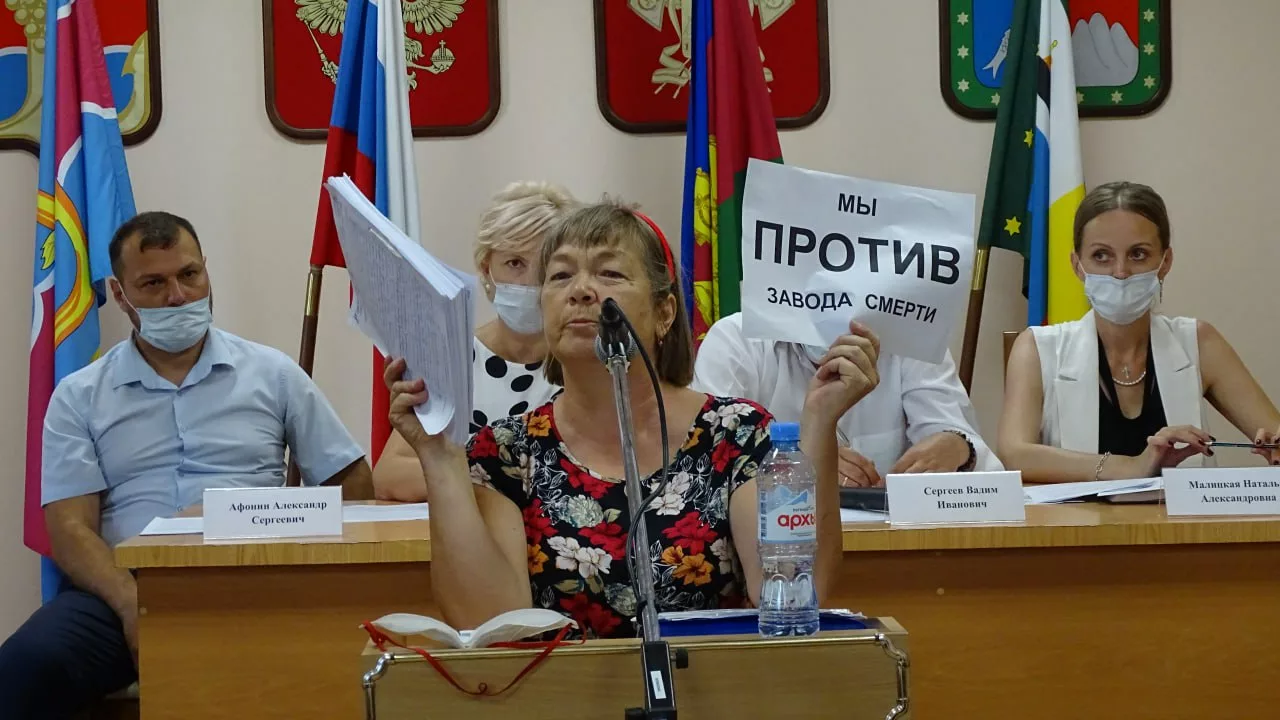
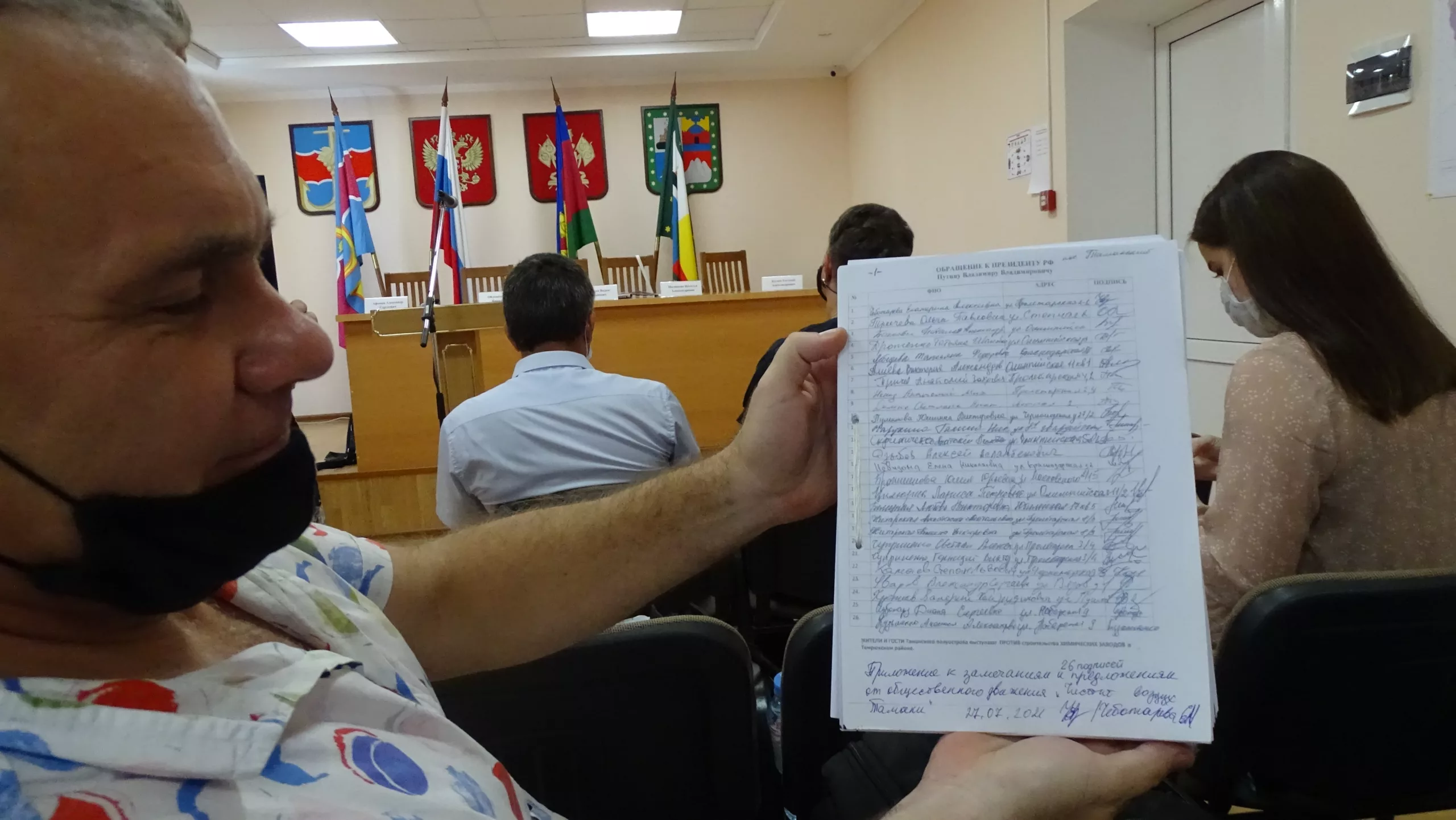
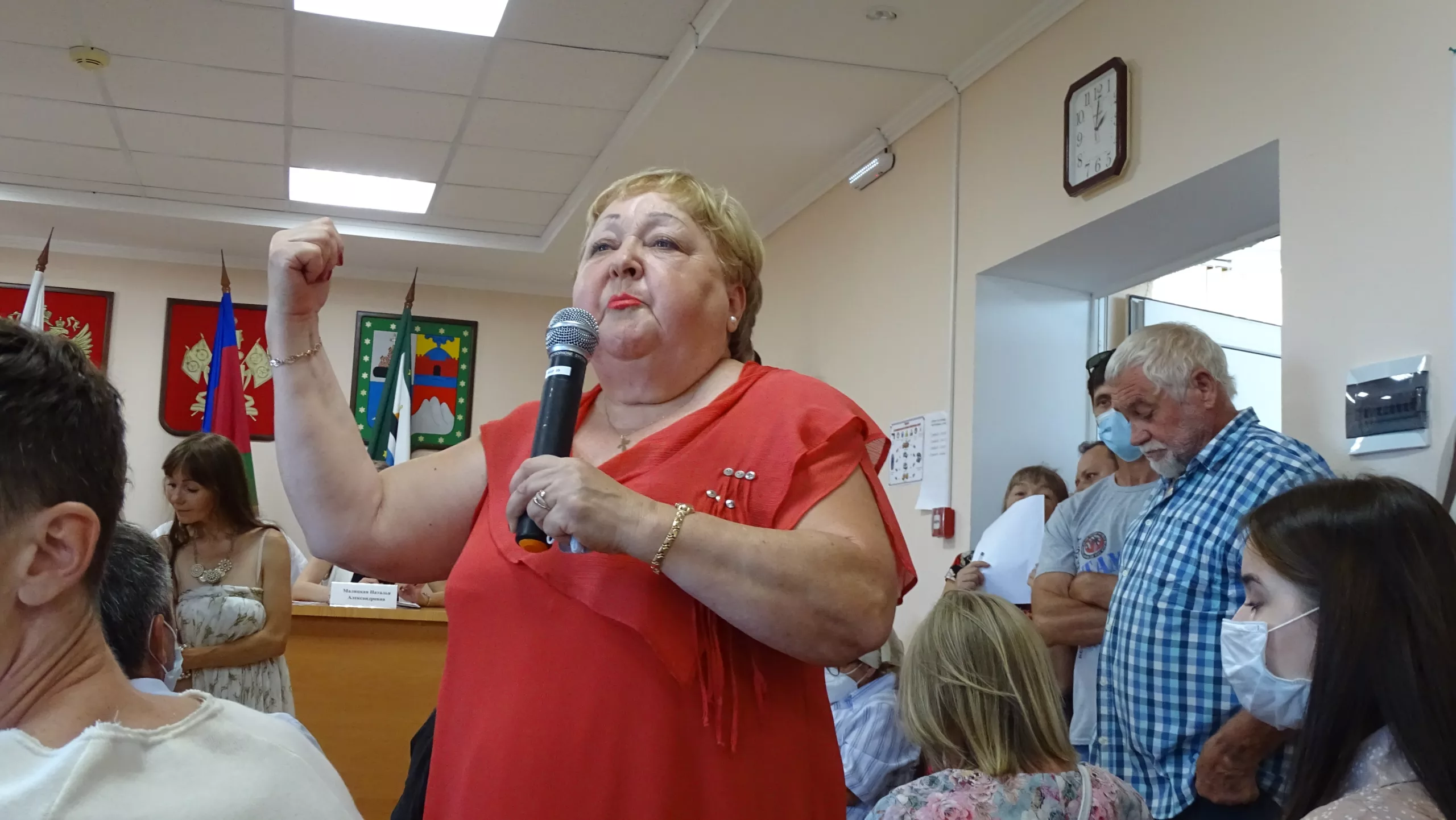
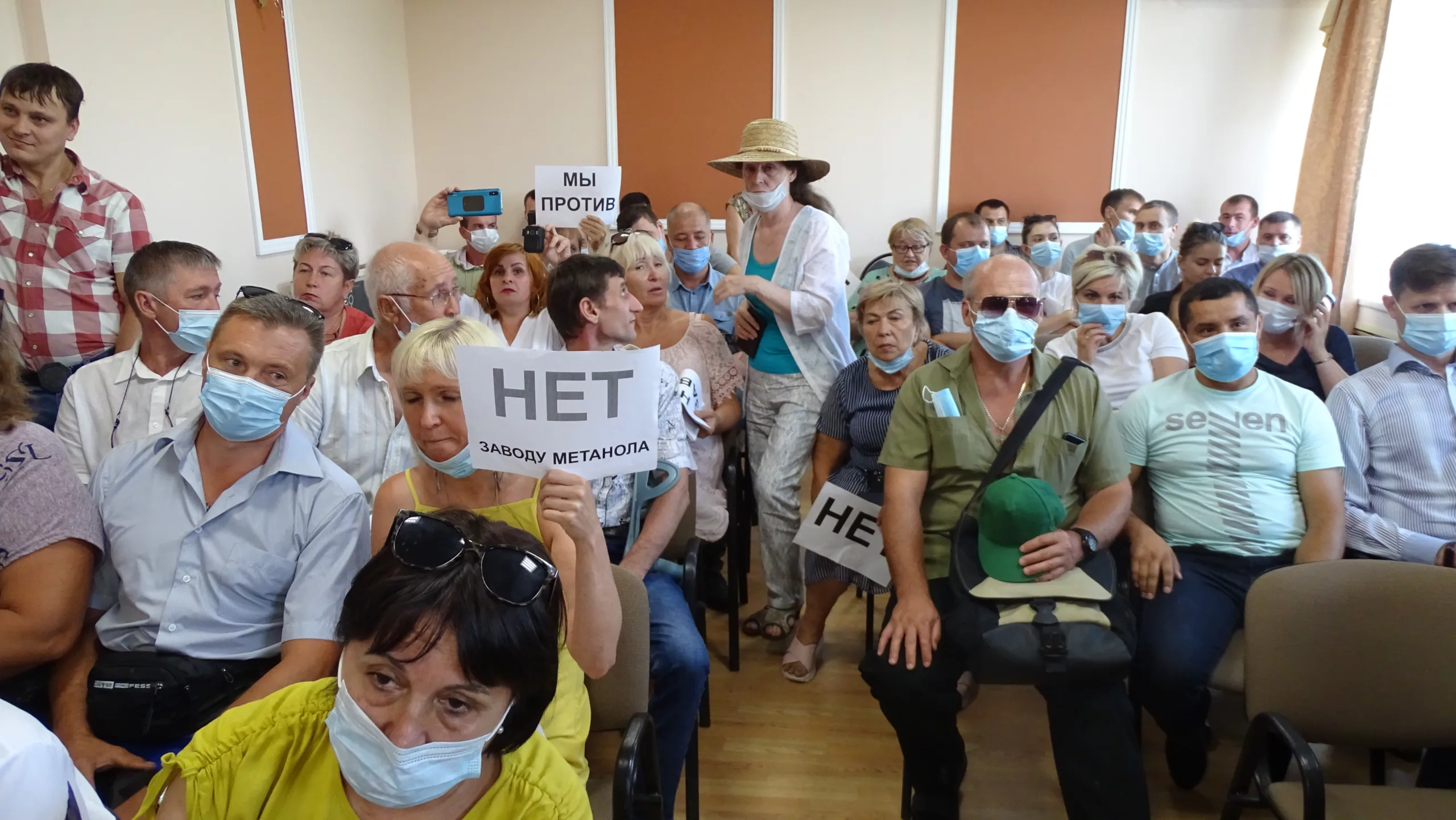
Residents of the Taman settlement also filed a class action lawsuit demanding that the district head's decree on holding hearings be declared illegal. The hearings were supposed to discuss the methanol and other plant projects, but the prosecutor's office found that the project didn't exist at the time.
A similar case of rigged results occurred at the hearings regarding the ammonia terminal. In both cases, the activists lost the court cases.
In addition to the lawsuits, the initiative group filed a petition for a local referendum, proposing to put to a vote by residents of the settlement the question of the permissibility of implementing the "Methanol, Ammonia, and Urea Plant Complex" project within the boundaries of the Taman rural settlement.
Local deputies considered the matter and decided that the proposed referendum question did not comply with federal and regional referendum legislation. The discrepancy was unclear. And now it will no longer be possible, since the page where the Council of Deputies' decision was posted no longer exists.
But the activists did not give up, and are now preparing materials for another referendum – one on banning the construction of first- and second-category hazard enterprises.
It will be the largest air polluter in the Black Sea region.
"The methanol plant—planned to produce 5 million tons of methanol per year—requires a large amount of fresh water. And Taman doesn't have any," says Dmitry Shevchenko, executive director of the Civil Initiative Against Environmental Crime. "It's a dry zone, and Crimea is right next door. Almost the entire Taman Peninsula relies on water from the neighboring region, and it's barely enough for household needs and for existing businesses. Therefore, the option of drawing seawater to cool the reactors where methanol synthesis occurs was considered. The hot wastewater is supposed to be discharged directly into the sea, at great depth. But Russian law doesn't even allow for the discharge of hot water directly into open water. Even nuclear power plants don't allow for this: they always build a cooling pond to discharge the hot water. So this project doesn't comply with current regulations at all."

Plus, the massive emissions of nitrogen oxide, nitrogen dioxide, and other pollutants into the atmosphere will make it the largest air polluter in the Black Sea region. Plus, there are potential leaks of toxic methanol during its transfer and loading onto tankers.
The ammonia terminal is a different story. They won't be producing ammonia, but transporting the finished product, so the impact will be somewhat different. But ammonia is also extremely hazardous.
According to Dmitry Shevchenko, while the declared annual ammonia transshipment volume is 5 million tons, the environmental impact assessment, judging by the documents, was conducted for a completely different volume—2 million tons. This could be a technical error or a fabrication.
"There have already been precedents where ammonia leaks on the Togliatti-Odesa pipeline, owned by Togliattiazot, have led to emergency situations. And in the Voronezh region in 2015, an entire village was nearly poisoned by ammonia," Dmitry continues. "Planned leaks are possible when transporting ammonia by rail. But how can we ensure the safety of people during open transhipment? And what about an emergency—an air strike, for example?"
A drone caused a fire.
On May 3, a drone attack in the Taman port caused a fire at a Tamanneftegaz oil tank. There were no casualties, but according to the Yasny Gorizont web service, the concentration of PM10 suspended particles (combustion products) in the air was seven times higher than the daily maximum permissible level and 2,5 times higher than the maximum one-time maximum permissible concentration. A few days later, another drone crashed into a local resident's garden.
And the residents sent Putin a letter with the following content:
“We, the residents of the Taman Peninsula, have repeatedly reported to all existing agencies (…) that the port of Taman poses a direct threat to Russia’s national security, including environmental and social ones. Such a number of explosive objects near the Crimean Bridge, in the Kerch Strait, on the Russian border, in close proximity to unfriendly countries poses a huge danger to the life and health of people (…). Today’s fire at the OTEKO oil terminal eloquently confirms this. We were all very lucky that the wind was calm this morning and smoke did not cover the villages, because the local authorities have no plans to notify the population and prevent major man-made disasters, including those with a possible partial or complete evacuation of the population. (…) There are no centralized alerts, no local operational decision-making center, no monitoring systems. (…) In addition, we are promised that very soon they will add an ammonia transshipment terminal for the TOAZ [Togliattiazot] company to the port. — Editor's note], completely disregarding the opinions of local residents, who are unanimously against yet another dangerous facility in the neighborhood. The public hearings were held in a formal manner, the documents were not provided to residents in full, and, furthermore, the project was not ready at the time of the hearings, and residents received no answers to their questions. Nevertheless, our authorities did everything possible to ensure the hearings were recognized as valid."
Kuban chooses ammonia
The methanol plant has actually presented a bit of a problem. The fact is that OTEKO's beneficiary, Michel Litvak, is a Belgian citizen, and his companies are registered in Cyprus, the Netherlands, and elsewhere in unfriendly climes. And after February 24, 2022, this circumstance played a role: construction of the methanol plant and other chemical plants was suspended. Whether this will continue for long is another matter.
But Uralchem's moment of glory has arrived: it has decided to revive an ammonia transshipment project on the Black Sea coast, which had been abandoned 20 years ago. Not only was the project considerably rusted, but it was also illegal—officially declared an illegal construction project by the prosecutor's office and the court, with 22 environmental, sanitary, and other violations.
But with the start of the war, the transportation of ammonia through the Tolyatti-Odessa pipeline stopped, and it was necessary to find an alternative.
And Kuban Governor Kondratyev, whose administration recently sued Uralchem's subsidiary, Togliattiazot, demanding the demolition of illegal buildings, signed a cooperation agreement with its CEO, Anatoly Shablinsky.
And the poor residents of Taman are now wondering what they'll be poisoned with next? Methanol with urea? Ammonia? Or all three—and fuel oil for dessert?
The editorial staff of NeMoskva sent inquiries to the management of OTEKO Group and Togliattiazot PJSC asking for comment on the situation.
The article uses investigative materials and photos from the ANO "Civil Initiative Against Environmental Crime."

