We, the SAAMI, and our name is not declined
"We have people who treat nature with care, like in Avatar."

Russia is home to two northern peoples who share a border: the Sami and the Inuit. The Sami live in four countries: Sweden, Norway, Finland, and the Kola Peninsula in Russia. Their population in Russia has remained under two thousand for many years. The Sami dislike being called Lapps, and their land, Lapland. This is because that's what the "newcomers" called them.

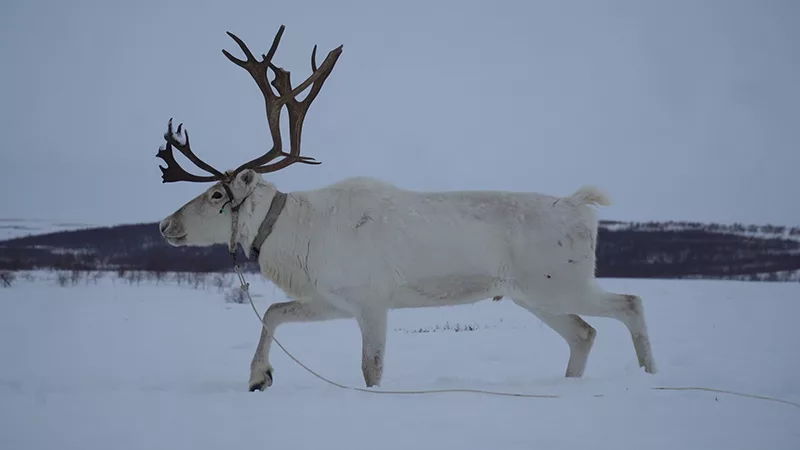
What do you feed him?
— Reindeer moss, birch and willow leaves, potato peelings, fireweed, mushrooms…
But you actually saved this deer from death?
— Yes, he had horseflies under his skin; we squeezed out over a hundred of them. You can see he still has scars. We gave him antibiotics for a month, applied ointments to the wounds. And he survived! True, he was a bit starved; he's a year old now, he should be taller. Well, that's what happened. They're supposed to have vaccinations in the fall, in September or October, when they count the reindeer (they count the reindeer in the fall). But this reindeer hadn't had any vaccinations. He was kept by summer residents, what we call new Russians. They came to us and asked: you're Sami, do you know how to handle reindeer? Can we give him to you, he's already dying. We used to have huge herds of reindeer, and now we have just one. We gave him Kuvaksa, a feeding trough, and now he's such a beauty, right, Mityaika.

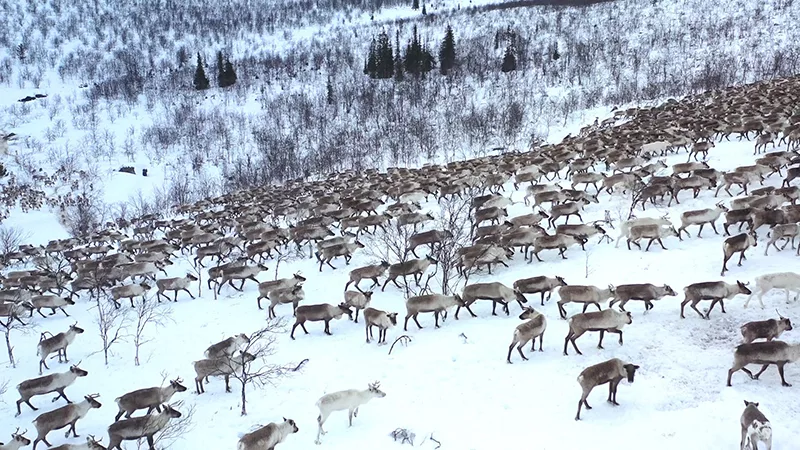
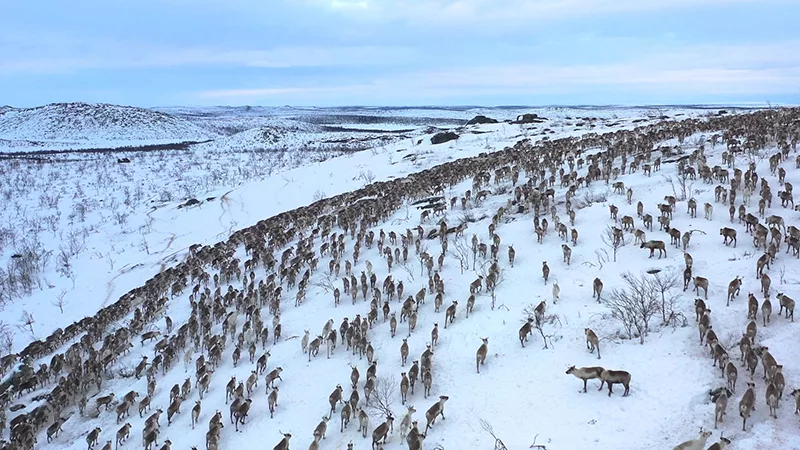
Elena, Nina, and Lidiya Sharshin are three sisters. They live in the small village of Loparskaya, 47 kilometers from Murmansk. The eldest, Elena, was born and raised in the tundra. Her parents and grandparents were reindeer herders. But now there are no reindeer in the Kola District. In the late 90s, support for reindeer herding ceased, and poaching flourished. By the early 2000s, the reindeer were almost completely eradicated. Now, their herds on the Kola Peninsula remain only in the Lovozero District. During the Great Patriotic War, there were more than 85 reindeer on the Kola Peninsula. Now, they barely reach 35.
"I lived in the tundra until I was sent to a boarding school," says Elena Tolstenko (Sharshina). "Back then, we were all torn away from our parents and sent to boarding schools to study. We were only brought home for school holidays. I was lucky; I lived with my grandmother, but I still really missed home, my mom and dad, and, most importantly, the freedom of the tundra. When I got a little older, from the age of 14, I went with the reindeer herders to settle accounts and calve. You see, the joint on my thumb is dislocated. It's called a reindeer herder's thumb. When you throw a lasso, the reindeer pulls it so hard that it dislocates the thumb."
We're standing on the bank of the Kola River. Conversation is difficult because of the noise around us. A railroad stretches across the river on the other bank, and freight trains pass by. And somewhere nearby, beyond the forest, heavy machinery rumbles. It's unexpectedly noisy in a place where I expected to see only forest, moss, a river, and a ringing silence.

That rumble—Novotek is building a road to Belokamenka. And Belokamenka is my mother's birthplace; now there are such factories there, such a village. Belokamenka used to be inhabited by what my grandmother called colonists: Norsemen, Finns, Swedes. And then there were us, the Russian Sami. My grandmother always grumbled, "You dress like colonists!" when we didn't wear our traditional clothes.
The village of Loparskoye used to be called MOS—the Murmansk Reindeer Herding Experimental Station. Now, only one kilometer-long street remains, and no more than a hundred people live here. But beautiful cottages grow along the river all around—home to the wealthier summer residents who could afford to buy land here.

Next to the dachas are two small houses and a kuvaxa—a Sami tent—where the Sharshina sisters come for weekends with their children and grandchildren and where they welcome guests. Recently, Sami women from Lovozero, Shonguy, and even St. Petersburg have arrived to visit. They came to socialize, gather roots in the forest, and learn how to make traditional Sami ointment. And they also came to learn the Sami language together. Many knew the language as children, but boarding school and the school's ban on speaking their native language took their toll.
"We've been through tough times, and now we have a small tribal community called 'Puaz' ('Reindeer' in Sami)," Elena says, lighting a fire in a kuvaksa. "There are no reindeer left, but we make traditional clothing, knit, and tan hides. Our pensions are small. I get 17600 rubles. Lida's is no more than 13 rubles. They say our pensions are so small because we were born in the wrong year. Although when I worked as the head of the breeding complex and the farm foreman, I earned a huge amount of money for those days. Now we earn what we can to survive. We just don't sing or dance."
My nephew works in reindeer herding. But he works in Finland. He's been working there since he was 18, and he's 31 now. He'd go back, but it's unlikely reindeer herding will be revived in the Kola region. Although our pastures are large and good, and the lichen is excellent. However, it's not up to us. I've suggested it many times: let's restore it. But no one wants to because it's too labor-intensive.

I'm surprised she uses sawdust briquettes instead of firewood for the stove. After all, there's forest all around. It turns out that using briquettes bought on Avito is much cheaper. One cubic meter of firewood here costs 6 rubles! Oatmeal for breakfast. Venison and elk soup for lunch. Elena's husband was Ukrainian. She picked up Ukrainian and Russian recipes from her mother-in-law, and taught her husband to eat raw meat, raw fish (stroganina), and cook Sami fish soup, which contains nothing but fish and rye flour.
The main food we had was meat and fish. We didn't have tomatoes or potatoes. We made everything with rye flour. But there was a military unit next door, and they would sometimes trade us meat and skins for their produce. I remember they gave us tomatoes, but we didn't eat them because they were sour. They brought a melon! You should have seen us eat that melon. Dad says: children, wait, I'll try it first. If I don't die, you'll eat it. He cuts it with a knife. He says to his wife: Lelya, give me some salt. No, it doesn't taste good with salt. Give me some bread—no, it doesn't taste good. Well, give me some sugar. It's probably supposed to be eaten with sugar. Now I know that the melon was just green.
And when we saw piglets for the first time in our lives! We laughed so much. Lida, our little sister, screamed: "Daddy, daddy, the soldiers' deer have escaped, and they have noses like these" (and she shows him her wide snout)! We ran out into the street, and there, indeed, were deer with noses like these. We'd never seen pigs before. That's how we lived. We were getting used to civilization. As they say, what the Russians do, we Lapps do too.
— And they say that the Sami don’t really like the word Lapps, because that’s what the newcomers called them.
"When I was a child, when I lived in boarding school, they called me Sampa the Lapp. Like a fairytale character. So, the name 'Lapp' doesn't grate on me. I'm used to it."
"And I confess, at first I tried to call you a 'Sami woman.' And then I was enlightened: the woman is Sami. And Sami doesn't decline."
“And they call me a little Samochka,” Natalya Samuseva joins the conversation.

Natalia lives in Lovozero. She only discovered she was Sami at age 16, when she was given a passport and birth certificate at the orphanage. Now, Natalia is discovering the history of her people, learning the Sami language, and even commissioned a traditional Sami poncho, a "luhkku."
When I came to Lovozero after the orphanage, I was looking for a job. No one would hire me. Then someone asked, "Want to work as a chum worker?" "Where your mother worked, that's where you'll be." I agreed. Even though I grew up in the city, I really liked it there. There was nothing there. No stores, no people, just reindeer herders, reindeer, and me. The work was simple: cooking, cleaning, stoking the stove...
I think I understand why you are here, you want to understand who the Sami are?
Yes, I'm interested in everything connected with this people. I'm discovering my own roots. For example, since childhood, I've loved everything bright and shiny. Like the beaded clothing of the Sami. It turns out I'm simply Sami... My mother abandoned all her children. I didn't ask why. I just wanted to get to know them all, my sisters and brothers. I only met my mother when I was 38. She's already passed away.

In the Sami language lesson, Natalia is the only one with no experience speaking or understanding Sami. The others have very similar stories.
I have two granddaughters, and I'm currently reclaiming the language. I want them to hear the same speech I heard from my grandmother. I understood the language until I was taken to boarding school. Since boarding school, I've lost my understanding of Sami. It's become a passive vocabulary.
I was born in Loparskaya and have lived here my whole life. My mother, father, and grandmother spoke only Sami to us. They spoke Sami to each other, but we only responded in Russian. Our mother died in 2006, and now we have no one to speak our native language with.
At home, everyone spoke Sami. They sent me to boarding school, and I didn't even speak Russian. They hit me in the mouth. And so, they discouraged me from speaking my native language.
I started learning Sami when I moved to Lovozero, having lived with Karelians before that. When I moved and started going haymaking with the kids, they all spoke Sami. We also spoke Sami at home, but in a way that prevented visitors from hearing Sami.
When I started school, I told my grandmother not to speak Sami: "Don't speak like that, or the policeman will come and take you away." I remember she sat down and cried, saying that even at home she couldn't speak Sami.
My mother was sent to boarding school as a child, and she didn't remember the Sami language. All I remember is that she could count to ten. I can too, but I confuse 8 and 10.
Gathered together for a Sami language lesson, recalling individual words and expressions, they also discover differences in pronunciation. The Sami language has four dialects, each with several subdialects. Everyone has a story from their childhood about being "lost in translation." One time, their grandmother was asked to bring a stool sample to the hospital for analysis. But she brought back a reindeer's forehead—"kal" in Sami. Or the time a mother-in-law, speaking one dialect, asked her daughter-in-law, speaking another, for a rag. But she brought back a live ram. And finally, a favorite joke among Sami is the word "very." In Russian, it sounds like the well-known three-letter word "х...й." "Very tasty," "very beautiful woman"... They reminisce and burst into laughter.

After the Sami lesson, the women move to the neighboring kuvaksa. There, Nadezhda Lyashenko (Fenina) talks about what her grandmother and mother taught her. Nadezhda is a noid (shaman). But as she herself says, among the Sami, every other noid was a noid. A noid is a person who simply knows how to hear and understand nature. Nadezhda teaches how to "charm" water, changing its quality. She also teaches which roots and plants to look for to brew a healing Sami ointment.
Listen to your instincts, turn to nature; it will lead you to the right stump and tell you where the juniper grows. If you trust nature, it will respond.
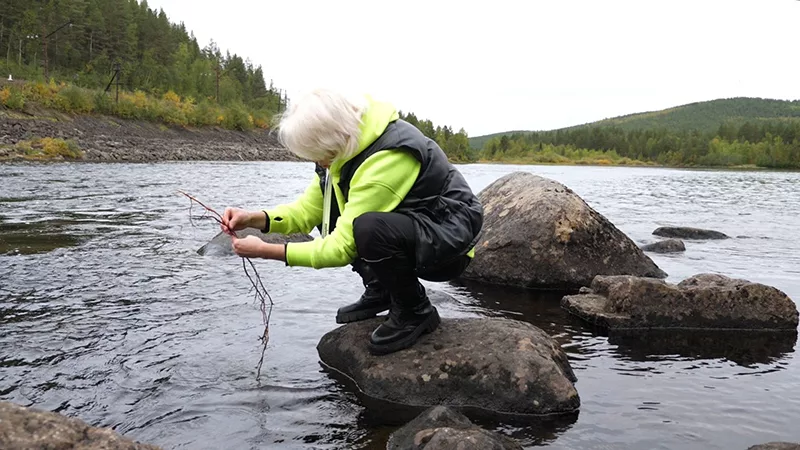
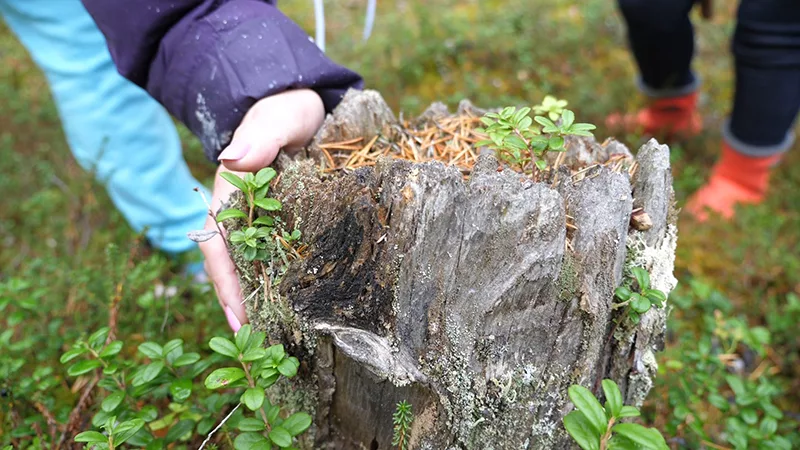
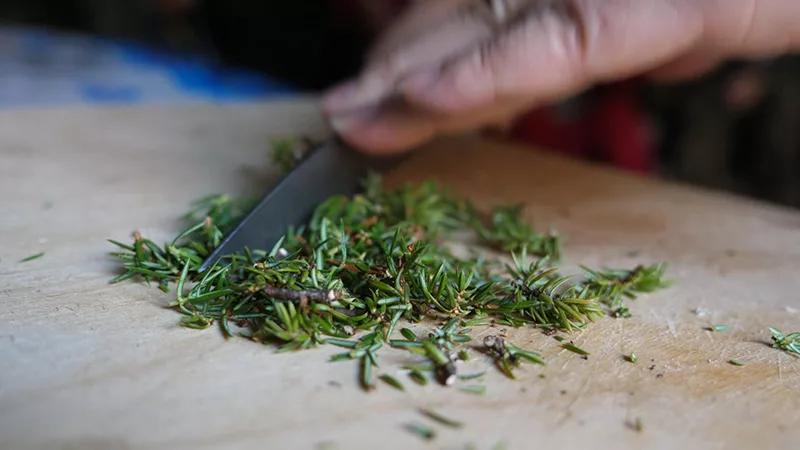
We go into the forest to collect the ingredients for the ointment: two small roots from an old pine stump, five juniper branches, and a handful of lichen. We don't need more. The Sami take from nature only what they need.


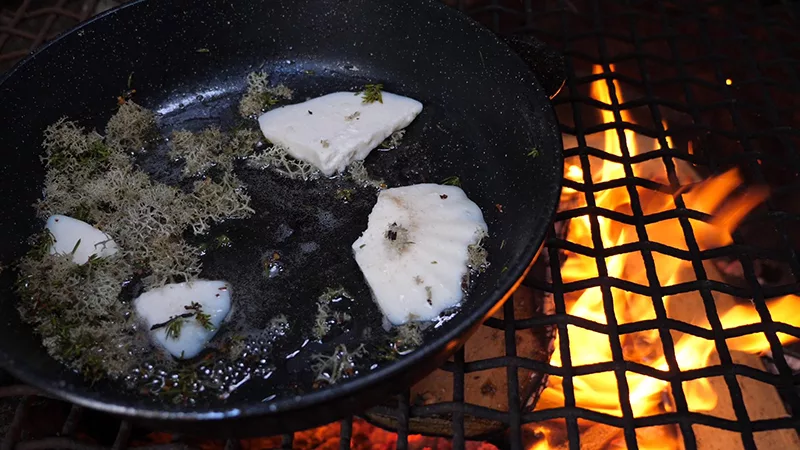
When my grandfather returned from World War I, completely wounded and unable to walk, my grandmother cured him with pine. She collected the layer under the bark, dried it, and made poultices with the fat. Our nature provides so much for our health. My great-grandmother lived to be 119 years old.

Nadezhda holds a helper in her hands—a "shuvva" (translated into Russian as "breeze"). The shuvva is a favorite instrument among the Sami. Unlike a drum, it's easy to transport. It's small and can be made from any board by threading two strings through it. You spin the shuvva in your hands, then stretch it and release it. The board spins, producing a "wind sound." Many Sami have played with the shuvva since childhood. The noid shuvva not only summons nature spirits but, according to Nadezhda, also scans a person.
I'm not a doctor, I just hear where people have problems. The sound from the shuvva resonates and changes. Where there are no problems, it passes through clearly; where there is a problem, the sound changes. I hear this and, if necessary, prompt the person to see a certain doctor. I do help in any way I can. Like my grandmother, I heal with tapping with sticks. A resonance is created and the pain goes away. Natasha will confirm this; she had a health problem that doctors couldn't solve for many years. I helped her and taught her how to deal with it herself.
Natalia now has her own swabs. But in the evenings, she lines up with people wanting to have Nadezhda tap her too. I get scanned with shuvva too—and they really do spot my ailments.

As a child, they called me Vorona Karkovna. They'd say, "You better keep quiet, or else it will be as you say." But sometimes they'd specifically call me: "Come and see if there's a fracture." I'd say, "Well, can't you see that the bones are broken?" Now I realize that few people saw it. But I did. My family tree has been reconstructed from the early 17th century using church records. But the church records don't record who did what. So whether I'm the first noid in my family or not—I don't know. But every second person in our family did it. There were no doctors. It was passed down from generation to generation, how to use nature, how to heal, how to stop bleeding. My great-grandmother could easily "whisper" blood. What is that? Shamanism? I can't call myself a noid, as I say, I'm studying this issue.
Tell me about your family. I know that your grandfather and his brothers were executed in 1937.
During Stalin's purges, all peoples suffered. My grandfather and his brothers were reindeer herders. Reindeer know no borders. Even now, Norwegian reindeer come to graze here, and our people make claims against the Norwegians. Reindeer go wherever there's good pasture. So they went to Finland to fetch their reindeer. And they were accused of some kind of espionage. They were arrested on August 8, 1937, and on August 24, in the Levashevskaya wasteland near St. Petersburg, they all executed. Eight people from the family. Later, when we looked up the documents, my mother kept complaining, asking why the old man was shot. But I look at the documents; he was 49 years old. He had just had a son. And not only were they all taken away, leaving their families without breadwinners, but their wives and children were also evicted from their home on Zapadnaya Litsa. They were taken away in December, without being allowed to gather anything. My mother told me they had sleeping bags made of reindeer skins. They'd dig a hole in the snow and wrap themselves in the skin. They'd stick a ferret stick in it so they could be found when the snow covered them. And they'd tell the NKVD men, "Just don't forget us." And that's how they got to Shonguy. My grandmother's sister lived in Shonguy. So I live in Shonguy.

The next day, the traditional 26th Sami Games were to be held in the village of Loparskaya. The Sharshina sisters were also preparing for them. However, this year they refused to cook the fish soup. Previously, up to 700 guests would come. Now there are fewer, but it's still difficult. The sisters continue to volunteer in organizing the celebration. However, they admit that since the administration took over the Sami Games, they have changed significantly.
For the first 25 years, we cooked fish soup. We organized it all, built a stage. Everything was different back then. The district started organizing the festival in its own way, and it became less Sami. And we gave up. There's nothing left of the Sami Games. We should just call the festival "Games in Loparskaya" and that's it. Although, thanks to the festival, over the years, people have at least learned that we exist. People come up to me and ask, "Are you Sami? Did you live in kuvaks?" And yesterday my granddaughter says, "Where's my Sami costume, and where's my hat?" I say, "In the museum." All our clothes are in the museum.


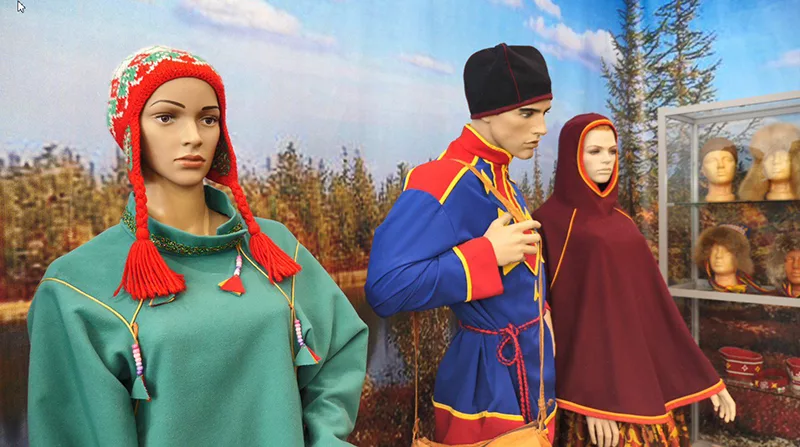
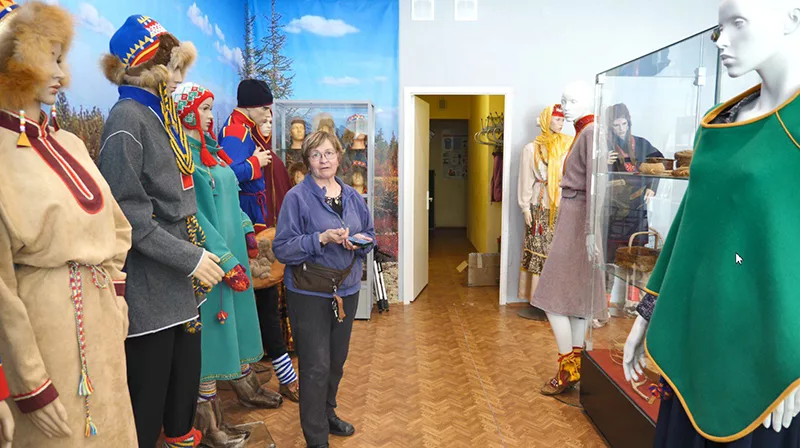
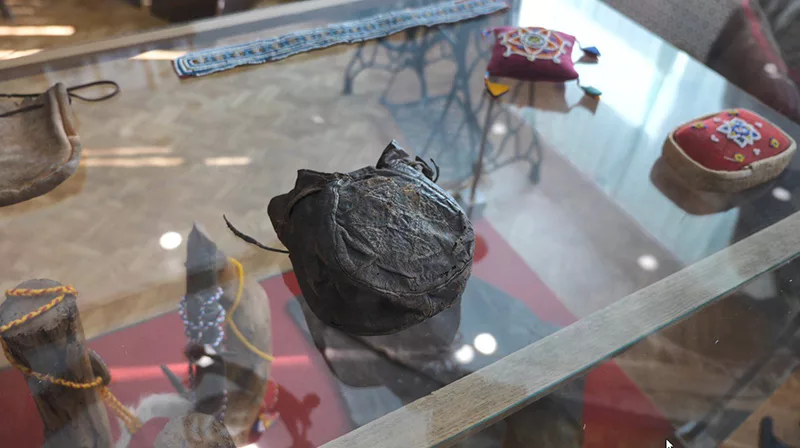
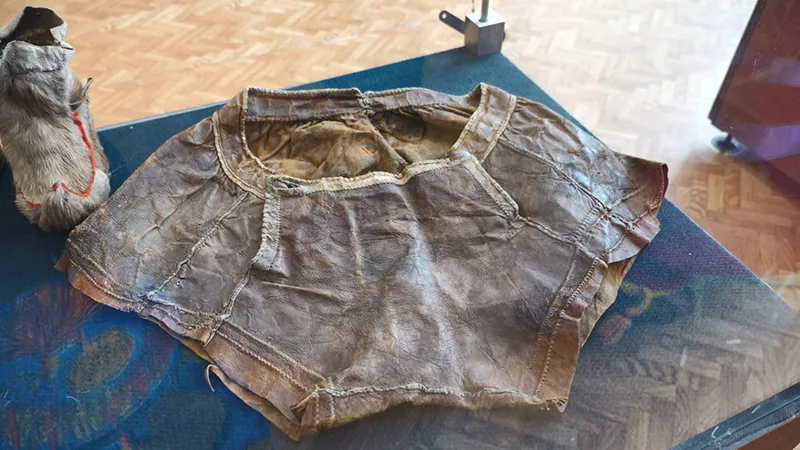
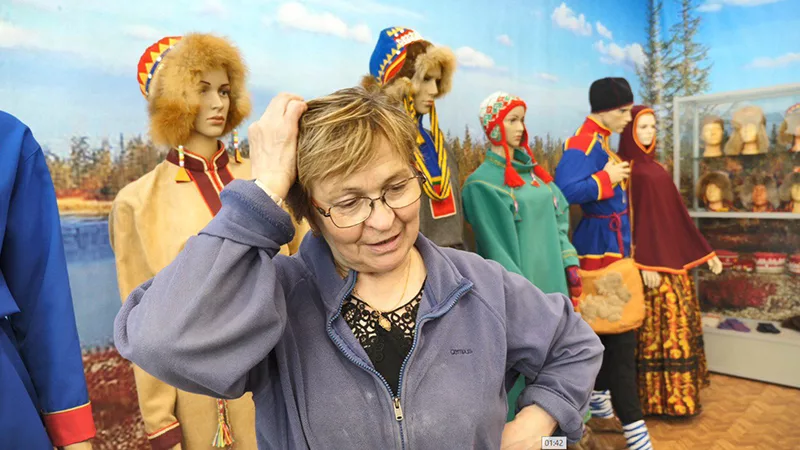
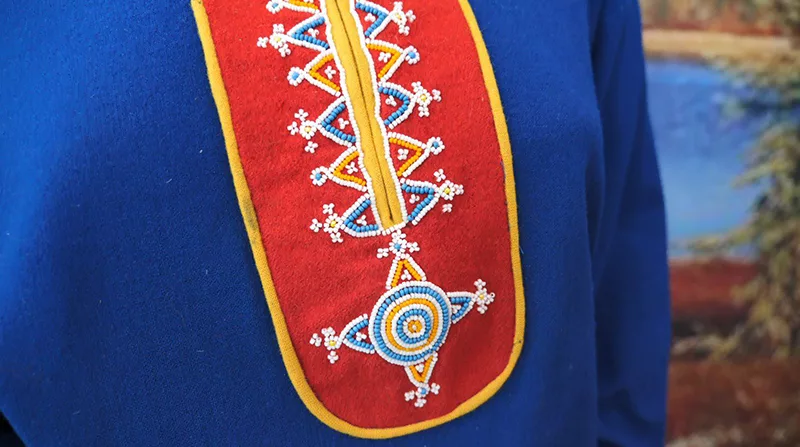
The museum is a room in the local Community Center. It was created by the Sharshina sisters from clothing and household items belonging to their family. Lida shows off some of her own sewing—clothes belonging to both her and her son. She also talks about her new hobby. She's almost completely given up sewing with reindeer skin. But now she makes items from fish skin: salmon, pike, eel… Fish skin makes equally strong and beautiful items.

I brought this eel skin from Norway,” Lidiya Bolshunova (Sharshina) shows off belts made from eel for herself and her son. “My son lives and works in Finland. I always dream of visiting him. I used to go often. It’s not far, after all. 353 kilometers from my porch to his porch. I’d jump in the car and be there when I had a visa. But now we don’t have visa centers in Murmansk or St. Petersburg. And it’s unclear where to get a visa. We used to travel often. To various gatherings, exhibitions, and sales. The Sami people live in four countries: Russia, Sweden, Norway, and Finland. My son got a residence permit and a work visa there, and I have the right to visit him.
Wouldn't he like to work with reindeer in Russia?
He would really like to, but there are no deer here.

Reindeer are truly a curiosity in the Kola region now. Previously, there were many at the festival, but now two have been brought so that the children can see them in person. Traditional games have been modernized. They throw lassos at fake reindeer, and jump over wooden boxes instead of sleds. The judge of the "can fishing" competition couldn't explain why the Sami fished with a tin can. He suggested it was to preserve nature and avoid breaking branches for the fishing rod.

We have peoples who treat nature with care, like in Avatar.
Incidentally, with some skill, you can actually use an empty tin can instead of a spinning rod. But fishing is prohibited in these parts. Surprisingly, the river exists, but there are no fishermen. Fishing is basically prohibited in the Loparskaya River.
"There's a catch-and-release law. This is spawning grounds," explains Valentina Sovkina. "In other places, you can fish for food. It's a requirement to submit a claim, if you're an indigenous person. But usually, they can assign you a plot of land where there aren't any fish. And now the rules have changed. Before, we could give our quota to commercial fishermen, and they'd bring us either fish or money. Now, the recipient of the quota must be present in person during the fishing trip. So, your husband can't fish without you if you have the quota. You can use a rod and line, but not salmon or salmon. Pike, for example. And for salmon, even with a spinning rod and line, you need a license."

Valentina Sovkina is a member of the UN Permanent Forum on Indigenous Populations. She is a Sami and a patriot of her land and her people. Her husband is also Sami, but Norwegian. Valentina lives in Lovozero, the only place on the Kola Peninsula where reindeer herds still exist. But, as she says, the circle is tightening.
For many indigenous peoples, land is their most important asset. Without land, everything disappears: language and culture. Defending your land is becoming increasingly difficult. And you can't explain to a reindeer why it can't return to its birthplace as usual. Today, the Lovozero District is the only area where reindeer graze. Two agricultural cooperatives, "Tundra" and "Olenevod," operate. Lovozero is the center of the Kola Peninsula and the largest grazing area. However, this area has recently become a lucrative target for industrial companies. Three companies have come to us in the last couple of years: Rosatom, Norilsk Nickel, and Fedorovo Resources. They plan to mine loparite, gold, and platinum. Approval and geological exploration are still underway. Natural resources are certainly needed, but I wonder: what will be left? The flora and fauna here have been untouched for centuries, and that's why they've survived.
We once wanted to create our own Sami Parliament to protect our rights and territories. But we were told that we don't have parliaments based on ethnicity, like in Finland, Norway, or Sweden. And who's stopping us from doing this? There's nothing seditious about it. Especially since the Russian Constitution states that peoples have the right to self-determination. They tell me there's no need to complain. If you complain, they won't give us anything at all. There are only 1,500 of us, but we can't even agree among ourselves because we're being controlled and manipulated.

Things have gotten easier for us now; we Sami are now kind of a specialty of the Kola Peninsula. But look at all we've been through! We had a good herd. We could live. But we were literally bankrupted. What haven't we been fined for? For a reindeer eating leaves, for someone taking a dump, for someone drinking tea, for leaving a fire pit in the forest. Condoms were left behind. Once we were fined for planting black currants. For planting potatoes. Why did you plant potatoes there? You lease that land, you have no right. We were punished for everything. They gave us a plot of land closer to the road, which made it more convenient, and we moved our reindeer there, a hundred of them. But then some law-abiding citizens filed a complaint against me for blocking the Murmansk-Lotta road. A criminal case was opened against me. Investigators came to investigate. Well, where did I block the road? They probably needed to build dachas here by the water. And they also wrote that I starve the reindeer, don't buy food, and they run around the forest and tundra and eat themselves. Well, that's how a reindeer should eat!
But the final blow was another fine of almost half a million rubles, for the fact that the project called for us to install a fence, cut posts, and stretch netting. But I decided why cut down the forest? I'd just stretch netting over the trees with small 2-centimeter staples and be done with it. But I was fined 465 rubles for supposedly ruining the trees. This was the 90s, a huge amount of money in those days.
So those trees survived?
They're still growing. What can happen to them? They're just staples. Well, the goal was simply to bankrupt us. It's better for the Sami to dance and sing than to do anything.
They shot the reindeer, even the reindeer herders. We were just in someone's way. They put us back at the very bottom, and we're climbing back up again. It's true, it's easier now; you can even get a subsidy. But I'm too old to fully climb back up.
I ask Elena: what about the children? Don't they want to take up their cause, the family community? "I didn't come to this conclusion right away either."