
FIND A JEW. About how Mountain Jews are living in Dagestan these days.

We decided to visit the Dagestani Jews back in the summer. It was simply interesting to learn about the life of the Jewish community in Derbent. It's small today, but it has a long history. Those who remained recently built a synagogue. And those who left literally "pray" to David Davydov, the caretaker of the old Jewish cemetery. Without him, who would care for the graves of their ancestors?
David Abramovich agreed to an interview only on the condition that the local rabbi approve. In this regard, the Jewish community of Derbent has a strict vertical power structure, especially after what happened in October.
The war in the Middle East has had repercussions in the Caucasus. instantly. It flared up from the very first days. In Nalchik, a Jewish center was set on fire. In Makhachkala, a search for non-existent Jewish "refugees" was organized. pogrom at the airport. Wave anti-Semitic sentiments In Dagestan, Jews were "locked" in their homes. An unofficial order was issued not to communicate with journalists.

However, the interview for the film had been arranged long before the recent events. The go-ahead for filming was secured upon arrival in Derbent, but under the condition: "no politics." However, a simple conversation about life occasionally led our characters to a sore point. They spoke little, then caught themselves, then fell silent. It's understandable...
Cemetery caretaker

"Peace and prosperity to Dagestan. Glory to Putin, glory to Russia!" cemetery caretaker David Davydov chants, half-whispering like a mantra. We walk to his parents' grave. Along the way, we meet a cemetery employee, already out with a broom this morning. He's not a member of the Jewish community, just a hired hand.
"I have several people working in my team. I'm the only one who's Jewish. The rest are Azerbaijanis, a Tabasaran. People work to feed their families. And in general, we all live together here. We celebrate holidays together, have tea with each other. The people here in Dagestan are so hospitable; no matter who you visit, they'll set a table for you, hug you, and talk to you as if they were your parents."
Next to his parents' grave, David points to an empty spot. He says the place has been prepared for him. He says he never planned to leave Derbent; this is his homeland, he's lived here his whole life, and he'll die here.
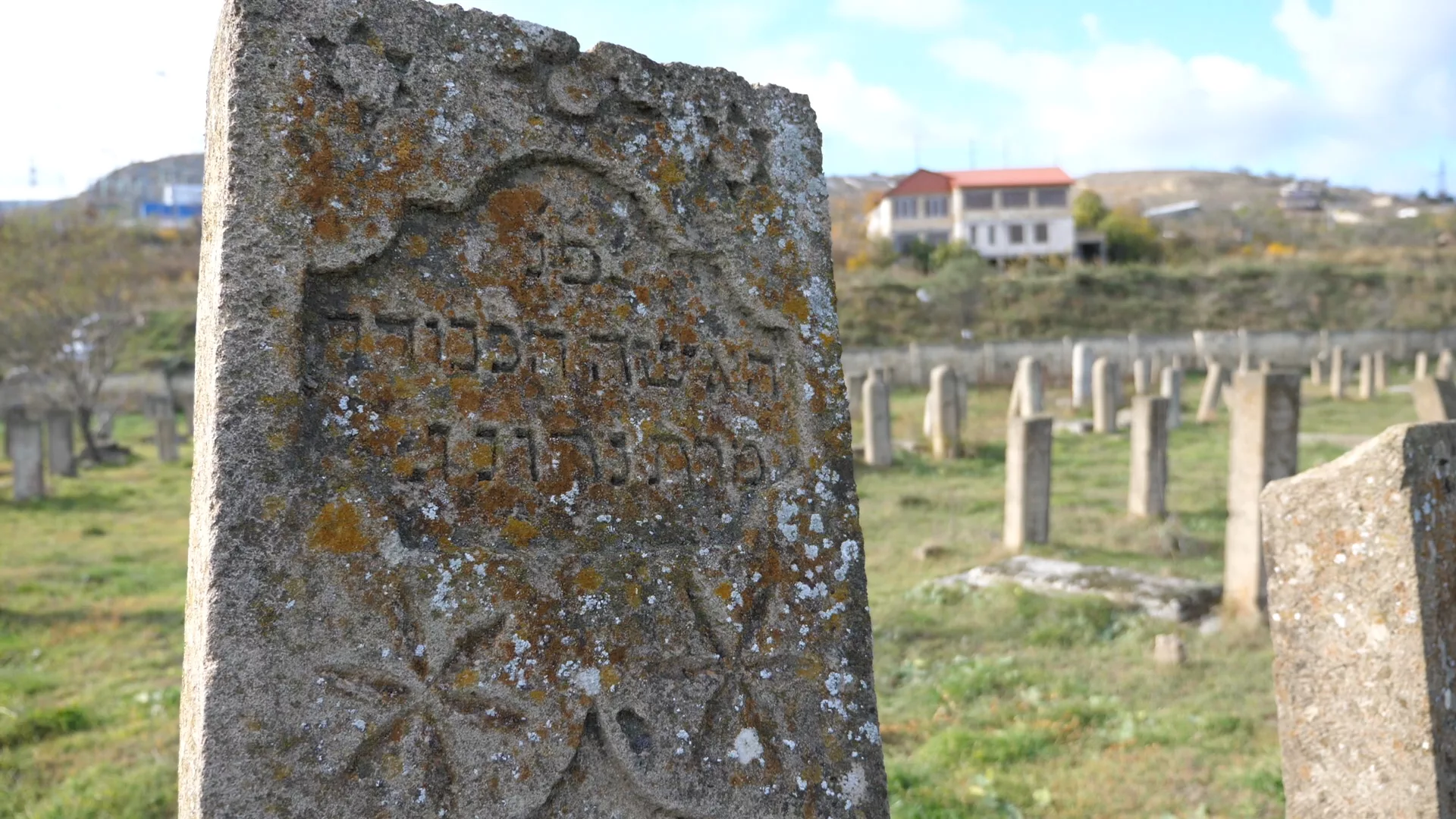
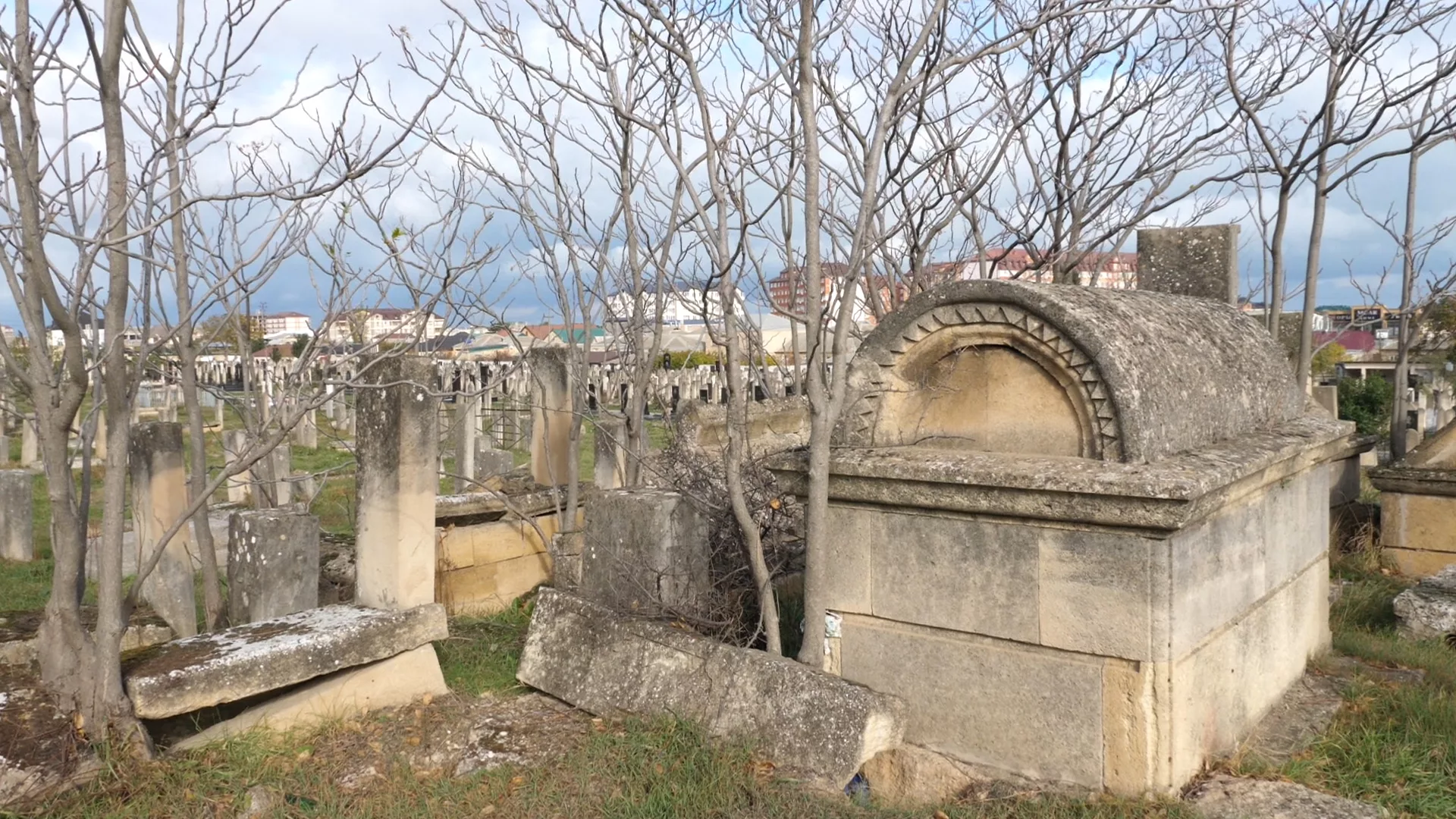
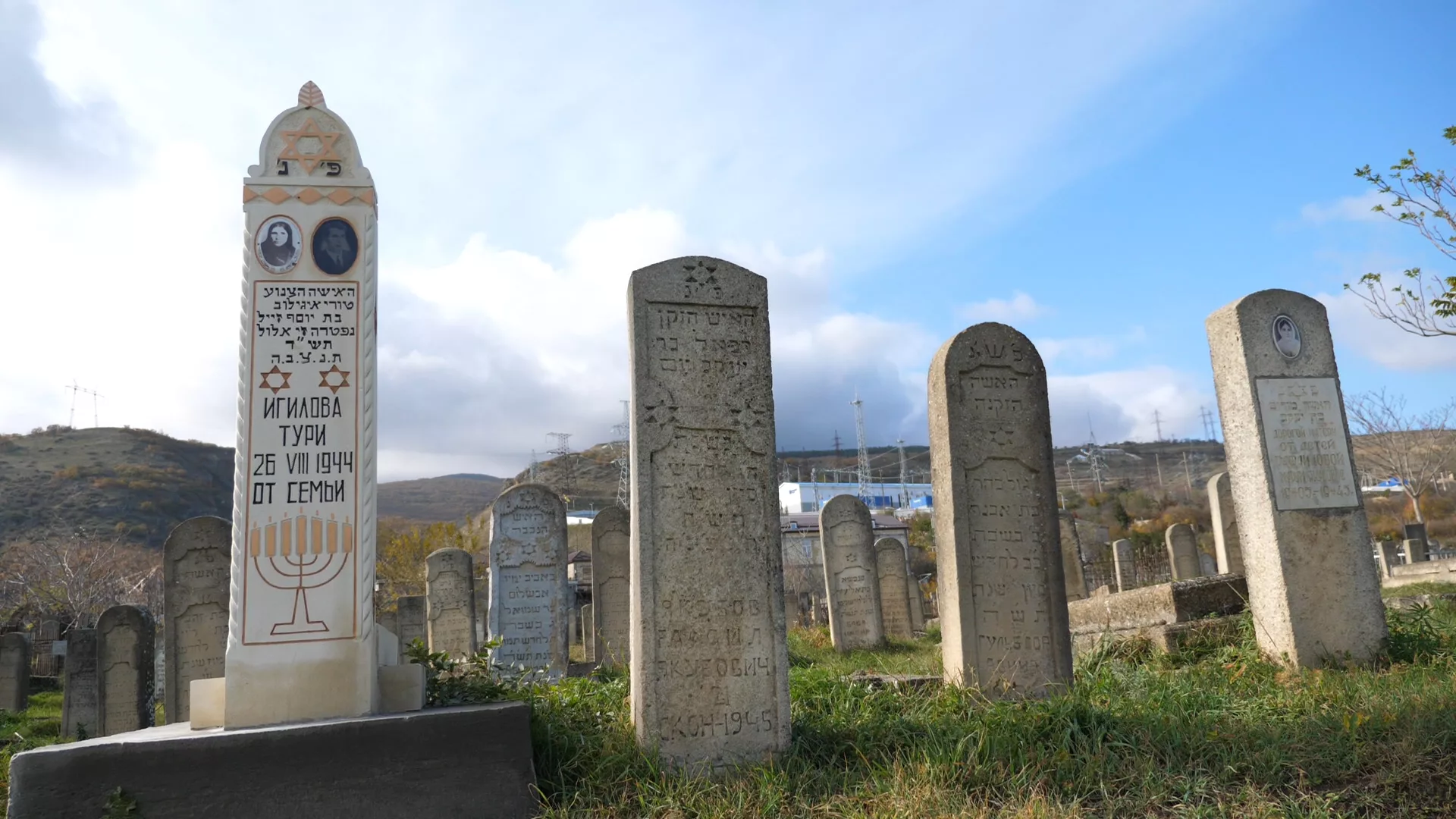
I've been in the synagogue for 42 years. For 17 of those, I was the chairman of the Jewish community. But my mission turned out to be so overwhelming that people started leaving, each in their own direction. May God grant health to everyone, of course! And I fulfill this mission before God, before people, and before the dead. I clean up the cemetery. Relatives call, inquire about the condition of the graves, donate money, and we restore headstones if they've fallen into disrepair. More than 25,000 people are buried here, and this cemetery covers over 100,000 square meters.
So, thank you to all the sponsors. It makes no difference whether he's Jewish, Dargin, Azerbaijani, Tabasaran, Avar, or Lezgin. Thank you to everyone who helps! It's not just Jews buried here. There were mixed marriages, too. And the families want to be buried next to each other.
Jews left en masse in 1972, when the government allowed them to leave the USSR. Then they left after perestroika, then after the start of the Soviet Military Revolution. Did you ever want to leave?
"Believe me, in my 67 years, I've never been to Israel. I had a golden invitation to go to the conference. A golden invitation! I thought about it and said to myself: David, you're from Derbent, you're from Dagestan, they'll hold a conference there without you. And I didn't go. It doesn't seem to me that I should go anywhere... You see the mountains, the Jews came down here. This cemetery is 240 years old. If you go 12 kilometers up, the graves are 380 years old, and if you go even further, they're a thousand years old. Jews lived on this hospitable land of Dagestan for thousands of years.



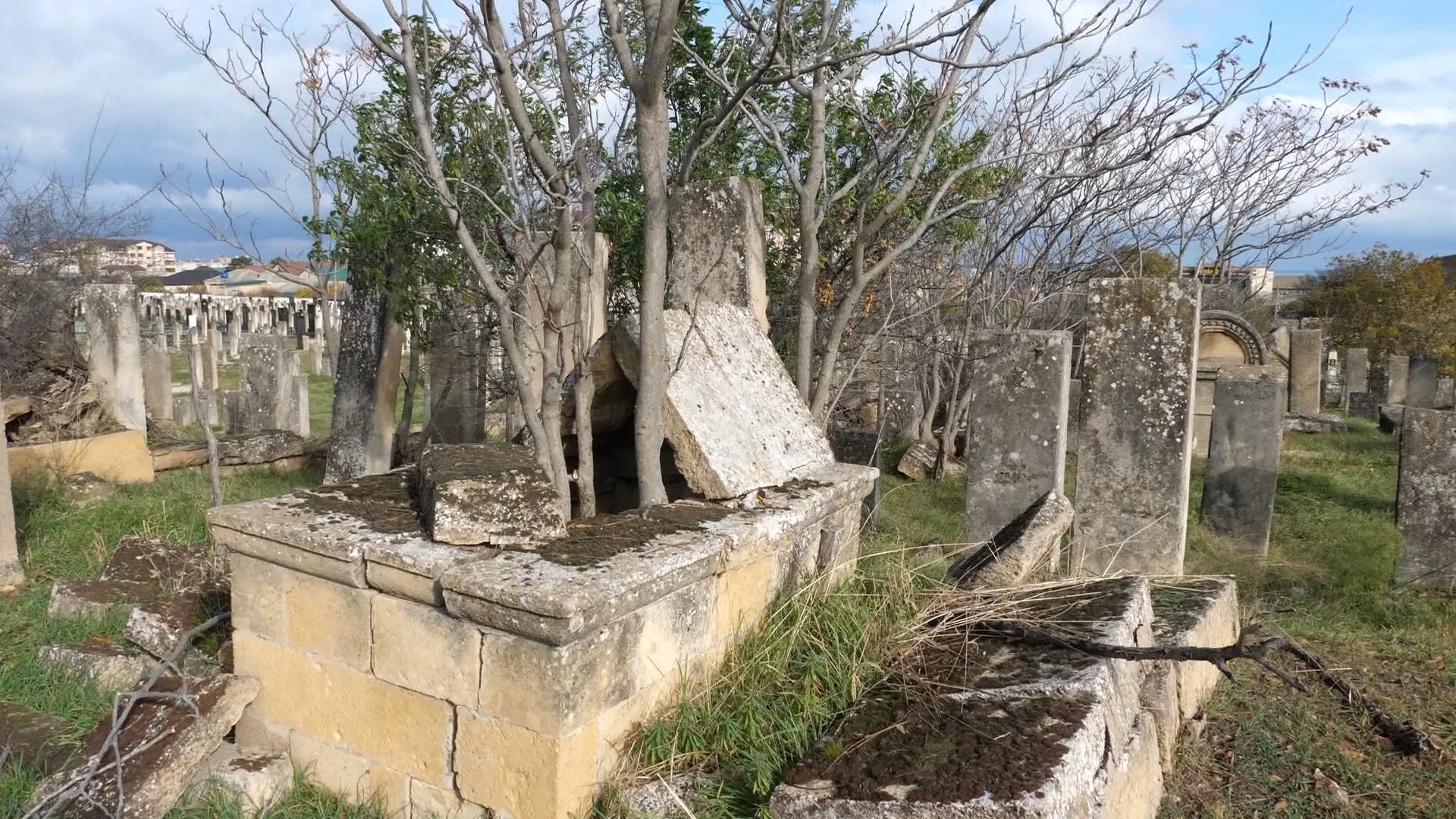
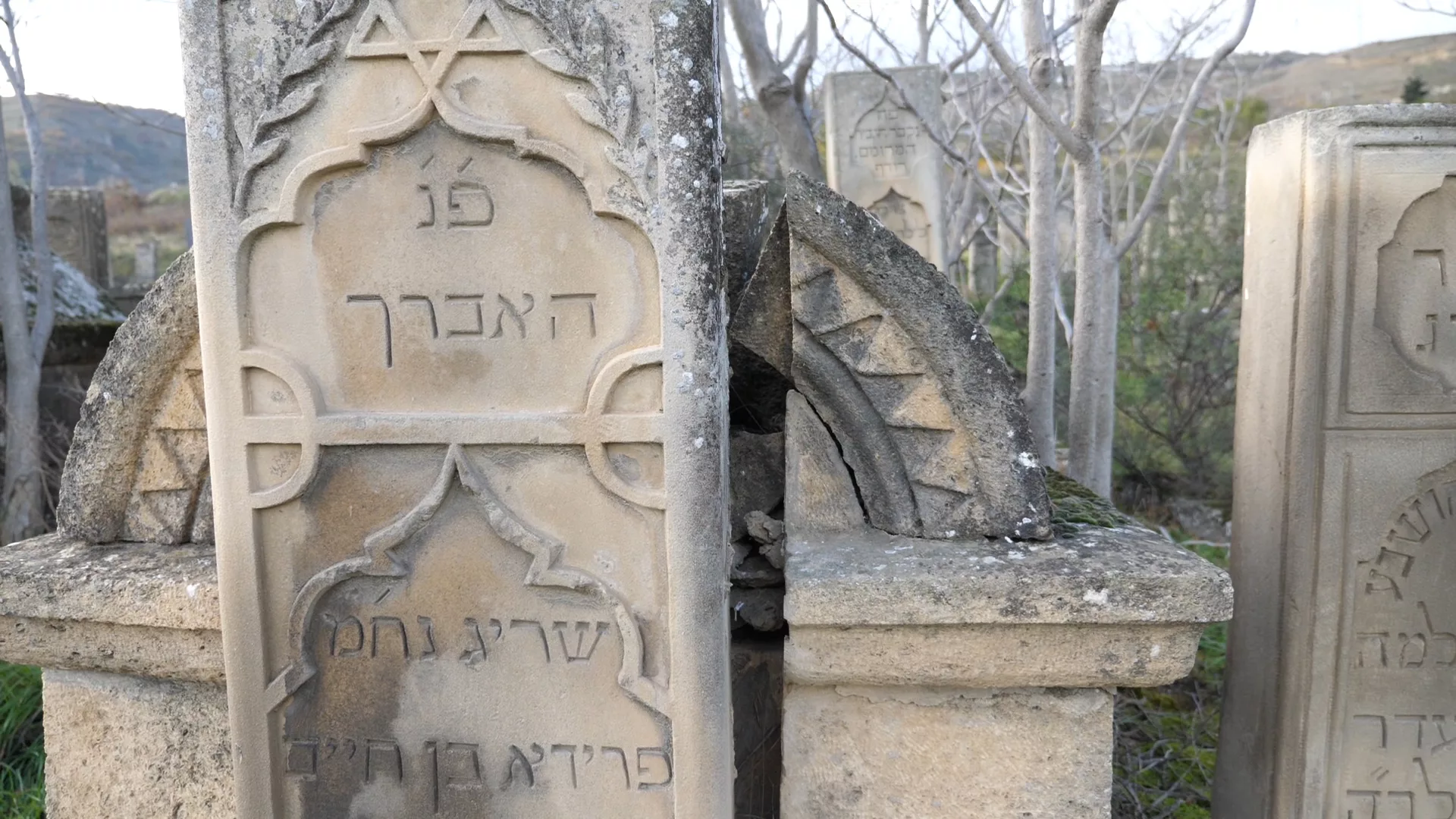
There is a theory that Jews lived in the Caucasus as early as ancient times. Linguistic evidence suggests they appeared here no later than the 5th-6th centuries CE. According to renowned Russian historian Mikhail Artamonov, the Jewish community in Derbent was initially formed by Mazdakite Jews expelled from Iran by Shah Khosrow I (531-579) after the defeat of the Mazdakite movement. Jews migrated from Iran and Mesopotamia, lived among the local population, and adopted the Tat language (related to Farsi). A decisive role in the development of the medieval Jewish community in Derbent was played by the Radhonites ("those who know the way" - Persian), Jewish merchants who controlled trade between West and East along the Great Silk Road during the 7th-10th centuries. It was presumably under the influence of the Radhonites that Derbent converted to Judaism in the early 9th century. Medieval Khazaria. Besides Derbent, important centers of their trade included the Khazar capital Itil and Kyiv. The Rahdonites are credited with introducing Arabic (Indian) numerals and Chinese paper to Europeans. Derbent is mentioned in the so-called "Jewish-Khazar correspondence" (mid-10th century), a crucial source on the history of medieval Jewry.

Derbent was, indeed, for a time, a very Jewish city. Mountain Jews made up at least a third of its population. There were 35,000 of them in Derbent before 1972. There are currently no precise figures, as "Jews don't count their own." Estimates range from 300 to a maximum of 1,500. Recently, this community has shrunk even further. Several people left after the pogrom at the Makhachkala airport. Where, and for how long? It's unknown.

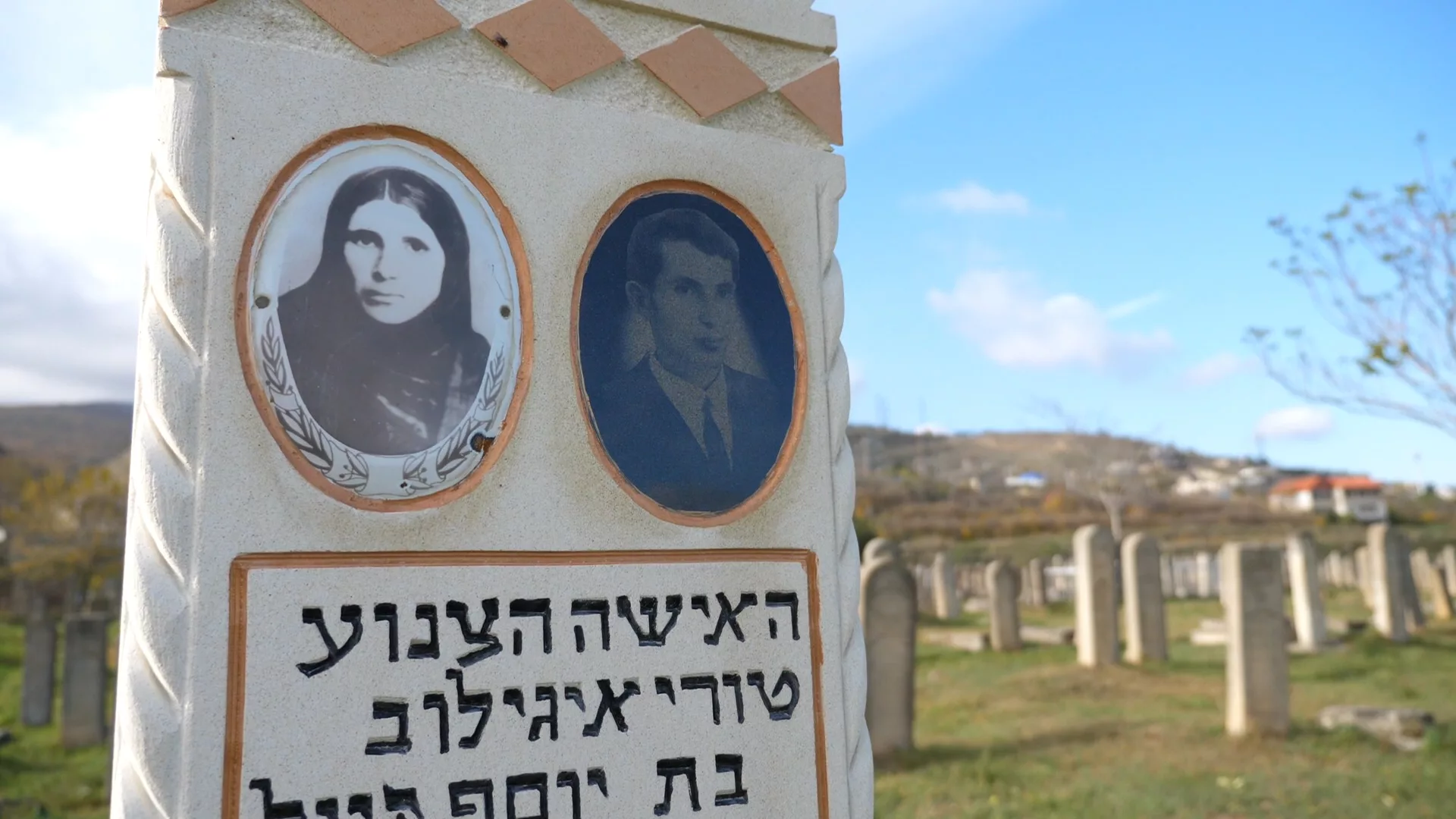
In two days, David will bury an elderly woman at the cemetery. Almost the entire Jewish community will gather for the funeral. The new graves stand out among the old ones. Nowadays, black polished stone is increasingly used. The only thing the old and new graves have in common is the Hebrew inscriptions on the stones. Where there is no Russian translation, David is at a loss—he can't read who is buried there or when. He doesn't know Hebrew. And Juhuri, the language of the Mountain Jews, is not written here in the cemetery.
The Jewish dialect of the Tat language, Juuri, developed in the same way as other Jewish languages, such as Yiddish, Ladino, and others. Jews adapted the language of their neighbors in their own way. Juuri is close to Tat, but not identical, just as Yiddish is not identical to German. Juuri has used various scripts at different times: the Hebrew alphabet, the Latin alphabet, and the Cyrillic alphabet. Most of its speakers now live in Israel, and the language is included in UNESCO's "Atlas of Endangered Languages."

Theater director
The Jews of Derbent have their own theater. In Soviet times, it was called the Tat Theater, then the Mountain Jewish Theater. In September of this year, the terms were combined. Now it is called the Tat (Mountain Jewish) Municipal Theater. And the word "municipal" is no less important here than the theater's self-designation.
The Tats, whom modern anthropologists, ethnographers, and historians recognize as a people distinct from the Mountain Jews, if only because the majority of them are Muslim, are recognized in Dagestan as one of the 14 titular nations. But the Mountain Jews are not. This means that a municipally funded Mountain Jewish theater simply cannot exist. They are not a titular nation, to spend public money on.

Along with the name change, the theater was named after Lev Yakovlevich Manakhimov, the father of the once-popular Russian singer Jasmine. Yes, Jasmine is a Mountain Jew, her name is Sarah, and Jasmine is merely her stage name.
"My background is in economics, far removed from theater. But after Lev Yakovlevich's death in 2021, I, as a representative of the Mountain Jewish Tat people, was offered the chance to head it," the theater's director, Boris Yudayev, and I were sitting in his office. A portrait of Lev Manakhimov hung on the wall.

Scientists write that the Tats and Mountain Jews are, after all, two different peoples...
— I don't know much about it, but they say that Mountain Jews used to register as Tatami for one reason or another, so as not to write "Jew." As if there wasn't always a place for Jews in certain organizations or higher education institutions. I don't know. My parents' passports listed my father as a Mountain Jew, and my mother as a Tat. We have a village called Dzhalgan, about five kilometers from Derbent, where the Tats live. They speak an Iranian-speaking language, like the Tajiks and Afghans, and our language (juuri—ed.) is really similar.
Does the closeness of the language group mean that the speakers of these languages are one people? The Tats are generally Muslims.
"But there were also Tats—Jews. That's how it works. And Vladimir Vladimirovich also said on television that Tats have lived in Dagestan for centuries, emphasizing that Tats are Mountain Jews. If the president said that, how can we comment on whether it's right or wrong? I believe that Tats and Mountain Jews are one and the same."
But if there was a fifth column in your passport now, how would you write yourself down?
Well, if you asked me, I'd write "Mountain Jew." What difference does it make? How does it change the essence of relationships between people? They can call me whatever they want, even Yakut. I generally believe that there are no nations in Derbent. We're all called Derbentians. That's it, and that's it. There were forty-two people in our class, and the question of your nationality never arose. I have a close friend, a classmate of mine, who's an Avar. I text him today, look (shows the phone conversation), "Salam aleikum!" And he texts me back, "Shalom!" I congratulate him on Muslim holidays, and he calls me on Friday and says, "Didn't I call you, Boris, before Shabbat, before the candles were lit?" I say with a laugh, "Yes, Marat, I can still drive and talk on the phone." I'm not really a big fan of these rules.
The term "Tats" is a collective term for the predominantly Iranian-speaking population of the Eastern Caucasus and, to some extent, Transcaucasia. This population was engaged in agriculture and, in the Middle Ages, was typically dependent on Turkic-speaking feudal lords. A significant portion of the people who spoke Tat dialects professed Islam. There were also some Tats who professed Christianity. The Mountain Jews who lived near the Tats partially assimilated the local way of life, customs, and language. They lived in accordance with the adat (traditional customs) and were integrated into the kunachestvo system.

By the 18th and 19th centuries, most of them were engaged in agricultural labor. They maintained the Jewish faith, but services in Caucasian synagogues differed in many ways from those in Ashkenazi synagogues. The very term "Mountain Jews" is the result of legislation by officials of the Russian Empire, which classified the Jews of the Caucasus as mountain peoples, extending to them the laws governing mountain peoples rather than the laws governing Jews in other parts of the empire. Subsequently, the term "Mountain Jews" became an ethnonym. In the 1926 Soviet census, Mountain Jews were counted as a distinct people. However, as early as the 1930s, official documents began referring to Mountain Jews as Tats. Since the Tats were considered the titular peoples of the Caucasus, Mountain Jews subsequently often preferred to be called Tats themselves, which created significant advantages for those seeking careers in the Soviet government.

Marat, an Avar, speaks of the devil. He pops in during the interview to greet his friend. He tells me, "Boris and I have been friends since school, forty years, understand each other very well, help each other out when needed." Because we're from Derbent.
"As Rasul Gamzatov, our great poet," Boris Yudayev continues, "said: 'In Dagestan I am an Avar, in Russia I am a Dagestani, and outside Russia I am a Russian.' We just staged a production at our Mountain Jewish Theatre dedicated to the Avar poet Rasul Gamzatov, and our director is from Tabasar. And among the actors there is a whole cast."

Onstage Rehearsal. They're staging a children's fairy tale for the New Year. Director Dzhanbulad Gabibov is new to the Jewish theater and also works at the Tabasaran theater. There are four national theaters in Derbent. There are also a Lezgin and an Azerbaijani theater.
The three actors are an Azerbaijani, a Mountain Jew, and a Lezginka with Greek roots. The fairy tale is being performed in Russian, and they also speak their native languages.
"We all live in friendship and harmony, especially in Derbent," Boris Yudayev concludes. "And... I'm against any killing, no matter how many of the dead—children, the elderly. People die in wars, in any war. And no one supports killing. Where, in what religion, is it written: let's kill!"
Lezginka in the synagogue
The synagogue is celebrating the Golden Autumn at a children's matinee. The little ones are enthusiastically dancing the lezginka. "Jewish dance is simply too difficult for children, but everyone knows the lezginka," explains Laura Izgiyaeva. The synagogue has been open for 13 years, and a kindergarten operates right there. Laura is a teacher and music director. She also teaches Juhuri, the language of Mountain Jews, at the children's Sunday school. But most importantly, she is now the voice of the Mountain Jews in Derbent. She is a singer. While the kindergarten is having naptime, we are chatting in the music room. And she sings with pleasure. First, a song she composed in Russian about Derbent, then several songs in Juhuri. If you don't understand the language, you might think all these songs are about love, such is their tender melody. But it turns out one of the songs is about a hero of socialist labor, a Jewish woman who lost two sons in the Great Patriotic War. The second is that it doesn’t matter where you’re a Jew from: Nalchik, Baku, or Derbent – you’re a Caucasian Jew.

There's a widespread belief that the Holocaust never happened in the Caucasus. The Mountain Jews, it is said, were saved because the Nazis believed the Tats weren't Jewish. And the Caucasians didn't betray their neighbors. In fact, this version of historical events is only partially true. The Mountain Jewish village of Bogdanovka near Mozdok was exterminated by the Nazis in September 1942, killing 470 people.

A little later, approximately 300 Mountain Jews from the Menzhinsky farmstead were executed. Mountain Jews were also murdered, indiscriminately, in Mineralnye Vody, where approximately 6000 were executed. However, in Nalchik, the so-called National Council, created by the occupation authorities, opposed the murder of Jews. To save them, they advanced the theory that they were Tats, a local people, not Jewish by blood, even if they professed Judaism. The pedantic occupiers began to study the matter, inviting scientific experts, some of whom confirmed the theory, which would save the Jews. By a personal order from Field Marshal von Kleist in December 1942, Mountain Jews were declared a Caucasian people, which cancelled their extermination. However, research into whether Mountain Jews were Jewish continued. At the end of 1943, the Nazi authorities decided that the "final solution" would also apply to Mountain Jews, as they were "true Jews." However, by this point, German troops were already retreating from the North Caucasus under attack from the Soviet army. The occupiers did not have time to begin the "resettlement" (as the documents referred to the extermination) of the Mountain Jews.
I don't think I can tell a Mountain Jew apart from other people from the Caucasus..
"It's hard for a stranger to tell us apart. I went to Pyatigorsk with my family for ten years. There, everyone took me for one of their own, for an Armenian (Pyatigorsk, of course, isn't Armenia, it's just that historically there are a lot of Armenians there – editor's note). They all spoke Armenian to me until they realized I didn't know the language. I was recently in Georgia, and there, too, they took me for one of their own, for a Georgian. But here in Derbent, everyone understands that I'm Jewish. I even go to the market, and the older generation speaks my language to me."
People used to live in large, friendly courtyards and knew each other's languages. Armenians, Azerbaijanis, and Jews, if they were neighbors, learned each other's languages. We wore the same clothes, and the food was similar, too. If it was khinkal, then everyone had khinkal. If it was kurze, or dumplings, then the Azerbaijanis had kurze, too. And then everyone managed to preserve their culture. The Mountain Jews did. Even back then, when we didn't know about the State of Israel, every grandmother knew what Shabbat was. She baked a special braided bread called challah. After dark, two candles were lit. My grandfather read a prayer. I grew up like that and saw it all.

It's Friday, and sunset will be in about two hours. I wonder if, if I were to walk through the streets of Derbent's old Jewish quarter today, I'd be able to see these two candles on the windowsill?
"Well, there aren't many of us left here now. Mostly everyone went to Israel, some to Moscow. But in Israel, I think you can see them on every window."
— Did any of your relatives leave for Israel?
— Almost everyone. But somehow it turned out that neither my dad nor my father-in-law, although they'd been there many times, wanted to move there. And so, miraculously, we stayed here. Otherwise, all my relatives, both my dad's and my mom's, are all there, in Israel. And my husband's side of the family is all there. My husband is also a Mountain Jew; in fact, we come from the same large Khanukayev family.
They're an old Derbent family! I read that the Khanukaev brothers opened a synagogue in Derbent.
— Exactly. But my last name is Izgiyaeva. It's an acquired name. For obvious reasons, during the Revolution, my grandfather quickly changed his name. When everyone was being dispossessed, he did it to save his house. Since the entire neighborhood belonged to the Khanukayevs, many people had their homes taken away and some were even exiled.


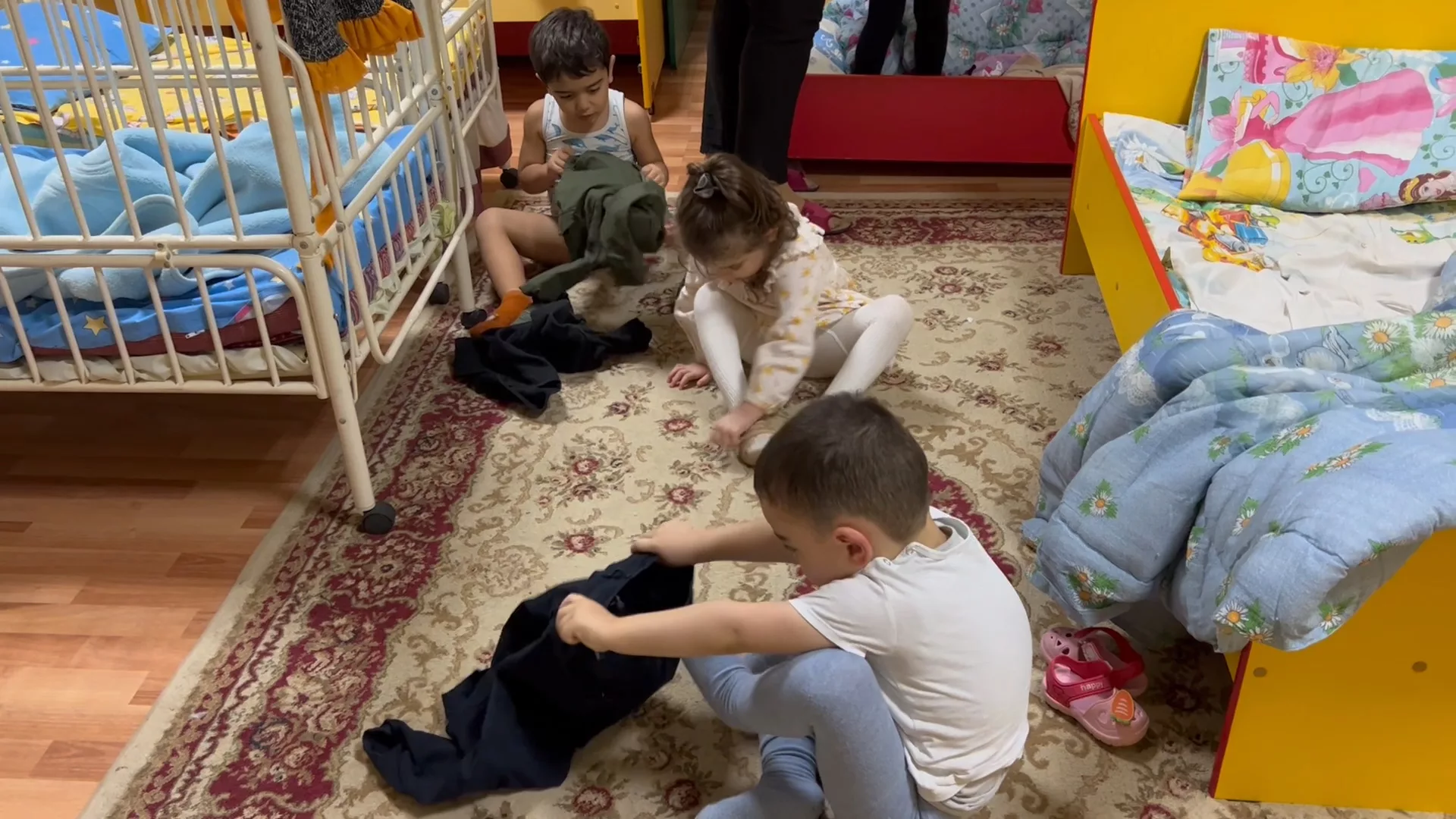
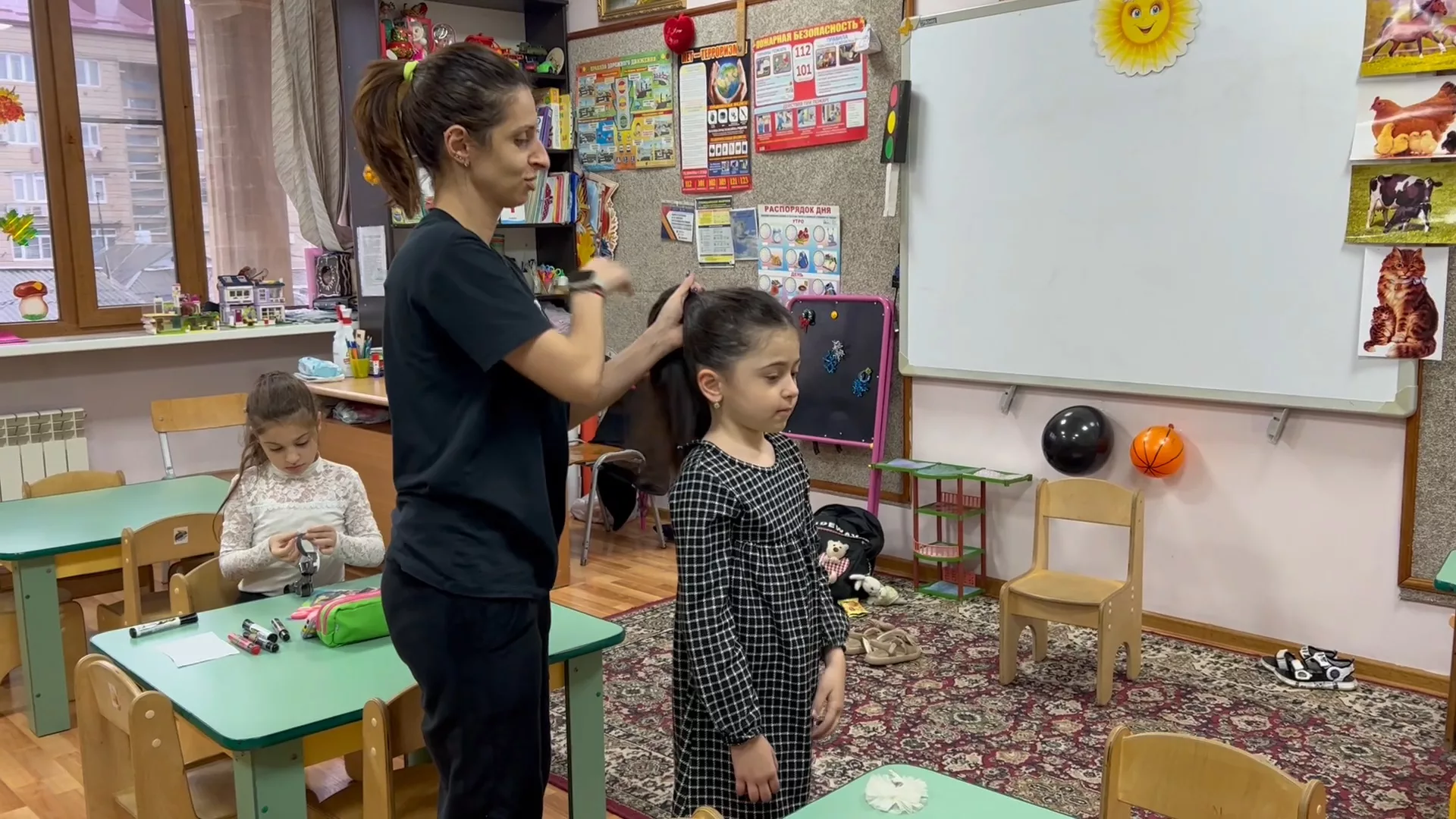
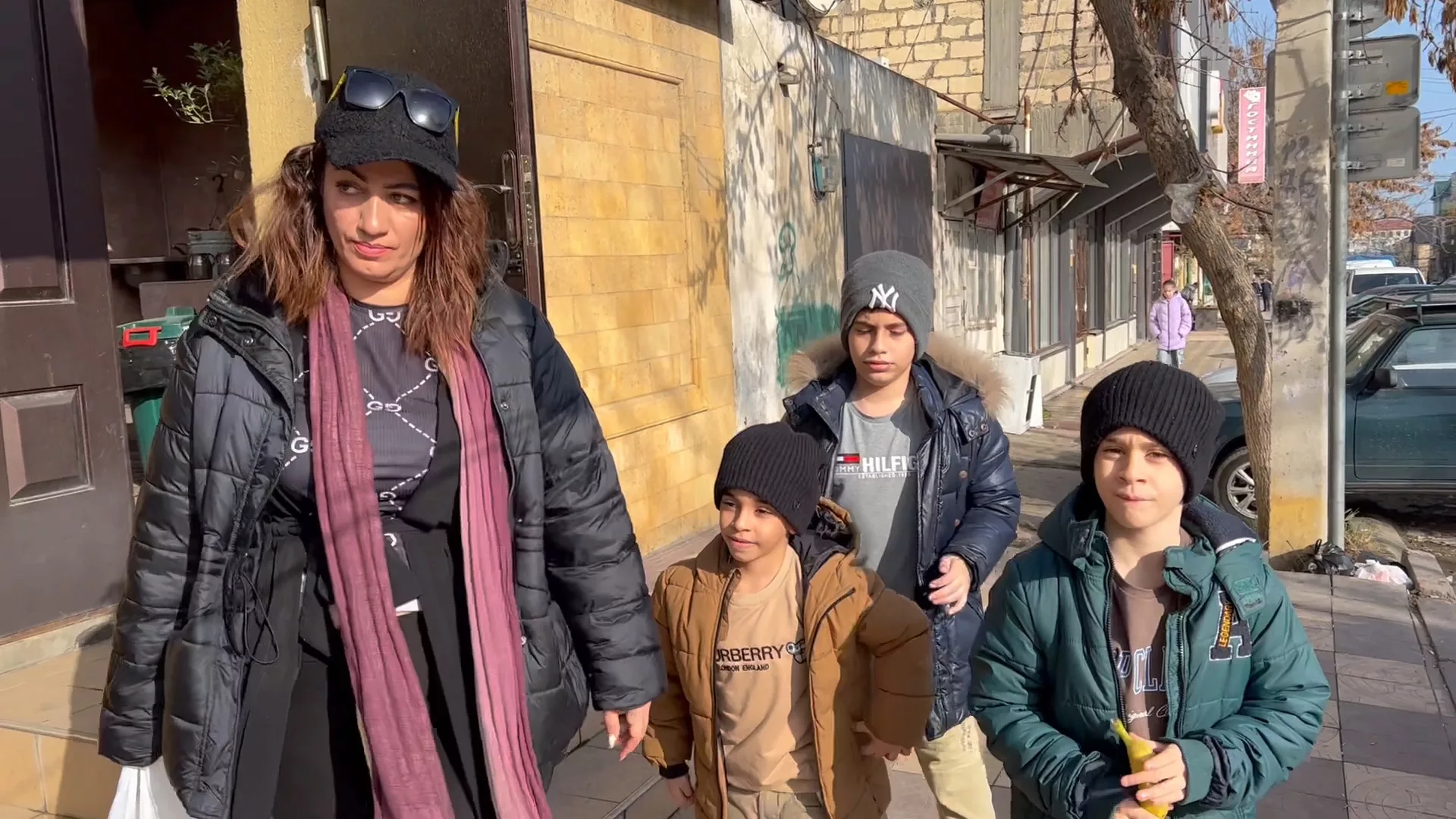

The nap time is ending. The parents are sending their children home. We hurry to Laura's grandmother, who lives right behind the synagogue. A narrow alleyway leads into a slightly wider street. On the alleyway wall is a large sign: "It's better to look at the wall than at the TV!" This street used to be called Prodolnaya. Then it was renamed in honor of Laura's grandfather, Abram Avdalimov, an actor, director of the Tata People's Theater, and an Honored Cultural Figure of the Republic of Dagestan. A memorial plaque on the old house reads: Grandfather has already died. Grandmother Isfira (Isfira, of course, is one of the existing phonetic avatars of the biblical Esther) is 92 years old. Isfira had three sons. The eldest moved to Israel in 1996. The youngest lives in Moscow. The middle one died not long ago. Isfira cannot speak of her sons who have left her without tears. In 2004, she received a passport with the stamp "issued for residence abroad." But she never moved to Israel. When talking about her life, Isfir sometimes pauses briefly, reflecting on something and constructing her narrative logic.

— When my husband died, I went to Israel. Arabs lived in the central cities there, and still do. Two million Arabs lived among Jews... My son says: Mom, if I had known such a nightmare would happen, I would not have moved... I feel really bad now. I want to leave here. I want to be with my children. I want to go to Moscow or Israel. I would gladly go to Israel, but you need a lot of money there... There are a lot of Jews there from Baku, from Nalchik, from Makhachkala. Now in Derbent there are about a hundred, a hundred and fifty of our people left, no more. But before, it was a Jewish town. This street is ours, this alley, everyone was ours. And now there’s no one here except me. Everyone’s left. They sold their houses for next to nothing, as if it was paradise for them, and when everyone left, they kicked themselves afterwards. There’s nothing so good there... Of course, when your own people live nearby, it’s better. But now everyone feels like strangers.
Is it safe for Jews to live in Derbent?
- Of course.
What does the eldest son do in Israel?
— He worked at the theater. And now the theater there is closed. He went to work as a security guard. Everyone works as a security guard there.


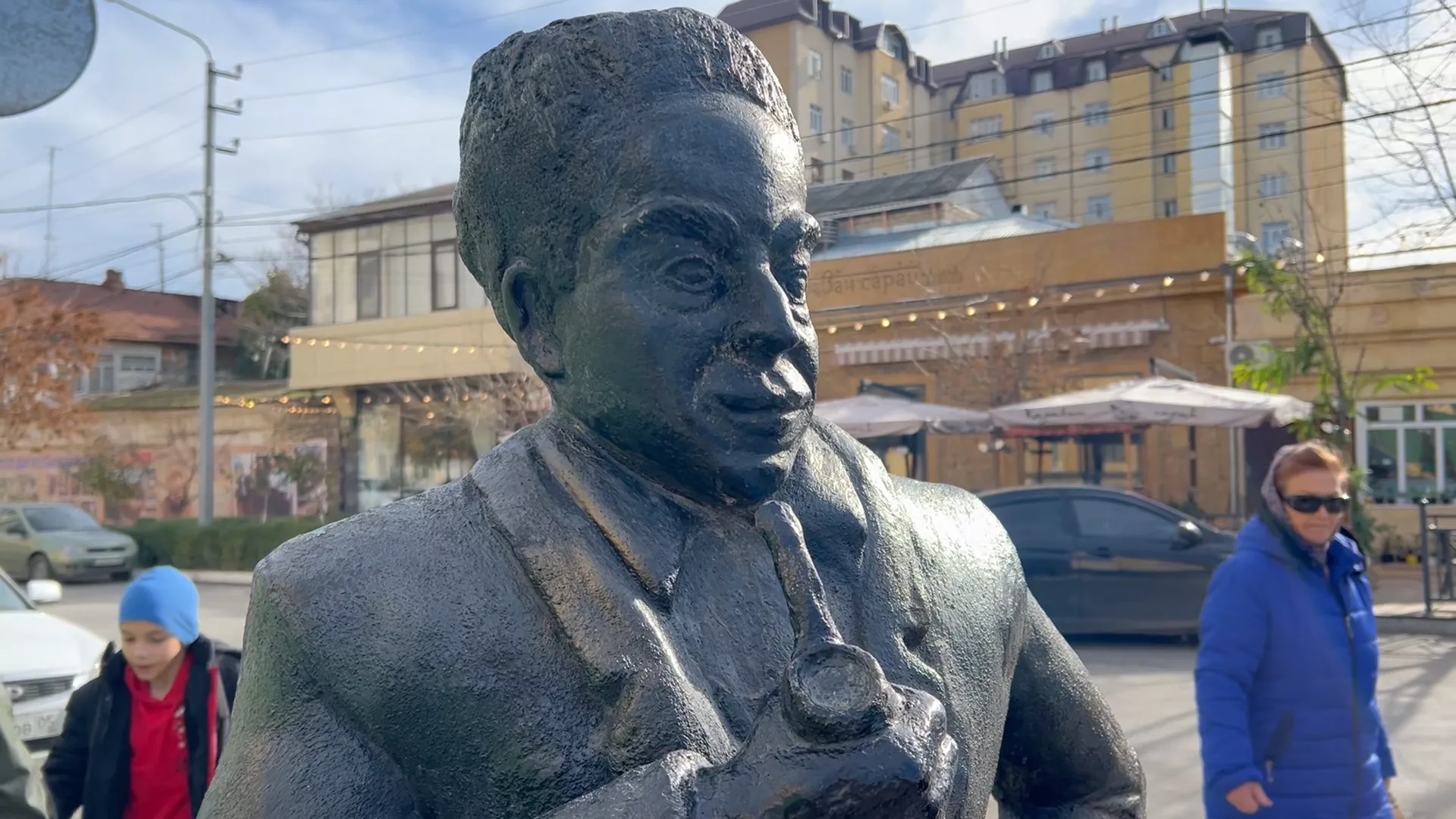
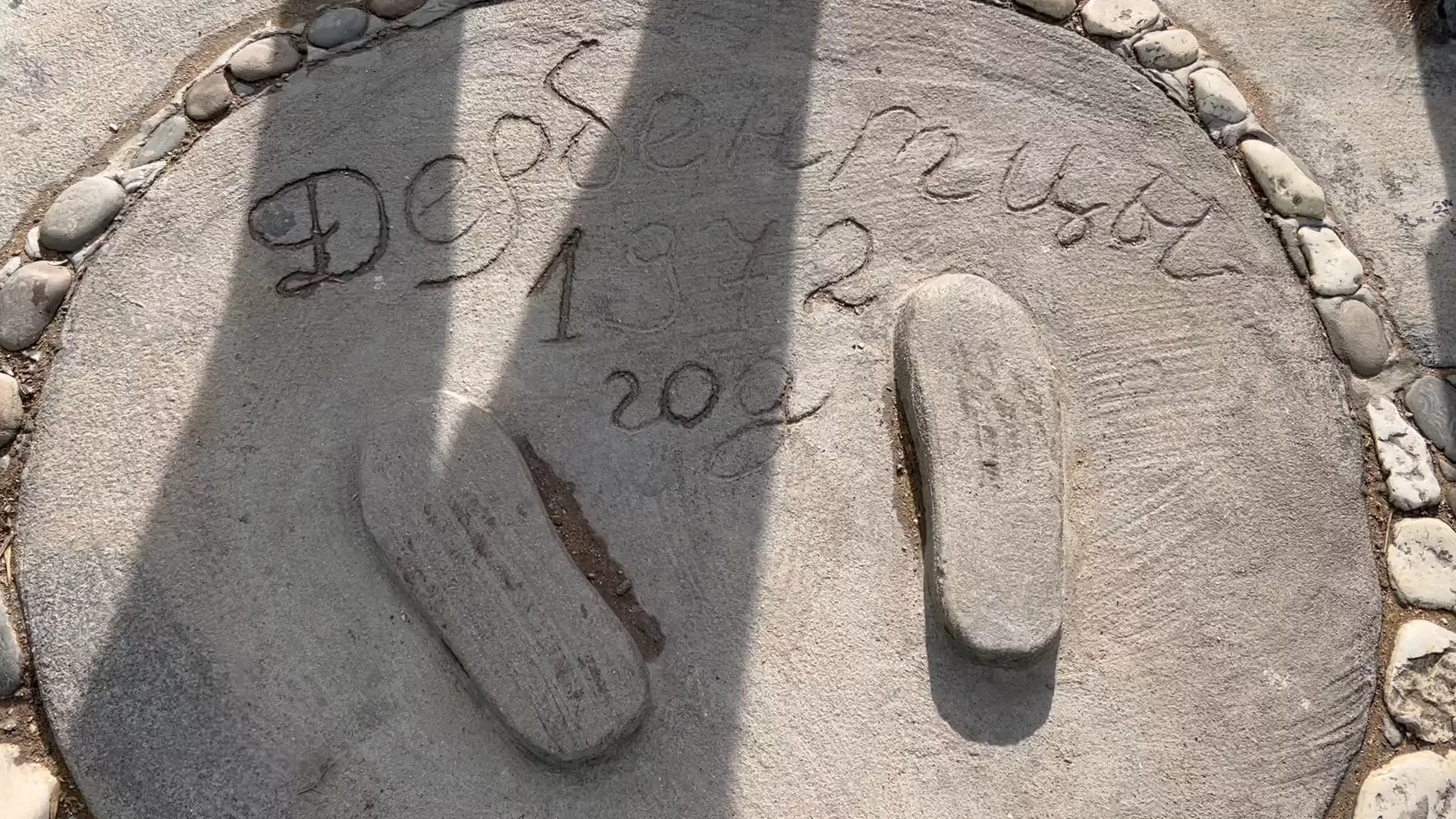
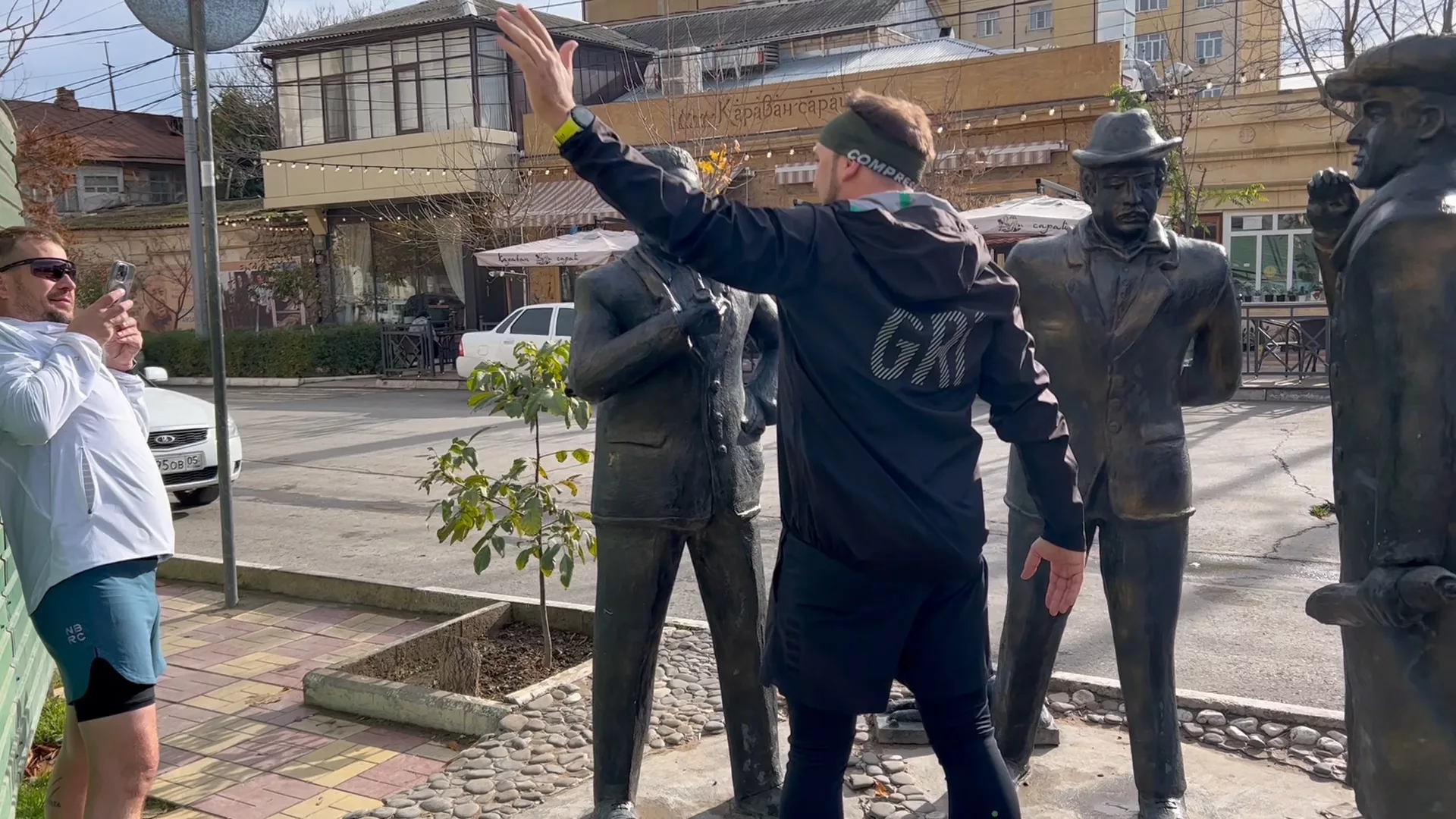
On Saturday (Shabbat), I spent the entire day just strolling around Derbent. I reached the "Three Religions" monument, where a rabbi, a priest, and a mullah are drinking tea at a table. The street it stands on is unofficially called "Happy People's Street." And, of course, the monument itself. As if to live in peace—what else do you need for happiness? A little further on, there's another monument: "To the Derbent People. 1972." The year of the mass exodus of Mountain Jews from Dagestan to Israel. Derbent residents would gather at this spot near the movie theater and socialize, discussing current and future affairs. One of the characters is based on Isfiri's grandmother's husband.



Late on Saturday evening, Derbent hosted the "Lights of Derbent" night half marathon. The start and finish were at the Naryn-Kala fortress, a UNESCO World Heritage site. The route ran through the city's central streets, which had been closed to traffic since midday. Fifteen hundred people registered, but not everyone showed up. I spoke with a couple of runners from Penza. They said there were people in their running chat who, fearing the pogroms, hadn't come to Derbent for that reason. That same day, I read the news story "Dagestan Leads in Tourist Flow Growth in 2023."

Everything is ready for the start of the Lights of Derbent half marathon.
"I know what country I live in."
— It’s true. If someone had told me a few years ago that Dagestan would receive such a large number of tourists, I would have been very surprised.
I'm visiting Khaya Safanova and her son, Roman. Roman works as a tour guide and plans to develop his own tourism business. He and his mother are the only relatives left in Dagestan. Everyone else, including Khaya's grandmother and eldest son, have long lived in Israel.

I was born in Derbent. Then I studied in Moscow. I attended a Jewish school, then a Jewish institute. I received a basic Jewish education and a secular one. After that, I returned home. Because my mother is alone, and I can't leave her alone. For many years, there was a stereotype about Dagestan as a dangerous region. This was, of course, after the gangs that were there in the 90s. But now it's become peaceful to live and work. And there are no signs of things getting worse. I am in contact with people of all ethnicities. And when those events happened at the Makhachkala airport, 80 out of 100 percent of the people I speak with called me. They said that if anything happens, you can always rely on our support. And that makes me happy.
So why did this happen?
- Well, it’s difficult for me to draw any conclusions, I’m not a political scientist.
Didn't you think about leaving after that?
"I knew things wouldn't go any further than that. So would I say there was any real fear? No."
Khaya listens silently to her son, prepares dinner, and cuts meat into small pieces for jellied meat. But at some point, she breaks down.
My mother was forced to leave. In the early 90s, ethnic hatred erupted here. And she left with her sister… Back then, if they found out that a Jew was selling his house to leave, they would break into the house and even kill him. I'm not afraid to say this. And then they would carry these coffins in front of the administration building and bang on the doors with these coffins and say: Why are you killing us?! And then they started hiding the fact that we were Jews. They would say: I'm Tatka. They didn't say that I'm Jewish. And now we're heading towards that again. Ethnic hatred again… We'll leave. We have our own land. We'll leave.
Her speech is interrupted by a phone call. It's her eldest son from Israel. When he realizes a journalist is sitting nearby, he switches to Juhuri and raises his voice. What he's talking about is clear from Chaya's answers.
"I'm not saying anything like that. We're just talking about traditions. I know what country I live in. And she knows (this is Khaya talking about me)..."
Hangs up.
"Nobody likes the truth... But you know, the whole world is in turmoil right now. The whole world. But I'm not complaining about anything. We're doing well, I raised two sons, they're my treasure, now the only problem is getting them married."
A nine-story building, unfinished for several years, looms over their small house. The door to the tiny stone courtyard is bolted shut.

On Sunday, I come to the synagogue again. Laura is teaching a Juhuri lesson at Sunday school. The rabbi and I are sitting in the main hall. Robert Simkhoevich Ilishayev heads the Jewish community in Derbent. He bears all the responsibility. He's in control, and it shows.
"I'm a native of Derbent. I finished school and joined the army. Then, when I began to get closer to the Torah, I was invited to lead the community. That was in 2008. It's believed that a man's primary occupation is serving God and observing the commandments. Everything else is secondary. But one of the principles of Judaism is freedom of choice. Everyone is free to choose their own path. Every point of view has equal rights."

Could it be that now, in order for a Jew to survive, it will again be better to be called Tat?
— No. Previously, it was at the state level. Now is a different time.
Do you have relatives in Israel?
"Of course, my grandmother and father are buried there. My mother lives there. All my sisters and brothers are in Israel. My son is studying Torah there. My whole family is there. But I don't want to leave yet."
What needs to happen to make you want it?
- Nothing. There just needs to be a spiritual impulse.
A song comes from the music room. Children are singing in juuri. Laura asks them what the song is about.
"Who is this song about? About the Mountain Jews. Jews live in the beautiful city of Derbent. They come to the synagogue to pray for their people…"
Derbent. End of November 2023

Watch the movie "Find a Jew" on our YouTube channel

