
"We are being sold like serfs"
How and why Krasnoyarsk's "royal district" is rebelling against the integrated territorial development program (ITD), designed to improve citizens' living conditions.

For over a month, residents of Nikolaevka, a district in central Krasnoyarsk, have been fighting for their estates. Over 500 buildings are slated for demolition and resettlement under the KRT (comprehensive territorial development) program. Residents are being forced to sell their cozy plots of land in the city center for next to nothing, along with their homes, or to move into high-rise Khrushchev-era buildings built in the 1960s. They are holding protests, recording video messages, and filing lawsuits. In response, they are facing accusations of blackmail and calls for "an act of uneasy civil agreement for the benefit of the entire city." Meanwhile, 80% of Krasnoyarsk could soon fall within the KRT zone, meaning that residents across almost the entire city will be able to be resettled under conditions favorable to developers, not residents, and the permitted building density will increase. NeMoskva visited Nikolaevka and spoke with its residents.
Nikolaevka is the center of Krasnoyarsk. It's one of the oldest neighborhoods, where wooden houses with carved window frames and paved roads have been preserved. Nikolaevskaya Sloboda appeared in Krasnoyarsk in 1898 and was named in honor of Tsarevich Nicholas. On May 19, 1891, the heir to the throne arrived in Krasnoyarsk from Berezovka on the steamship "St. Nicholas." He stopped in the neighborhood, which was founded during the construction of the Trans-Siberian Railway and stretched along the railroad. Soon after his visit, the area became known as Nikolaevskaya Sloboda, or more simply, Nikolaevka.
By 1909 in the settlement lived By the mid-17th century, Nikolaevka had grown to over 50 people (Krasnoyarsk's population at the time was around 3). Railroad workers and their families settled in Nikolaevka, as did migrants from neighboring villages looking to earn some money near the station. The settlement's infrastructure developed slowly at first; residents had to constantly petition the city council for electricity and water, paved streets, and a hospital. But by 1914, Nikolaevka boasted its own church, a water tower (which remains on Gogol Street today), schools, a market, public baths, a summer theater, a reading room, a post office, and even a mill. After the revolution, the neighborhood was renamed "Sloboda of the Third International," but the name didn't stick. It remained Nikolaevka.
"It's a historic place," says Nikolaevka resident Alexei. "One time, while digging up my garden, I found cartridges suitable for the Tsarist 'three-line rifle.' In 1905, when the workers at the EVRZ (electric railcar repair plant) revolted and were suppressed by the Tsarist troops, this was the firing zone."
"We have a merchant's house; a merchant lived in it. It's listed as an architectural monument. But they're still going to tear it down. I don't understand. In Yeniseisk and Tomsk [in Krasnoyarsk], they preserve the old buildings, but here they destroy them," says Irina, another local resident, perplexed.


Source: Photo from Cherkashin's album "Yenisei Province, Krasnoyarsk Krai. History in Photographs."
Today, Nikolaevka feels like an island village in the center of a metropolis. Just turn off the paved street that skirts the neighborhood and you find yourself in a green area. On both sides of the street are houses with front gardens and blooming apple trees. Cats lazily cross the road, and roosters crow somewhere. Between the houses are compacted lanes, and the roads are paved in places. The noise of the city—and it's just steps away—is almost inaudible. It's from here that people are being relocated to "concrete jungles"—apartment buildings with shared courtyards and a couple of benches at the entrances. And not new ones, with gated courtyards and underground parking, like they're building now, but Soviet-era buildings, where the courtyards are jammed with cars.

At the end of 2020, the State Duma adopted Law No. 494-FZ on integrated territorial development. The main objectives of the KRT program are the development of settlements and cities, improving their appearance, enhancing the quality and comfort of the urban environment, developing the necessary infrastructure, and improving the territories. The KRT is compared to the Moscow renovation program, as it also provides for the demolition of non-emergency apartment buildings with a high degree of deterioration. Regions have the right to independently determine the criteria for such buildings. In Krasnoyarsk Krai, the program's implementation is regulated by law Krasnoyarsk Krai on KRT and decree The Krasnoyarsk Krai government has approved the development of integrated territorial development zones. According to the documents, all costs associated with implementing the integrated territorial development program—including relocating residents of buildings to be demolished—will be borne by the developer. NeMoskva previously wrote about how the integrated territorial development program is forcing some residents into small spaces while depriving others of their yards and sunlight. "Destroy cities and lives".
"This is a corporate raid."
The first global resettlement took place in Nikolaevka in 2015, when the land in the upper part of the microdistrict was confiscated by the city for the construction of an interchange near the fourth bridge over the Yenisei. About five hundred houses were demolished. Not everyone agreed with the resettlement then either—they went to court. have entered Thirty-four lawsuits were filed against the mayor's office by residents who disagreed with the compensation amount and resettlement options. Some reached a settlement and backed down, while others fought a lengthy legal battle but lost—eventually, everyone was demolished. As officials explained at the time, if residents failed to respond within 90 days regarding their choice—an apartment or money—the mayor's office could petition the court to declare the land under the buildings a regional "need" and seize them without the owners' consent.
Last year, Nikolaevka was shaken again. Last July, the Krasnoyarsk mayor's office decided to apply A comprehensive territorial development program is being added to it. And demolishing the remaining historic neighborhoods on Kopylova, Pushkin, Bograd, Karl Liebknecht, and Lenin Streets is no longer for the "needs of the region," but to make way for the construction of high-rises. In their place, according to officials' plans, a new microdistrict is to be built.

They played a prank TenderFive bidders applied, then one withdrew, three were rejected, and only one remained—the Stroyinnovatsiya group of companies. The authorities signed a contract with Specialized Developer StroyIndustriya LLC, a member of the group. The company received the right to develop 18 hectares of land for 10.8 million rubles.
The Stroyinnovatsiya group of companies was founded in 2015. It has representations — headquartered in Krasnoyarsk, with branches in Moscow and previously in Irkutsk. It specializes in the construction of multi-apartment residential buildings, administrative buildings, and structures. In addition to Krasnoyarsk, the company has built in Irkutsk, Moscow (including as part of the Housing Renovation Program), and Solnechnogorsk, Moscow Region. The business is owned by Krasnoyarsk entrepreneur Alexander Yakubovich. Rusprofile counterparty database He is listed as the director of nine organizations and the founder of eleven. Their revenue in 2023 amounted to 2,4 billion rubles, and their profit exceeded 430 million rubles.
Locals say the developer has begun offering residents demolition compensation—estimated to be "pittance" (depending on the size and location of the developer, the square footage, and the condition of the building—from one to seven million rubles). Purchasing another home with this compensation is difficult or impossible—for example, the average two-bedroom apartment in Krasnoyarsk costs seven to eight million. Residents of Nikolaevka called the situation a "hostile takeover" and contacted regional governor Mikhail Kotyukov through his Telegram channel. They then filed a class action lawsuit in the Krasnoyarsk Regional Court demanding that the regional law on housing and communal services be declared invalid and suspended, citing its "raw" nature.
The Krasnoyarsk Krai government, the Legislative Assembly, the governor, and the Ministry of Construction were the defendants in the lawsuit. The court dismissed the case. But the people decided to continue the fight.

The Nikolaevka residents' initiative group opposing the KRT currently comprises 20 people. They record video messages to the authorities, organize meetings, and attend rallies where they try to explain their position to Krasnoyarsk residents. In one of their videos, they call upon Krasnoyarsk Mayor Vladislav Loginov "come down to earth and move into these decent homes himself." The video's creators claim they are being asked to move into buildings built in the 60s with cracked foundations that haven't seen major repairs since their construction.
The administration interpreted the activists' video message, according to Olga, a member of the initiative group (she's in the first photo in this article), as follows: "A bunch of inadequate extortionists and blackmailers are going around sabotaging the people, while the people actually agree to move."
"But not everyone agrees," Olga asserts. "More than 500 homes are slated for demolition, and so far only 60 [owners] have agreed to the developers' demands. In the media, officials and developers are citing different numbers." (then 200, then the "over 270" — editor's note), but they don't specify whether this is along with Verkhnyaya Nikolaevka, where demolition and resettlement took place long ago for entirely different reasons. Verkhnyaya and Nizhnyaya Nikolaevka are two completely different villages. Most of the residents of Nikolaevka, whose houses are their only residence, have no intention of relocating. Those who agree are primarily those who use them as dachas, rent them out, or inherited them.
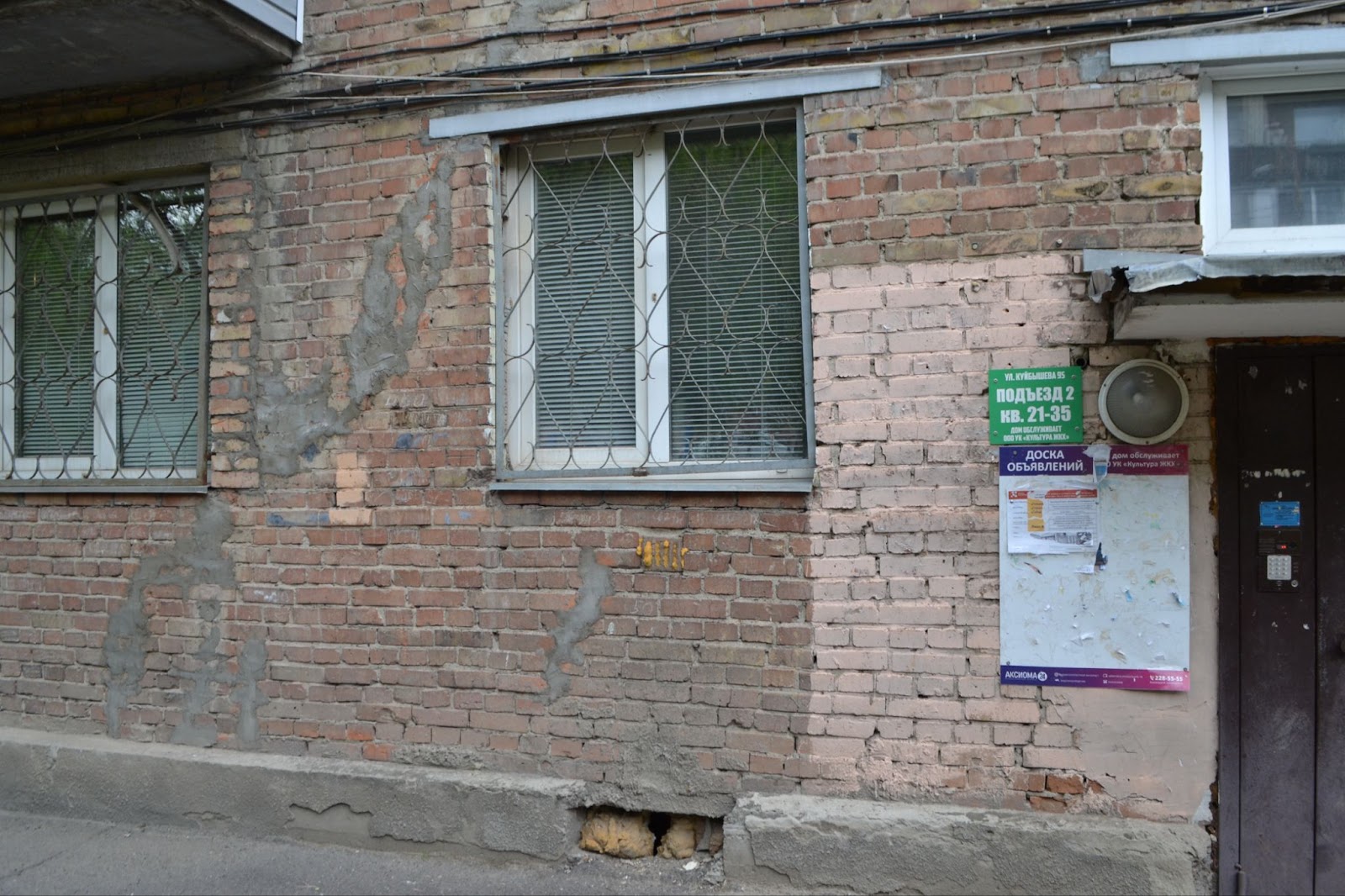
According to the interviewee, at one of the city council meetings, activists wanted to show slides of the proposed buildings, but the equipment in the hall suddenly broke during the first frame. They then offered to take the Mykolaiv residents to the addresses, but no one went.
Deputy Vyacheslav Dyukov, whose district includes Nikolaevka, openly which usually takes The developer's side (although he himself claims to be on the side of the "city"). He asserts that the budget is insufficient, and that there is currently no other mechanism for renovating the area other than the KRT. Moreover, the deputy says, some residents of Mykolaivka are effectively "blackmailing developers for their own gain," and are assisted by "scavenger lawyers." Dyukov notes that the state should take on the wishes and needs of people "beyond those established by law," and the law must be amended accordingly.
According to residents, the situation was "very strange" from the very beginning. In March of this year, appraisers started knocking on the doors of Mykolaiv residents. They insisted they weren't selling anything, but they were told, "Don't you know you're under the KRT? A decree has been issued regarding your resettlement." People didn't know. City officials simply said, posted the resolution in the newspaper "City News" and on Online city administration. Local residents were not informed of the decision in any other way.


— We started asking "egereenki" to the sites,” Olga continues, “and discovered that our buildings had been transformed from multi-apartment buildings into block buildings.” (In fact, this is not true - editor's note)How can this be? Only the owners can change the status of a building?! And for what purpose? We soon realized. This was done to deprive us of the right to decide our own fate. Owners of apartment buildings can decide to leave the KRT at a general meeting of residents. Owners of block buildings do not have this right. Moreover, after being reclassified as block buildings, the assessed value of our buildings and land dropped. We appealed to the prosecutor's office about this, because this is a crime against people, against our private property. This has practically ruined us. But we still haven't received a clear answer.
At the request of NGS, the prosecutor's office reported: violations regarding the illegal transfer of buildings to the status of terraced houses have been confirmed; a submission has been submitted to the Rosreestr office, which is under review.
As Olga says, the authorities are now trying to divide the united Mykolaiv residents. They created conciliation commissionResidents were asked to attend the meeting individually. The same was true for the developer's office (locals explained that everyone was simply not allowed in together). According to Mykolaiv residents, at meetings, people are convinced that the land on which the houses stand is not their property—even though many have deeds for the buildings and land (not all, but those without proper documents don't claim their rights), and they pay land taxes. In an attempt to protect themselves, owners are allegedly required to provide certificates from mental health and drug treatment centers for transactions—to make them more difficult to challenge later. Locals also say people are "persuaded" to conduct transactions through "their" lawyer, rather than a notary.
"We are ready to negotiate, but we demand justice."
Residents of Mykolaivka understand that sooner or later their neighborhood will be resettled—they say the process has already been set in motion and can't be stopped. But they want the resettlement to occur without deteriorating living conditions. An initiative group has drawn up a "roadmap"—their vision of it. They propose building a multi-story building right here in Mykolaivka for everyone they want to resettle—they say there are "plenty" of vacant lots for this. This way, people will remain in their "familiar neighborhood" and "adequate conditions." This map has been submitted to the mayor's office.
"They told us the developer doesn't have the money to build such a house, and the city administration certainly doesn't," Olga says. "But we hear something else behind that answer: 'Wouldn't it be too much to build you a house in such an elite area—in the very center of the city?' At a city council meeting a few months ago, the deputies said outright: 'If the developer adequately estimates the value of the land and houses, they'll abandon the project because the profit will be small.' They're not worried about us, about us having to abandon our homes, but about the developer, about them not getting rich enough."
The previously mentioned deputy Dyukov also писал On his VKontakte page, he wrote that if the developer is burdened with resolving "all social issues for all categories of people in need," it won't bring them any profit, the developer will refuse to participate in the project, and we "will get no school, no kindergarten, no sports complex here—nothing." He called on those who disagree with the demolition and resettlement to "an act of uneasy civil agreement for the benefit of the entire city's residents."
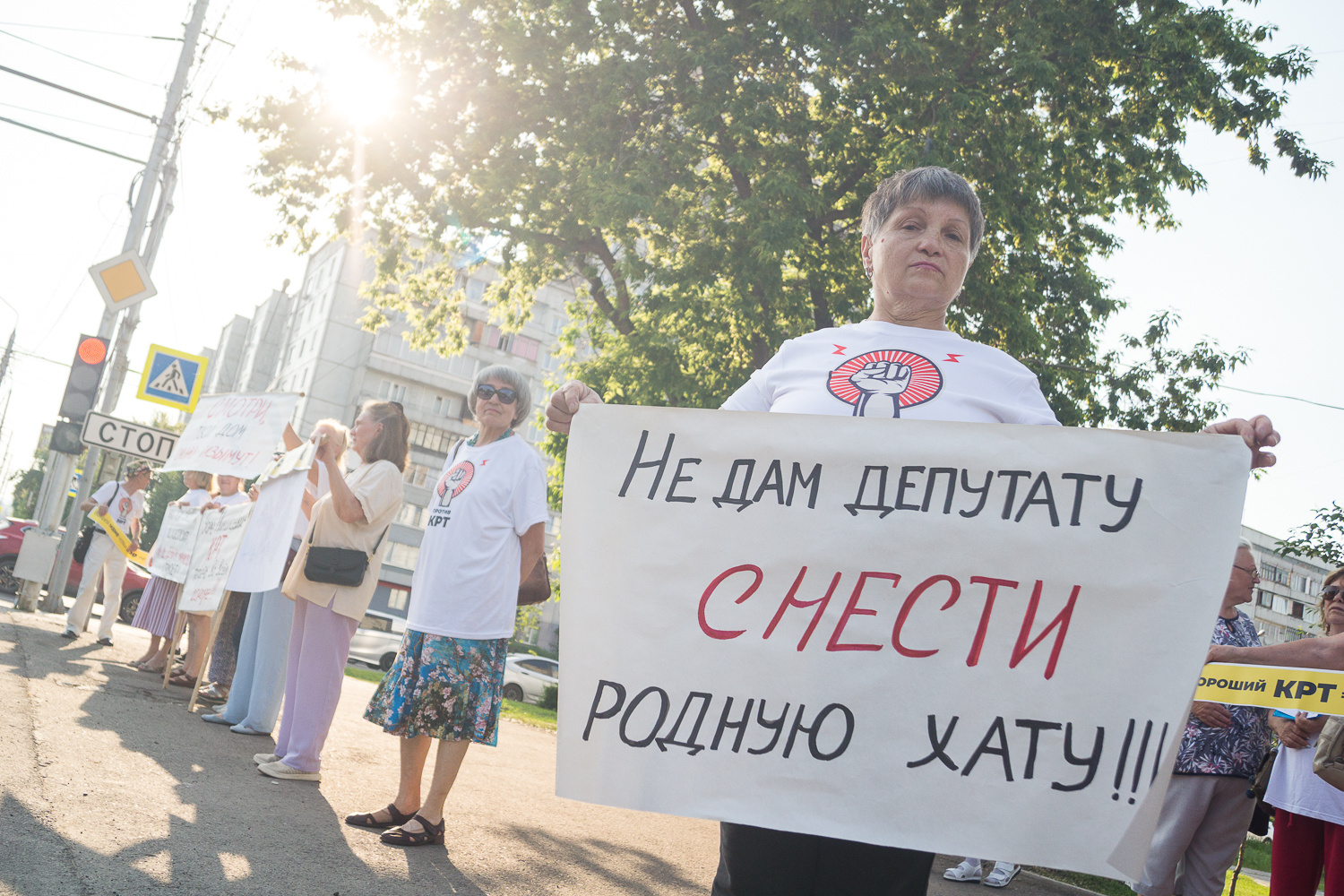
All this time, people have literally been running after officials. To get a personal appointment with the mayor, you need to present your passport, and secretaries, Olga says, as soon as they see your Mykolaiv registration, refuse to schedule an appointment—they say they don't have the time.
Last year, the regional governor, Mikhail Katyukov, held a meeting with residents of the Solnechny microdistrict. Residents of Mykolaiv learned about it, went there, apologized to the residents of Solnechny, and shared their concerns. The governor instructed the mayor to meet with the residents. Only afterward did Mayor Vladislav Loginov attend the meeting. According to those present, he promised: "Everyone will be monitored," and "We will resolve issues individually." And at the end, he addressed one resident: "How many square meters is your house, 100? Why do you need a house like that? It could be smaller!" After that, the residents of Mykolaiv realized they were unlikely to be heard.
Locals tried to reach out to the veterans using the "SVO" theme. They hung a poster on a fence: "While my son is fighting, the mayor is stealing our land." But, Olga claims, it didn't even last half an hour. She also asked the mayor: "What will you say to those who return from the "SVO" and find their homes gone?" The official didn't respond. On May 9, Mykolaiv residents attended a rally at the Victory Memorial, knowing that government officials would be there to congratulate the veterans. They printed out appeals to the mayor and governor and handed them to them personally. "There was zero reaction," Olga comments briefly.
People are also seeking justice in the courts. We wrote above that they demanded the repeal of the regional law on the KRT, but the court dismissed the claim. They also filed for injunctions to keep the residents out of harm's way while the court proceedings were pending. This claim was also dismissed. On June 18th, another court hearing was held – Mykolaiv residents are challenging the conversion of their buildings from multi-apartment to terraced houses without their knowledge. The next hearing will be in August. If the district court doesn't rule in their favor, they intend to pursue their case through all courts, including the Constitutional Court.
“I’d like to improve it, but what if they tear it down?”
"I've been living in Krasnoyarsk since 1981. I came here as a boy, and ever since then there have been rumors that we're going to be torn down," says Alexey, a resident of Nikolaevka. He's disabled and uses a wheelchair, and the prospect of moving to a high-rise building doesn't appeal to him at all. "I remember 30 years ago, the streets here were so well-kept, there were lanterns hanging on every corner, and a police officer kept an eye on things. But the more persistent the rumors of demolition became, the more discouraged people became. I think it was deliberate. Well-kept estates are worth significantly more, and no one wants to pay people a fair price for their property."

"We've been living in limbo for years: will they demolish it or not?" confirms Valentina, a resident of Nikolaevka. "That's why some of the houses don't look very good. You want to improve them, but what if they tear them down? Yet, many have heated toilets and showers. I installed plastic windows in 2006. They told me, 'Are you crazy? They'll tear you down soon.' And so I've lived like that for 20 years now..."
According to Valentina, for many years they haven't been allowed to register more than two people in their homes—to avoid having to give too many people away when resettling. She, for example, can't register her own granddaughter. She moved her parents from Uyar, went to the administration, and tried to get permission to register them, but so far she's only received a temporary one—for a year.
Alexey also doesn't understand why the value of their properties is falling, despite rising prices on the secondary market. He says his house was appraised at 5.1 million rubles last year, but after a reappraisal this year, it's worth 4 million. He claims that, according to the initiative group's calculations, by selling two or three entrances to one building, the developer would cover the entire cost of resettling Nikolaevka, even according to locals' wishes.
At the same time, the mayor's office, at meetings with residents, says that now that the developer has won the right to develop the territory, they have no right to refuse him.
"They've basically washed their hands of the matter, leaving us alone to deal with this monster developer. We're finding lawyers ourselves, engaging journalists, and holding meetings. Our initiative group sent a letter to the president and the prosecutor's office, and Bastrykin took control of us and ordered an investigation. What's our next move? Write a letter to Grandpa Biden asking him to come and sort this out? They're selling us like serfs, even though serfdom was abolished back in 1861," Alexey comments.
Another Nikolaevka resident, Tatyana, is also perplexed as to why the mayor's office is suggesting that residents negotiate with the developer themselves:
"What, are we back to the 90s? Are we supposed to negotiate with the gangsters while we're armed with guns? For now, we think we're being targeted in a predatory, if not fraudulent, scheme."
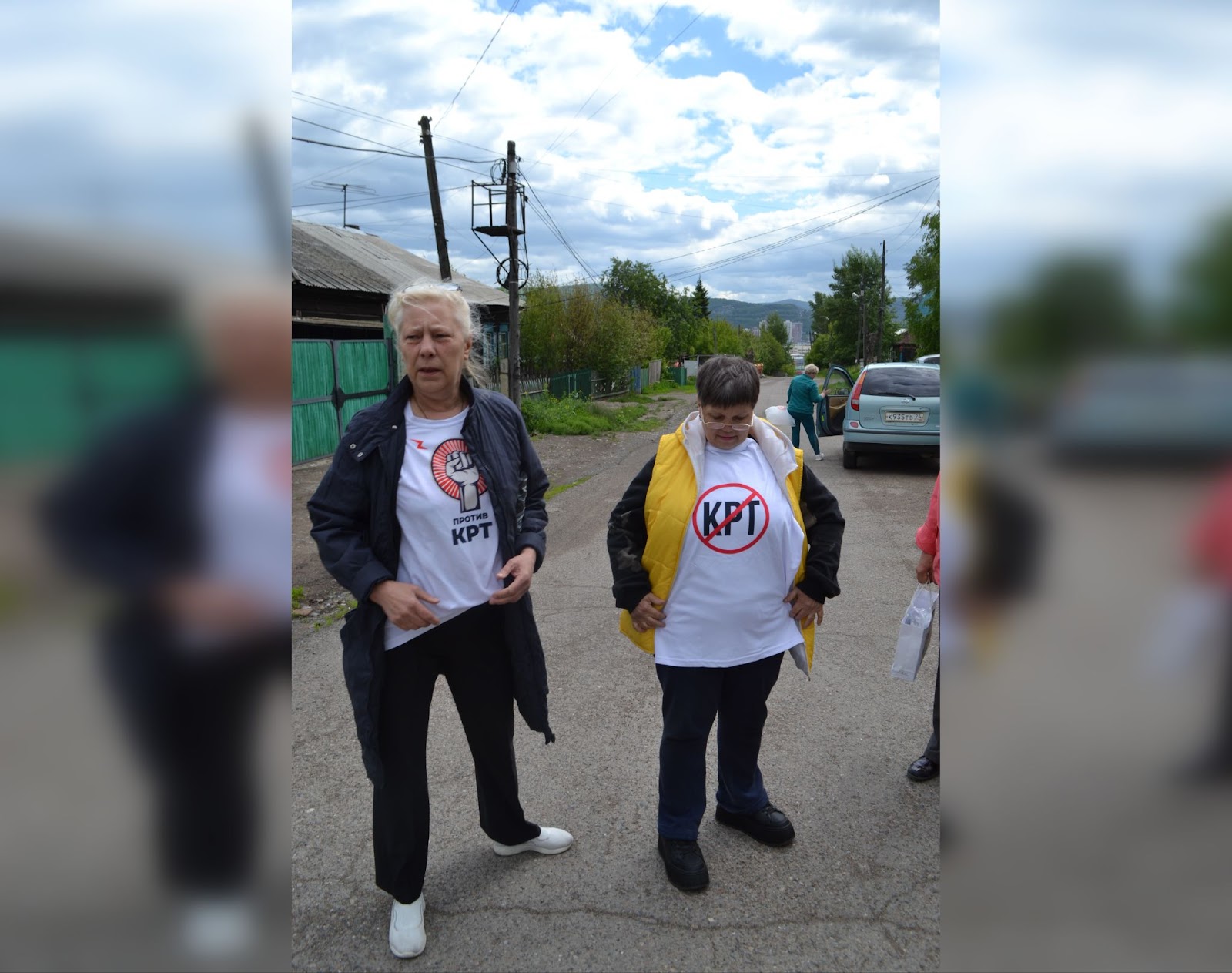
Tatyana lives on Marata Street and is in the second stage of resettlement. She can live peacefully for another couple of years. Although "peacefully" is a relative term.
"Why did they create these 'queues'?" Valentina from Nikolaevka is perplexed. "Can you imagine, they'll already demolish the first one and start driving piles, but the second and third ones are supposedly still livable. But I lived on a construction site in Verkhnyaya Nikolaevka when they were building the interchange near the fourth bridge—it was terrible. Trucks were speeding around, breaking the fence. The poker was bouncing around the stove, the chandeliers were rattling."
Another Mykolaiv resident, Victoria, had her husband leave for the war in Ukraine a year ago. She was left with three small children. Her house—a small 39 square meters—is on the first priority list for resettlement. Only Victoria and her children live there now, but the building has three owners, including her sister and brother. They inherited the house from their parents. The developer valued the building at three million rubles, meaning each owner will receive a million. This amount is unrealistic for a family of five to buy a home; it's not even enough for an average one-room apartment. Victoria went to the City Council, and they promised to add another two million, but even that won't be enough.
"[The developer's representative] suggested I take out a mortgage and supplement it. He said my husband earns a good living at the SVO," Victoria shares. "But of his 200 [monthly payment], we only get 60. He needs to buy a helmet, a bulletproof vest, or medication. And not just for himself; he always splits it with his partner. He recently got 150... And the authorities here only brought me coal and firewood, that's all the help. And anyway, why should I take out a mortgage if I'm losing my property?! I was born here and have lived here my whole life. We plant a garden, the kids run around in the yard all the time. We rebuilt the entire house here after my parents left, replaced the paneling, the ceiling, and the stove; we invested so much money and effort..."

According to Tatyana, local residents contacted the presidential administration and received a letter stating that residents eligible for resettlement under the KRT program should receive compensation, including lost profits based on the market value of their properties.
"I'm a former economist and I know perfectly well how much a square meter of land costs here. It's like gold here, after all, this is the center! I'll ask for no less than 15 million," the interviewee comments. However, she notes that she has no plans to move anywhere "until the last minute": "The KRT program was created for Khrushchev-era buildings that had long since expired. To improve people's living conditions. What does that have to do with us? We're happy with everything! We have our own land, space to park cars, a sauna, boiler rooms, greenhouses... I have a clinic and a hospital nearby, and my children have kindergartens and shops just steps away. I worked on the railroad for 21 years and I believe I deserve to be treated fairly."
Tatyana didn't let either the first or second appraisers into her office. She's sure they're "spying on the best way to set the fire": "This has happened before in Nikolaevka. The houses of those who disagree with the resettlement plan are burning."
During the few days that we talked with residents of Nikolaevka, on one of the streets there really was burned down house. According to neighbors, the owners did not agree to the move. According to preliminary version, this is arson, an investigation is ongoing.

"The city and businesses are striking while the iron is hot."
June 17, City Hall commented the situation with the KRT on its website.
"The KRT is currently practically the only mechanism that guarantees developer participation in the creation of the city's social and engineering and transport infrastructure," comments Sergei Shikunov, Acting Deputy Mayor and Head of the Department of Urban Development. "Its implementation can be initiated either by the municipality, as in Nikolaevka, or by the investor who owns a particular plot of land. <…> But in both cases, the agreement will include a significant block of social obligations for the investor."
NeMoskva spoke with Andrey Muzhshchinsky, a well-known local community activist, journalist, and housing manager, about the implementation of the KRT program in Krasnoyarsk. He lives on Vavilov Street, where one of Krasnoyarsk's first KRT projects is being implemented. Locals also opposed it, dissatisfied with the significant increase in residential density in the area, but so far to no avail.

"Objectively, the KRT's goal is very good. The authorities are trying to kill two birds with one stone: relocate residents of dilapidated buildings, demolish other dilapidated structures (former industrial sites, abandoned summer cottages, etc.), and give these areas a new lease on life. Not just build them up, but do it comprehensively: construct houses, kindergartens, schools, medical facilities, roads, parks, and sports grounds. It sounds great, but... At least two questions arise.
The first question is: how fair will the replacement offered for the buildings that will be taken from people be?
If an apartment or house is owned, monetary compensation is usually offered. Where does the buyout price come from? An independent appraisal company is selected, inspects the property being seized, and provides its assessment: the house, garden, and shed are worth two million rubles. The owner either agrees and takes the money, or disagrees and goes to court. Then it's a game of chance. As practice shows, the buyout price can either increase or decrease following legal proceedings, compared to the initial offer.
So far, the developer is approaching the residents of Nikolaevka with a proposal. This isn't illegal, but it's strange, including for the residents—they believe the mayor's office should be handling the relocation, but it's seemingly withdrawn, "throwing them into the jaws of a monster" (as the residents themselves put it). My opinion is that the mayor's office will now evaluate what the residents agree to and what they don't, and decide how to proceed when the official relocation process begins. In other words, they really did screw the residents over—to minimize their problems.
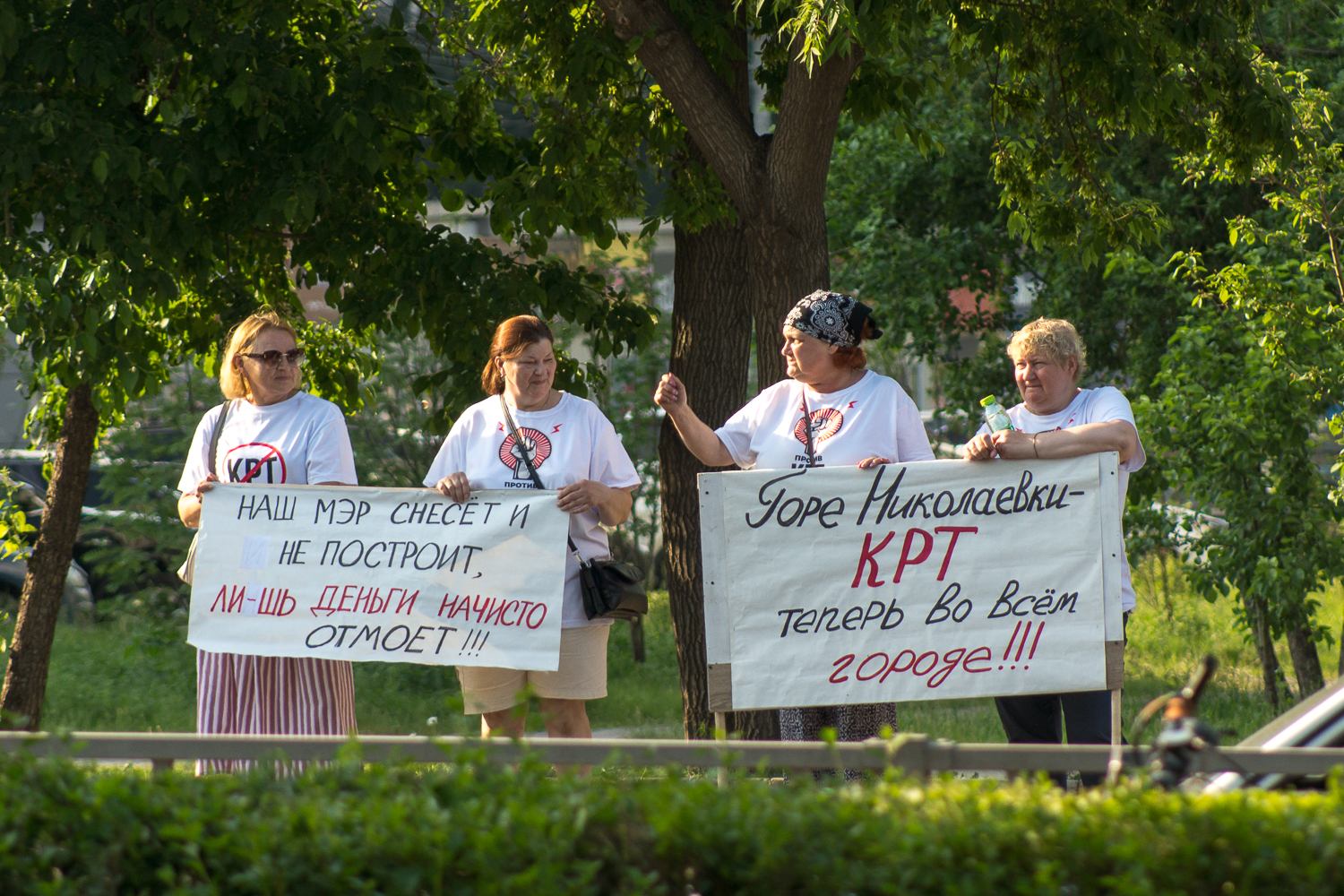
If the apartment or house where a person lives is municipally owned, city authorities simply relocate them to another municipally owned building. However, by law, relocation can be to any district of the city. For example, if a municipal building [targeted for resettlement] is built in Solnechny, then no matter where the building being demolished is located, the relocation will still be to Solnechny.
It's important to understand that everyone's situation is different. Some people don't use their home—it was inherited, there's another place and the building is empty or rented out, or they were planning to move out of the area anyway. In these cases, the owners happily take advantage of the situation and agree to the offered buyout price. It's a different story when people actually live in these houses. Some have invested heavily in them over the years, built a family home, and planned to live happily ever after. And then, it's like a bolt from the blue. Some houses are shared by several owners, and they'd be happy to move out, but when the offered buyout price is divided proportionally, everyone ends up with a sum they couldn't afford to buy a new home for, even on the resale market. That's where the problems begin.
Before the KRT, it was impossible to evict a property owner who disagreed with the terms of their move. There are plenty of examples of this in Krasnoyarsk. On Vavilov Street, a garage stands as an eyesore in the courtyard of a new building; its owner couldn't reach an agreement with the developer. On Kalinina Street, there are wooden houses surrounded by high-rises. On Lebedeva Street, wooden houses stand out next to a high-rise building. Under the KRT, such things are impossible. The owner will be evicted regardless, whether they agree or not. The mayor's office and the developer can legally evict anyone, impose a buyout price through the courts, transfer the money to an account by court order, and then bailiffs will remove the property from the building, and the developer will demolish it.
The owner also has guarantees, of course. He'll get the money, and possibly the apartment, depending on the agreement with the investor. But whether he'll be satisfied is a big question.
Second question: won't it turn out that the developer who wins the right to comprehensively develop the territory will build only "human anthills" without kindergartens, schools, parking, or public spaces?
The guarantor is the agreement the developer signs with the mayor's office. Krasnoyarsk hasn't yet completed a single KRT project, so it's impossible to say to what extent this agreement guarantees that new buildings won't be left without social facilities. However, we can look at established practice.
About ten years ago, when Edkham Akbulatov was mayor, Krasnoyarsk developed a master plan, development and land use regulations, and plans for specific microdistricts. As city officials put it at the time, this package of documents guaranteed that where houses were drawn, there would be houses; where parks and squares were drawn, there would be parks and squares; where kindergartens and schools were drawn, there would be kindergartens and schools. What happened in practice? Developers began making massive changes to the plans, and suddenly houses appeared in the places of schools, kindergartens, green spaces, and promenades. See the mayor's website for a look at how the plans for the Yuzhny Bereg and Vavilovskoye districts have changed.
I'll say more, with each new version of the planning project, the number of storeys in buildings and the density of development increased. So, when singed an agreement Under the construction and development plan on Vavilov Street, the developer was granted the right to build almost 100 square meters. Previously, according to the 2016 planning project, just over 60 square meters were planned for these areas. In other words, the development density has increased by more than 30 percent. A concrete jungle! Everyone has criticized the "human anthills" in Belye Rosy and Tikhie Zori, but the city continues to create the conditions for the emergence of new, uninviting neighborhoods.

A contract is a contract, but the developer's plans could change at any moment, and they might not want to build social facilities, but they'll still build residential buildings and sell the apartments. Or the economic situation might suddenly change, and the developer might go bankrupt. What to do then? Everyone's heard about the development of the Kombaynovy Plant site. The prosecutor's office threatened, that he would take away the land if the developer didn't build kindergartens and schools. He refused. Okay, so they'll take the land away from him, but dozens of residential buildings have already been built! Now the Arbitration Court understands with the developer of the Portovy microdistrict. They also want to confiscate the land there if the investor doesn't build kindergartens and a school.
Another example about "guarantees." Earlier this year, city authorities lowered the coefficient development intensity of up to 1,3. This means that 13 square meters of housing can be built on one hectare of land in Krasnoyarsk. However, there is an exception to this decision: in the KRT zone, construction can be done with a coefficient of 1,9. And now the city authorities came up with an initiative Designate almost 80 percent of the city's territory as a CRT zone. How about that? The city has found a way around its own restrictions!

A possible solution is for the developer to build social facilities first and then begin construction of the houses. But that's a completely different economic model. After all, what does it mean for a developer to gain the right to comprehensive development of the area? It means the city shifts the entire responsibility for renovating the neighborhood to businesses, and those businesses, in turn, shift it to the buyers of the future apartments.
The problem is that the KRT mechanism is too restrictive and schematic, and the renovation process is delegated to regional and municipal authorities and developer-investors.
Essentially, if an area is officially declared a KRT zone, the city and the developer can do whatever they want. We have a decree signed at the regional level that doesn't even require public hearings under a KRT, although ideally, any development plans should be discussed with residents. However, public hearings in Krasnoyarsk have long since become a sham, a mere formality. We held the city's first KRT on Vavilov Street. We managed to secure public hearings through the prosecutor's office. The city held them, but not a single one of the residents' fundamental wishes or suggestions was taken into account. Because it's the city government that decides whether or not to consider the suggestions.
Another point. The Krasnoyarsk administration has long since outsourced the development of planning projects to developers. Supposedly, to save budget money. We've created a paradoxical situation: the company planning to develop the area sets its own rules! It's not the city that says, "We need to build so many square meters of housing, allocate space for a park, a kindergarten, a school, and parking." The developer, however, decides what will be on the site, squeezes the maximum out of the area, and the city then silently approves these plans.
In other words, we, the residents, are in a losing situation from the start. And the saddest thing is that the city is playing on the developer's side, not the people's. When the KRT program began in Mykolaivka, people learned that, at the City Hall's initiative, some buildings within the KRT zone had been reclassified from multi-family housing to terraced housing. This is a completely different approach to the resettlement process. In other words, the City Hall deliberately infringed on the rights of property owners to simplify the demolition of Mykolaivka.
After this, what doubts can remain about whose side the administration is on? And the statements of some city hall employees and deputies who advise dissenting residents to defend their rights in court seem very cynical. So, the problems were created by the city authorities and the developer, and now it's up to the aggrieved owner to resolve them?!
At the same time, I repeat, the law on the KRT is very schematic and framework-based. Even a competent lawyer will have a hard time finding fault with it. This means that any court appeals are a priori doomed to failure. The judge reviews the KRT agreement for violations of current legislation. And if there are no specifics, no numerous bylaws clarifying the various nuances of integrated development, then what violations can we possibly be talking about? Everything is legal!
We, residents of Vavilov, have been in constant correspondence with the prosecutor's office and suing the mayor's office, but to no avail. This is precisely because neither the prosecutor's office nor the court have found any violations of the current KRT law. And today, we see how the mayor's office and developers are abusing the law's imperfections. The city and businesses are striking while the iron is hot. Instead of implementing a couple of KRT projects, fine-tuning the mechanism, closing loopholes, and then launching new projects, taking into account the mistakes, the mayor's office and developers are jointly seeking to quickly allocate as much land as possible to KRT.
Svetlana Khustik
Photo Irina Yakunina
Thank you GLUSH service for assistance in preparing the material.

