
"I can do anything"
How the state becomes "accomplice" to the crimes committed by former participants in the war in Ukraine

Dmitry Kiryukhin, mobilized from the Saratov region sentenced He was sentenced to four years in prison for brutally beating his neighbors. During the court hearing, he stated that he wanted to show society that he could do anything. NeMoskva attended the trial, tells this story, and tries to understand: what does the state intend to do with former military personnel who, upon returning home, bring violence into civilian life? For now, the situation is as follows: the courts convey a message of permissiveness, allowing them to escape punishment or punishing them less harshly than "civilians," while the healthcare system is unwilling to dispel the myths surrounding "shrink-wrappers," and instead of addressing the problem of PTSD (which also contributes to crime), it promotes the positive concept of "post-traumatic growth."
"The press has arrived, but will there be a scarecrow?" Kiryukhin whispers to his lawyer, leaning toward the bars. Loud enough to be heard throughout the courtroom. The defendant—a tall, broad-shouldered man in a black T-shirt and sweatpants—seems to fill the cramped cage. He refers to the victim, 52-year-old Irina Matasova, as the scarecrow.
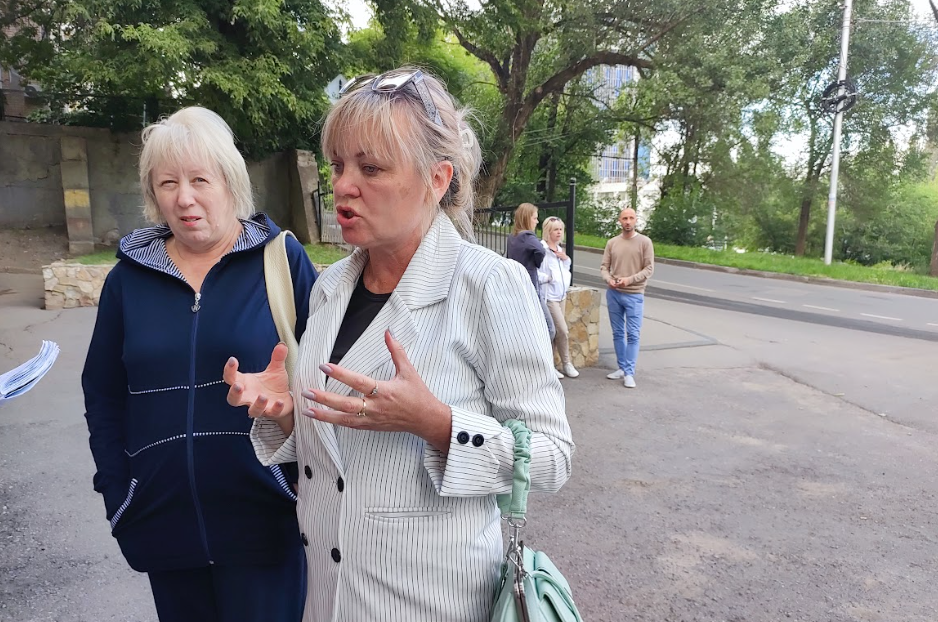
Irina is the last one to enter the courtroom. Her light striped pantsuit, multicolored manicure, and stylish rings clearly show she's trying to maintain her composure. But her eyes betray her recent tears. Her friend, Larisa, came to court with Matasova. She, like many residents of Atkarsk, also suffered at Kiryukhin's hands. Three years ago, the drunk man chased her through the courtyard of a five-story building, shouting obscenities, but Larisa managed to hide in the entryway. She didn't report it to the police—she was afraid.
The judge, a middle-aged blonde, looks tired. She reads the verdict, her lips barely moving. Kiryukhin was found guilty of hooliganism, assault against a government official, and insulting police officers (he resisted arrest). The sentence is four years in a general regime penal colony (the military prosecutor had requested six) and a fine of 30 rubles. He must also pay the victims over 263 rubles in compensation for moral damages, medical expenses, and legal fees. Kiryukhin listens without turning to the courtroom. Irina smiles faintly.
“I don’t need his money, I know how he earns it, — says Irina, stepping out into the corridor."All the Atkarsk residents he insulted and beat asked me to fight to the end. The most important thing for me is that Kiryukhin didn't shirk his responsibility."
"I am your master!"
Atkarsk is a small town with a population of 22. Jobs are few, mostly at the oil extraction plant and the railway station. Most men leave for work in Moscow or the north.
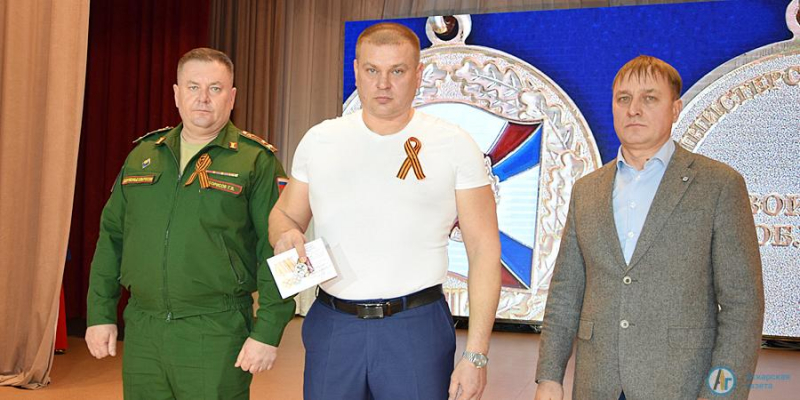
Kiryukhin served 11 years in the transport police, patrolling commuter trains. He resigned, as he said during his court testimony, voluntarily, but rumor has it he was "asked" to leave because of his drinking. He signed a contract with the Ministry of Defense. He traveled to Syria four times. He received the Medal "For Military Valor." The award was ceremoniously presented. were awarded in the district administration.
"In a small town, everyone knows everyone else. People said that during his first marriage, Kiryukhin beat his wife for 12 years and trashed their apartment when drunk. I saw him with my own eyes harass an elderly neighbor in the courtyard. He cursed and bragged that at 40, he earned a bigger pension than this old man. The saleswoman at the store complained that he was rude when he came to buy vodka. The nurses at the hospital said that when he visited his sick mother, he refused to put on shoe covers and yelled, 'You have to wipe up after me!'" Irina Matasova recalled in a conversation with NeMoskva.
According to her, city residents didn't believe the police would punish "their own." And, apparently, their mistrust of the law enforcement system was justified. In April 2022, a drunken Kiryukhin, who was aggressively harassing passersby on the street, was detained by patrol officers. The troublemaker threatened to beat them up and even tried to snatch a holster from the belt of one of the officers (in court order It's not specified whether there was a weapon in her at the time. The police officer, as noted in the case file, "stepped aside." Eventually, the PPS officers placed Kiryukhin in a patrol car and took him to a psychiatric hospital for an examination.
A criminal case was then opened under Article 318 of the Criminal Code, "Threat of Violence against a Government Official." Kiryukhin was remanded in custody. He explained to the investigator that he threatened the police officers because the demand to go to the hospital "angered" him. He was not registered with a drug addiction specialist at the time, and he was not registered after the incident. The court did not consider alcohol intoxication an aggravating circumstance. Part 1 of Article 318 carries a fine of up to 200 rubles, arrest for up to six months, or imprisonment for up to five years. However, the Atkarsk City Court imposed a fine of 30 rubles.
In September 2022, Kiryukhin was mobilized. On October 17, he found himself in the combat zone. He commanded a motorized rifle platoon.
In March 2023, I went on my first vacation. "Hero" invited to tea to the Atkar Polytechnic College - despite the fact that at that time he still had was not repaid A conviction for threatening police officers. A photo essay titled "A Real Man Talk" is still featured on the school's website. The Mash Telegram channel рассказал, how Kiryukhin rescued an abandoned German Shepherd in Donbas. "Caution, this video may cause you to experience uncontrollable emotion," warns the author of the video.
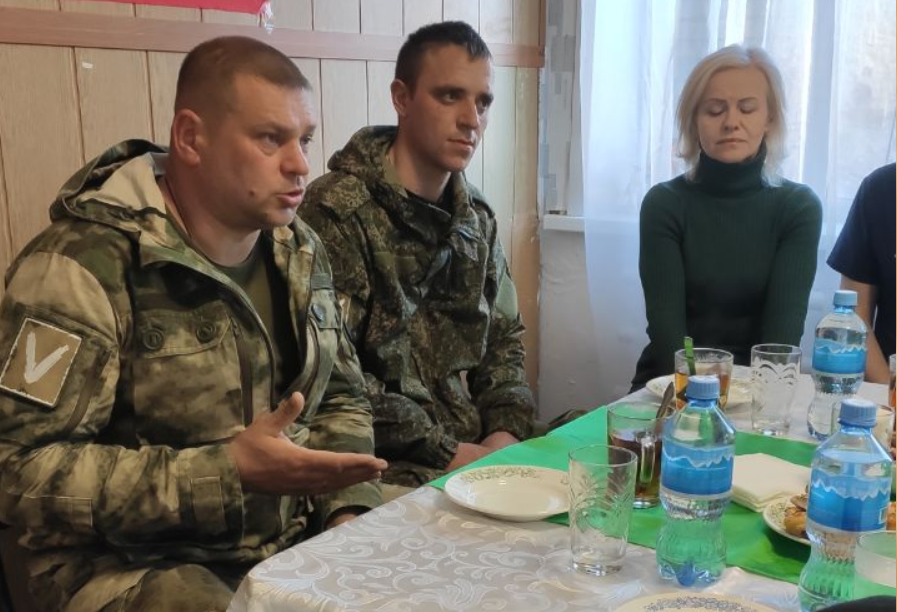
By November 2023, the senior sergeant had risen to the rank of officer and returned to Atkarsk. He bought a white Mazda 6. On the morning of November 14, he conducted a "courage lesson" at School No. 6, where he had once graduated (reports about this have been removed from the district administration website). That evening, he went to visit relatives. Around 21:00 PM, his wife, Natalya, dropped him off at home. At that time, 57-year-old Oleg Matasov was approaching the entrance to the building with bags. He and his wife had gone shopping, while Irina had stayed behind at the store. According to the Matasovs, Oleg called out to his neighbor, "Hi, Dima!"
The subsequent events were recorded by a CCTV camera. Recording Kiryukhin is seen tumbling out of the passenger seat, cursing, and walking toward the entrance. Loud thumps are heard at first—the attack is happening out of the cameras' line of sight. Then the victim appears in the frame, falling motionless. The attacker continues punching and kicking him. "Dima, you killed him!" Natalya screams. Her husband tries to kick her, too. The woman runs away. Kiryukhin approaches the motionless body and yells, "Speak to me with respect! I'm your boss!" He looks up at the balconies and calls to the neighbors to come down: "You fucking bastards! Come out! I'll tear you apart!"
— He's dead! Dima, what did you do? — Irina Matasova runs into the yard screaming.
- Killed, — Kiryukhin simply answers her.
The woman falls to her knees next to her husband. At that moment, Irina Anatolyevna says, she was certain that the closest person she had lived with for thirty years and raised two sons with was dead. The camera captures Kiryukhin attacking both Matasovs, kicking the woman in the head.
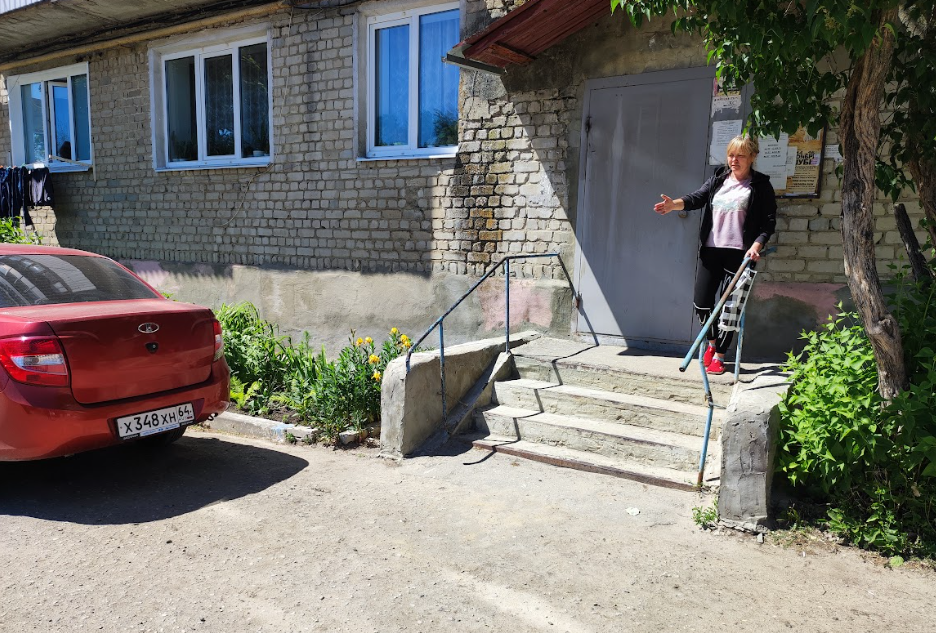
The recording lasts nine minutes. According to Irina, not a single neighbor called the police during that time. No one later came forward as witnesses. The beating was stopped by a random person—policeman Alexei, who happened to be visiting her mother, who lives in the same five-story building, that evening.
"I screamed, 'Lesha, help!' Kiryukhin turned on him, swung his weapon once, twice. I dragged my husband into the entryway, and I don't know how I got him up to the third-floor apartment," Irina recalls. According to her, Alexey managed to distract Kiryukhin and called the police.
The police station is across the street. But the patrol officers didn't arrive for ten minutes. During the arrest, Kiryukhin cursed the officers and grabbed them by the lapels. One of the officers pepper-sprayed him.
The district administration website continued to display news about Kiryukhin's "lesson in courage" for three days, then the posts were removed. Atkarsk newspapers called the incident "unpleasant incident" и "street aggression", without mentioning the attacker's name.
"I am an adequate person"
Oleg Matasov didn't die. He even refused hospitalization on the first evening. But later, he became ill and was taken to a hospital in Saratov, where no further medical treatment was given. Irina Matasova, with a suspected traumatic brain injury, was taken to the district hospital, then to the regional hospital. The injury was not confirmed, but doctors at the Atkarsk psychiatric hospital diagnosed her with anxiety disorder and PTSD. She was unable to work for two months after the incident, despite the fact that Irina is an insurance agent with sole proprietor status, and sick leave for a sole proprietor is not covered. Throughout this time, the Matasovs received financial support from their adult sons.
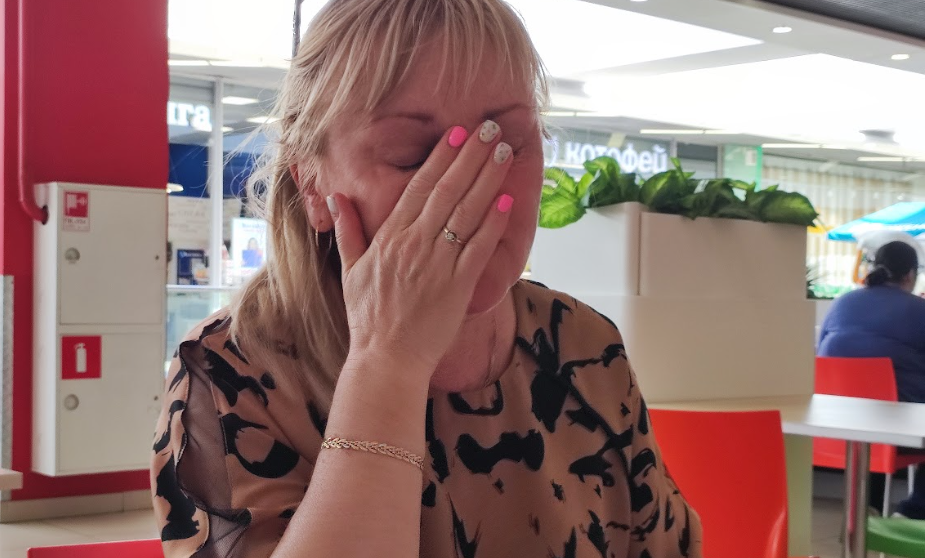
"I've never been beaten in my life. I didn't know what bruises on my face were. I've been on medication for six months, I can't sleep, I'm shaking at night," Irina recalls, crying again. She cries a lot during our conversation.
A criminal case against Kiryukhin was opened under Article 105, "Attempted Murder." The charge was later changed to hooliganism.
During questioning in court, Kiryukhin called himself an "adequate person" and explained that he did not want to kill the Matasovs.
“Did you want to show society that you can do anything?” asked Konstantin Kartashov, the victims’ lawyer representing Trauma Center project.
“Yes,” Kiryukhin said, without any embarrassment at all.
During interrogation, the defendant stated his intention to return to the front. It is unknown whether he has submitted documents to the military registration and enlistment office. The defendant's lawyer and relatives declined to speak to journalists, and it is currently impossible to ask Kiryukhin himself this question.
According to amendments Legislation adopted in the spring allows for the conclusion of a contract at any stage of criminal prosecution—from the initiation of the case to serving a sentence. Only defendants in criminal cases involving pedophilia, terrorism, and crimes against state security are deprived of this opportunity. сообщает According to Kommersant, military enlistment office staff and the medical commission can visit potential recruits even in pretrial detention. After a contract is signed, criminal cases against those under investigation are suspended, and those convicted receive suspended sentences.
Unlike the stormtroopers recruited by the Wagner PMC at the beginning of the conflict and who fought for six months before being pardoned, today's contract soldiers must serve until mobilization is lifted. After that, their criminal prosecution will be permanently terminated, and their convictions will be expunged. This may happen sooner if the soldier receives a decoration or is wounded.
"A signal that violence is acceptable"
In total, there are currently 100,000 people in the war with Ukraine. words According to Putin, 700 people are participating. In December, the Russian president cited a figure of 617. According to the Ministry of Defense, more than 100 people joined the contract service from January to April 2024.
It's unknown how many people have already returned from the war zone. In June 2023, Wagner PMC owner Yevgeny Prigozhin reported, that 32 people previously convicted have returned home since January. The BBC and Mediazona, citing their own sources, confirmed This figure. According to publications' estimates, 31,1 of the 48,3 recruited prisoners remained alive. According to Prigozhin, 83 of them committed new crimes immediately after returning from the war.
Official statistics fixes Serious and especially serious crimes increased by 9,7% by 2023. Crimes committed with the use of weapons and explosives also increased significantly, by 32,4%. The situation is most serious in border regions.

Law Firm "Traumpunkt" declaresIn 2022, the number of murders and attempted murders increased for the first time in 20 years. Overall, the increase was only 4 percent, but in the border regions of Belgorod and Kursk, the rate nearly doubled. The number of women calling the domestic violence hotline increased by 5 percent in 2022. сообщил Resource center "Anna".
How to Verstka calculatedFrom the beginning of the invasion of Ukraine until April 2024, at least two hundred residents of Russian regions were killed and injured at the hands of frontline soldiers on leave or after completing their contract service. From the beginning of the war until April 2024, 84 servicemen and 91 pardoned stormtroopers committed crimes against the lives and health of residents of Russian regions. Most often, criminal cases were opened under the article "Intentional Infliction of Serious Bodily Harm." In more than half of the cases, the perpetrators were intoxicated. They primarily attack those nearby—drinking buddies, neighbors, or random passersby.
In total, more than 1,1 members of the "SVO" were accused of violations of the Criminal Code during the war, both those related to the death of people and those of a minor degree of severity. сообщает Novaya Gazeta. Europe. Their number increased sevenfold in 2023. Veterans are most often convicted of drunk driving, theft, and drug trafficking without intent to sell. In two-thirds of cases, the newspaper notes, judges recognized participation in the war as a mitigating circumstance. Overall, their sentences are more lenient.

Moreover, the government commission on legislative activity has already approved Amendments to the Code of Administrative Offenses will automatically reinstate the licenses of all Russians returning from war who had previously been stripped of their driver's licenses. As a reminder, licenses are revoked for serious violations, including drunk driving, leaving the scene of an accident, driving on the wrong side of the road, running a red light, and failing to yield to emergency vehicles.
"This practice is a signal that violence is acceptable on the part of war participants." comments Sociology doctor Iskander Yasaveev discussed the courts' position in an interview with Cherta. He believes that someone who has escaped punishment for a crime develops a sense that "anything is possible" and that "participation in combat operations should be abandoned as a mitigating circumstance when sentencing."
"Now they are heroes."
In March in Moscow, former Wagnerite Sergei Mironov, out of jealousy, killed his common-law wife, Svetlana. He cut off her ear and stabbed her more than 15 times. Her 15-year-old daughter was in the apartment at the time. In April, the Kirov Regional Court sentenced Former Wagner fighter Ivan Rossomakhin was sentenced to 22 years in a maximum-security penal colony for the rape and murder of an 85-year-old pensioner. In May, in the Moscow region was convicted Also a former Wagnerite, Maxim Golovachev. Out of jealousy, he killed an acquaintance with whom he had been in love before leaving for the front. He stabbed the victim 47 times. In June, a court in Izhevsk posted Artem Egorov, a member of the SVO, was sentenced to 15 years in prison. He tried to drown his girlfriend and stabbed a friend who tried to stop him.
Also in June, the Lipetsk Regional Court sentenced Vladimir Vlasov, who had returned from the war. He had come home after completing his contract service. Having gotten drunk, He accused His wife, Tatyana, claimed she loved her four-year-old daughter from her first marriage more than their children—one-year-old twins. Tatyana and the children hid from her aggressive husband at an elderly neighbor's, but Vlasov managed to break into the apartment, beat his wife, and trampled the child. The girl died from ruptured internal organs. As noted by the publication "Gorod 48," Judge Oleg Miroshnik addressed the defendant by his first name and patronymic during the trial, which is unusual in Russian legal proceedings. Vlasov received a 14-year sentence in a maximum-security penal colony. He has already filed a petition for a contract with the Ministry of Defense.
One of the most high-profile crimes committed by SVO members was the murder of 12-year-old Karina Kabikova in the town of Topki in the Kemerovo Region. The schoolgirl went missing on the afternoon of June 18. The following morning, her body was found in a manhole. Nearby, 49-year-old Andrei Bykov was hiding in an abandoned boiler room. He was wearing Karina's sneakers.
The man said that around 13:00 PM, he caught the girl returning from a summer school camp, dragged her into an abandoned building, tied her to a tree, and attempted to rape her, but was unsuccessful. He then strangled her. Returning the next morning, he skewered her body and threw it down a well.
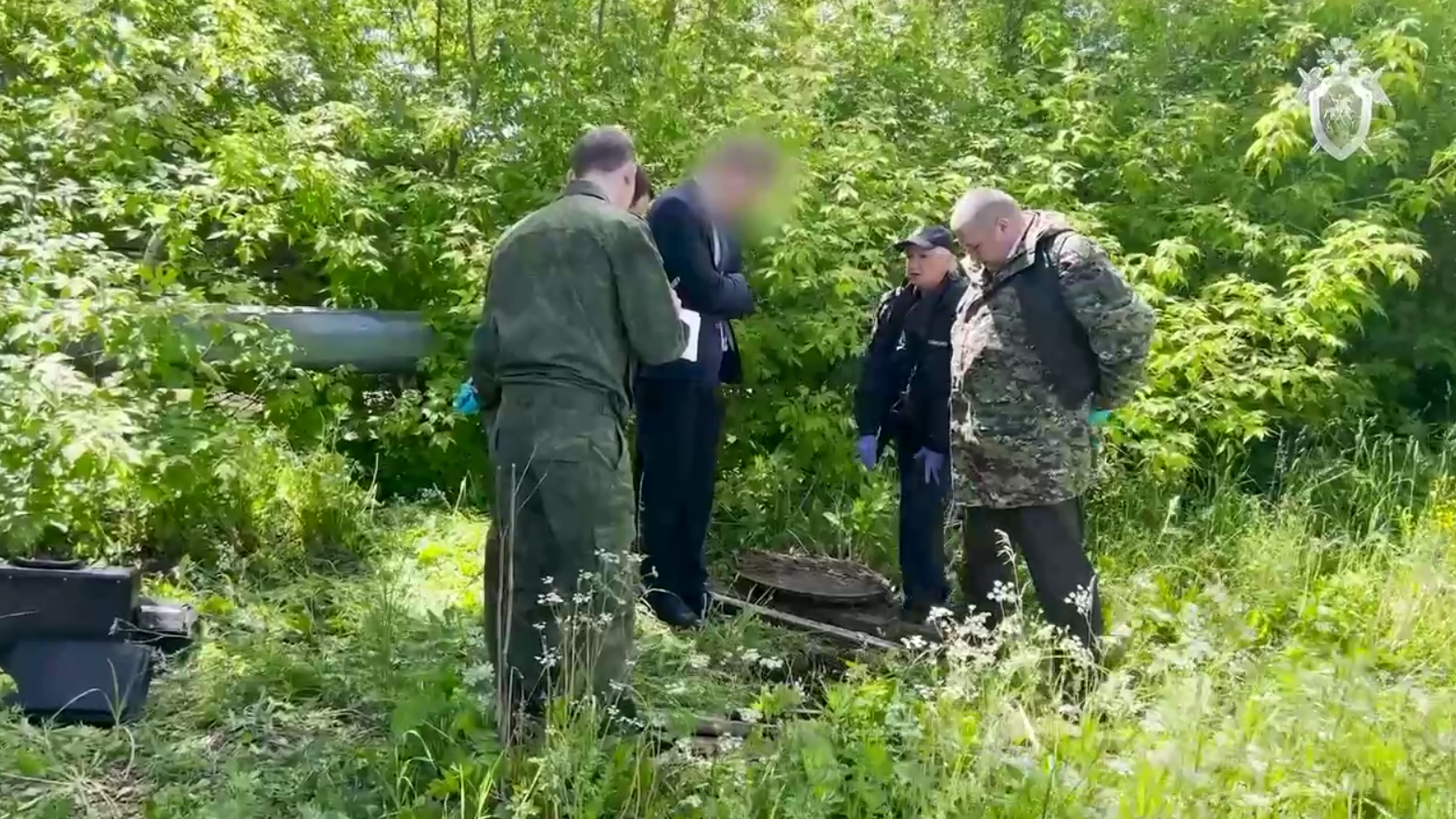
How to Found out Journalists say Bykov has been convicted at least six times over the past 20 years—for theft, involving a minor in a crime, threatening to kill, and causing grievous bodily harm resulting in death. In 2019, he sentenced Bykov was sentenced to 13,5 years in a maximum security prison colony for the murder of an elderly woman. Following a domestic dispute, he hit the pensioner over the head with a bucket and strangled her. At his trial, Bykov claimed the victim had insulted him.
In October 2023, Bykov signed a contract with the Ministry of Defense. In December, he was captured near Krasnogorovka near Donetsk. In January 2024, he was exchanged. In February, he returned to his native village of Maly Korchugan, 17 kilometers from Topki, and has been a vagabond ever since.
Following Karina's murder, State Duma deputy Nina Ostanina wrote on social media: "As the chair of the State Duma Committee on Family Protection, I am obliged to warn that such tragedies will occur with increasing frequency. Upon returning from the front, these people found themselves unsocialized and pose a danger to society. We must establish regular monitoring of their movements and provide them with assistance in finding employment."
"At first, these people felt like criminals, but now they're heroes. And this sense of heroism will influence their return." explained Ostanina later commented to Gazeta.ru.
Her colleagues didn't support her. Deputy Chairman of the State Duma Security Committee Ernest Valeev said RBC said it sees no need for "supervision of individuals who were convicted and then went on to fight." Committee member Andrei Alshevskikh explainedthat contract prisoners “according to the laws of wartime, atoned for their guilt with blood” and “it is a little wrong to establish control over this social group.”
"Epidemic of Immorality"
According to psychologists, the rise in crime among veterans may be due not only to leniency on the part of law enforcement agencies, but also to mental health problems that develop after participating in combat. "In 1989, based on the Afghan experience and the shocking comparison I made with the experiences of World War II veterans, I called the war an 'epidemic of immorality,'" писал In the monograph “Psychic Trauma,” Mikhail Reshetnikov, rector of the East European Institute of Psychoanalysis, one of the oldest PTSD researchers in Russia, who participated in the Afghan campaign as a doctor, wrote about it.
According to his conclusion, “along with mutual assistance, military brotherhood and other relatively positive attributes, robbery and murder as a result of showdowns among one’s own, medieval torture and cruelty to prisoners, the most perverted sexual violence against the population, armed robbery and looting constitute an integral part of any war and are not isolated, but characteristic phenomena for any of the active armies.”
As the author explains, the most painful thing for survivors is the inability to "verbalize and thereby reject painful experiences." After all, if front-line soldiers were to tell the complete truth about the war, rather than the heroic one, "they would be refused not only understanding, but even listening." According to the researcher's observations, it is customary to recall criminal experiences even among veterans, let alone in confidential conversations with family members and medical professionals.
"Even in those isolated cases where former fighters do see a psychiatrist or psychotherapist, most of them fail to overcome the barrier and voluntarily speak about how they roasted a captured Afghan sniper alive at the stake after he had killed their friend, how they dropped a boy captured in the mountains from a helicopter, how an entire platoon raped a young Afghan girl, how they shot dozens of civilians or bombed their villages out of sheer vengeance and despair (I have cited only a few such cases, the veracity of which I have no doubt). Lest the uninitiated reader develop a one-sided understanding of such events, I will note that such situations were accompanied by similar actions by the opposing side. "We witnessed how an unarmed Soviet food convoy was not only shot at by the mujahideen, but also how each soldier killed in it had his eyes gouged out, stars carved into his chest, his genitals cut off and inserted into his mouth," writes Reshetnikov.
According to the expert, "the virus of future psychopathology grows in this fetid broth of memories that cannot be verbalized," and "tens of thousands of people whose memories are poisoned pose a real threat not only to themselves but to society as a whole." The author believes that "having taught people to kill, society must also be responsible for the rehabilitation of professional killers."
Citing the experience of the international psychological center in Armenia, opened after the 1989 Spitak earthquake (PTSD can arise not only after a war, but also, among other things, as a result of a natural disaster), Reshetnikov notes that "in the first three years, the need for therapy demonstrated by the affected population may be reassuringly small," but the number of initial requests for psychiatric and psychotherapeutic help has consistently increased over the years since the tragedy, almost doubling within a decade.
It should be noted, however, that Professor Reshetnikov's book, in which he spoke of the "absolute immorality of such a method of conflict resolution as the physical destruction of the enemy," was published in 2006. The rector now holds a different position. Speaking out At a roundtable discussion in the State Duma dedicated to the rehabilitation of SVO participants, Reshetnikov declared the need to "disavow the hysteria with the possible number of post-traumatic disorders that is being whipped up in the general press."
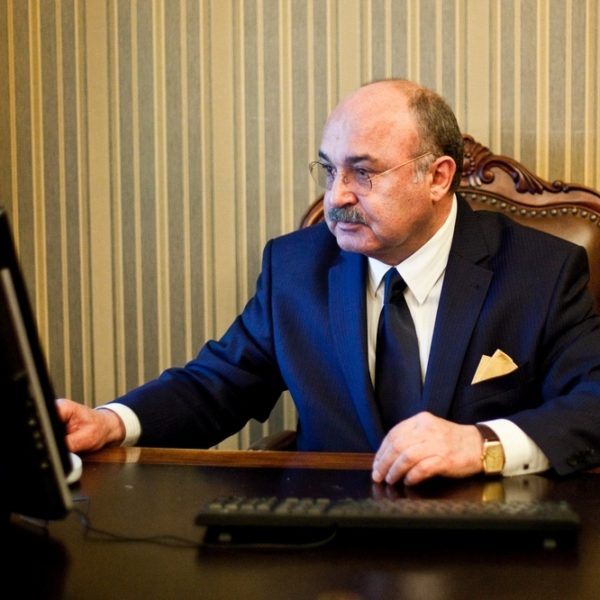
“The Russian spirit as a special psychic instance is not a poetic image, but a real part of our national mentality,” explained The researcher, in a conversation with readers of the Psychological Newspaper, stated that “a soldier who has been shot at and has experienced PTSD is the gold reserve of any army.”
"Psychologists in Russia are now obliged to say that there won't be a large number of military personnel with post-traumatic stress disorder. They shouldn't sow panic, no matter how contrary it may be to global experience. I wouldn't be surprised if clinicians claim that war is only beneficial for Russians and leads to unprecedented personal growth," explained US-based clinical psychologist Fyodor Konkov described this transformation to People of Baikal. He called Russian researchers' statements about the mental state of military personnel "not clinical psychology, but propaganda." The publication notes that the authorities avoid discussing PTSD, but instead talk about post-traumatic growth (PTG) (positive changes that occur in people after participating in war), although there is little evidence for this concept.
On counting According to the US Department of Veteran Affairs (VA), on average, one in seven out of every 100 people returning from war experiences PTSD at some point in their lives. Among participants in modern conflicts, the incidence is higher: one in three American soldiers who served in combat in Iraq and Afghanistan suffered from PTSD.
Russian researchers cite different figures. estimated According to specialists at the Bekhterev Center for Psychology and Neurology, between 3 and 11 percent of war veterans may experience PTSD. Sergei Yenikolopov, head of the department at the Scientific Center for Health Psychology, believesthat the proportion of victims may be higher - 18-20 percent. According to Psychologists at the Bekhterev Center estimate that the proportion of patients with PTSD among the wounded may reach 30 percent. The Russian Ministry of Defense has not disclosed the number of wounded, however according to our calculations Their number may range from 197,5 thousand to 245 thousand people.
It turns out that 60-70 thousand people with PTSD will return to Russia from the war.
"Heroes can't complain"
How does the Russian government intend to help these people integrate into civilian life?
Psychological screening of veterans is organized as follows:
- A demobilized service member may (but is not required to) contact a psychologist from the Defenders of the Fatherland Foundation, whose branches have been operating in all regions since the summer of 2023.
- After an express diagnosis, the visitor, if necessary, receives a referral to a local clinic (since July 2023, “to increase the availability of psychological assistance” for war veterans, 1,4 medical and psychological counseling rooms, 412 medical and psychological assistance rooms, and 556 psychotherapy rooms have been opened in clinics) or a neuropsychiatric dispensary.
Meanwhile, active military personnel are unable to access assistance—both the "Defenders of the Fatherland" and municipal clinics only serve those who have already been discharged from service. "SVO members returning on leave are being diverted from civilian medical facilities to hospitals, which are often overcrowded," complains new Minister of Defense Andrei Belousov.
Per year passed the screening More than ten thousand discharged Russian military personnel and Donbas militia members who participated in combat operations on the side of the DPR and LPR since 2014, as well as family members of fallen soldiers, are also involved. Twenty-six percent showed up signs of mental and behavioral disorders. They were advised to begin treatment with a psychotherapist, psychiatrist, or drug addiction specialist. How many people followed this recommendation is unknown, but it was likely few.
Thus, in St. Petersburg, psychological assistance offices opened in clinics were opened with a referral from the Fatherland Defenders Foundation and on their own initiative for a year. requested Only 120 front-line soldiers. "Those who returned from the Soviet Military District are heroes, and heroes can't complain," explains Elena Isaeva, chief specialist at the city's health committee. Furthermore, psychological help is stigmatized in Russia: it's considered shameful and unsafe to seek help from a "brain therapist," as it can hinder future employment.
At the same time, as follows from interview Deputy Defense Minister Anna Tsivileva says that instead of medically qualified professionals, veterans are seen by educational psychologists from educational institutions, emergency psychological support specialists from the Ministry of Emergency Situations, and representatives of religious denominations. The latter, according to Tsivileva, is even better: "Not everyone will go to a psychologist. But they will go to a priest who will listen."
If the number of people needing help increases (and we mentioned above that the number of requests is initially small, but grows over the next ten years), the system may not be able to cope. In the spring of 2023, Guzel Ulumbekova, Rector of the Higher School of Healthcare Organization and Management, said that psychiatrists In Russia, the number of doctors is half that required by regulations. To address the staffing problem, the Ministry of Health запустил Refresher courses, within the framework of which pediatricians, therapists, cardiologists, gastroenterologists, and geriatricians can obtain the specialty of psychiatrist—in 720 academic hours (approximately five months of study).
According to the regulations, established As of the fall of 2023, the Ministry of Health will allocate 15 minutes for an appointment with a psychiatrist and 27 minutes for a psychotherapist for an undiagnosed patient. 35 percent of this time will be devoted to paperwork.
Meanwhile, in Russia, patients with PTSD may not receive the treatment they need at all, as Insider reports. This is because the Russian Ministry of Health refused to cross The new International Classification of Diseases (ICD-11) is being considered. Psychologist Yuri Zarubin, who emigrated after the war began, explained to the publication that the updated classification introduces a new diagnosis—complicated PTSD—in which it is impossible to determine the specific episode that caused the disorder. "Complicated PTSD has similarities with other disorders. A person may be prescribed treatment for schizophrenia, which will have side effects but will not help," Zarubin expressed concern.
It's unknown how much money is allocated specifically for psychological and psychiatric care for former military personnel in Russia. However, there is data for the United States: according to BBC, one of the clinics that provides psychological rehabilitation within the American veterans' department spent $40 million in 2022. That's 3,5 billion rubles at the current exchange rate. About the same amount. spent The Saratov regional budget in 2023 will provide subsidized medications for all Saratov residents with serious illnesses, such as diabetes, cancer, and others.
Overall, the rehabilitation of SVO participants (which includes not only psychological and psychiatric care, but also surgeries, prosthetics, and general medical treatment) is expensive for the Russian budget. According to Medvestnik, in 2023, the Mandatory Medical Insurance Fund (MHIF) will allocate funds for medical care for veterans, including medical rehabilitation. listed more than a billion rubles. Ten billion planned to spend For the purchase of equipment for rehabilitation centers. 70 billion rubles have been allocated for the rehabilitation of the wounded over three years.
Again for comparison: Saratov's city budget for 2024 is 30,1 billion rubles.

