
"There was never a Gulag here."
How the heirs of victims and executioners in Kolyma are trying to "rethink" an inconvenient past
From Perestroika to the present day, debates about the Stalin era and the price the country paid during the mass repressions have raged in Russia. NeMoskva examined how Kolyma (famous for its most horrific prison camps) has experienced a process of simultaneous acceptance and denial of the facts of its horrific past over the past thirty years.
At the end of 1931, the Council of Labor and Defense of the USSR created The state trust "Dalstroy" was a mining enterprise in Kolyma. Subsequently, in April 1932, the North-Eastern Correctional Labor Camp (SVITL, Sevvostlag) was established—Dalstroy's main work base. Road construction, building construction, and gold mining fell to the prisoners. Surviving prisoners who had served their sentences often remained to work in Kolyma as civilian employees after their release. Dalstroy reported directly to the Council of People's Commissars; in 1938, it came under the control of the NKVD. The director of Dalstroy oversaw the entire territory (Kolyma, Chukotka, parts of Yakutia, and Khabarovsk Krai) and the camp, although Sevvostlag formally had its own separate director. From 1932 to 1956, 880 people passed through the Kolyma camps, and 126 prisoners died. In 1957, in connection with the dissolution of the majority of prisoners after the start of Khrushchev’s “thaw”, Dalstroy was liquidated.
The Glasnost Era: The Return of Names in Different Shapes
At the end of 1988, a branch was opened in the Magadan region MemorialLocal periodicals began publishing memoirs by former prisoners. Shalamov's "Kolyma Tales" (50 copies) and Ginzburg's "The Steep Route" (25) were published in impressive print runs by a regional publishing house.
At the same time, the rehabilitation of the first head of Dalstroy began in the public consciousness. Eduard Berzin — the actual founder of the Kolyma camps.
In fact, he was immortalized in Magadan immediately upon his arrival in Kolyma—Berzin Street existed during his reign, from 1933 to 1937. However, like many other servants of the regime, Berezina himself fell under the steamroller of repression. After his arrest, the street was named after Stalin, and in the 60s, it became Karl Marx Street. However, as early as 1967, a street in a new district of Magadan was named in Berzin's honor.
The "perestroika" wave of Berezina's rehabilitation began on August 1, 1988. A memorial rally was held in his memory that day. In October, a memorial plaque was unveiled on a city school building, and a school museum was later added. As a result, on July 16, 1989, a bust of Berezina was unveiled in front of the city Communist Party Committee building (now the Magadan mayor's office).
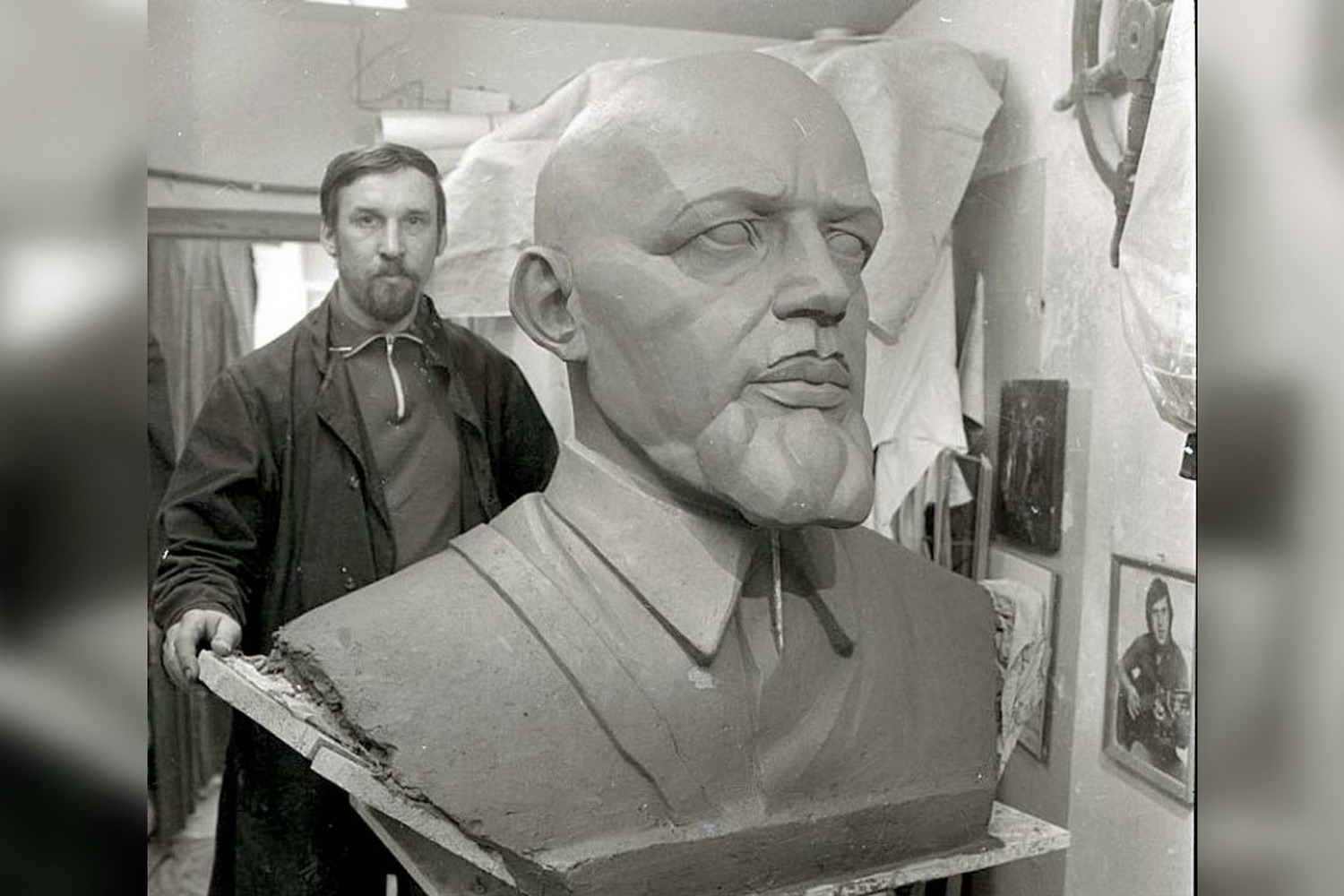
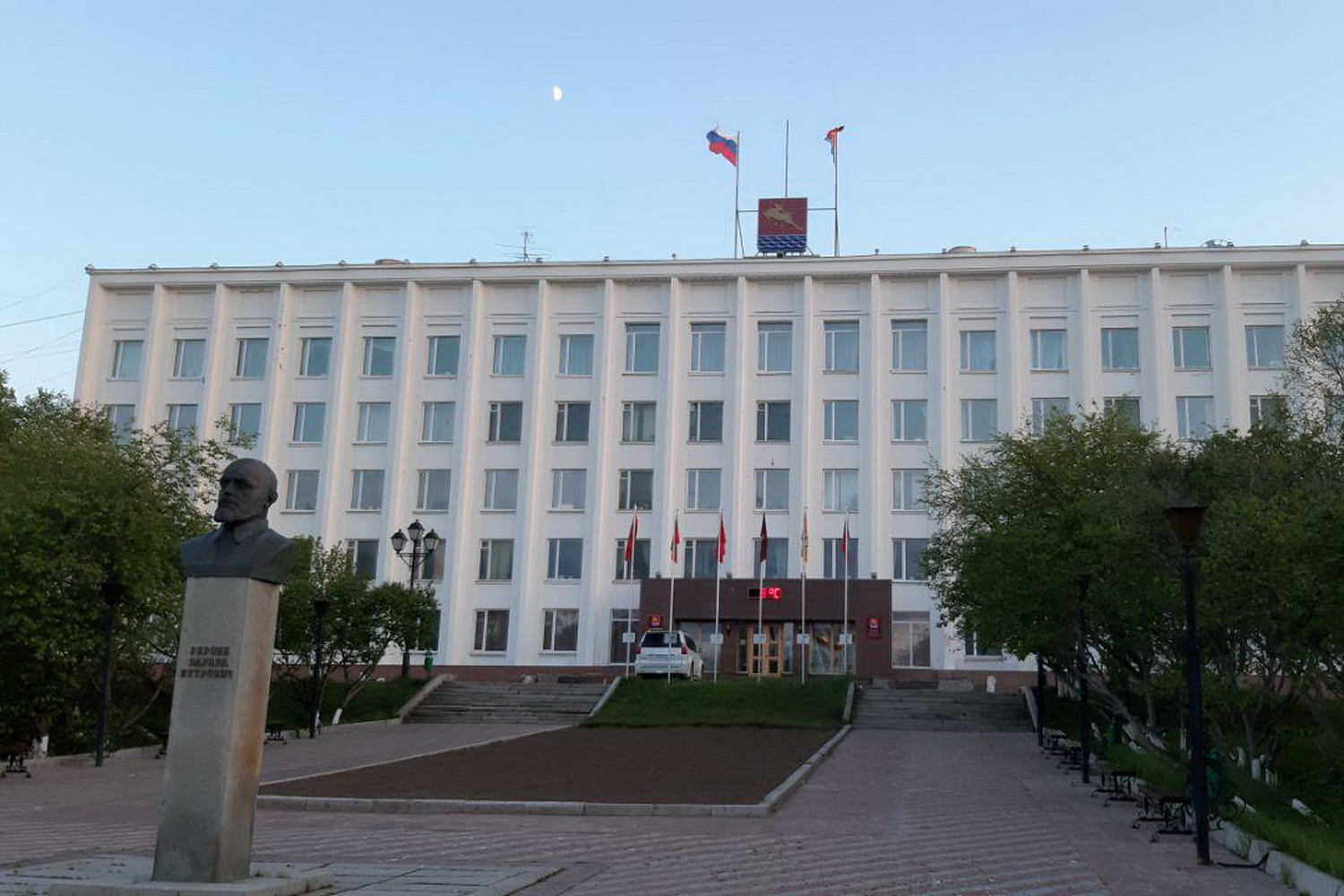
The confrontation between two policies of memory of the Kolyma past can be described as follows: “A special type of plant” (“effective management”) vs. “Auschwitz without ovens” (“an extermination labor camp”).
The first description of the "plant" comes from Stalin, who veiledly called it "Dalstroi" in 1939. Legally, it (along with the North-Eastern camp, Sevvostlag) was not part of the Gulag system, but in reality, it was the outermost point of this "archipelago."
The symbiosis of formally “free” authorities and forced labor from among prisoners made it possible to present the Kolyma camps as an industrial enterprise, leaving out its “extermination-labor” essence.
"Auschwitz without ovens" phrase former Kolyma prisoner, engineer and later writer Georgy Demidov, for which he received a second prison term.
This same formulation was championed, among others, by Tomsk historian Anatoly Shirokov, who arrived in Magadan in the early 90s. He began researching the history of Dalstroi in Kolyma. Initially, his works were distinguished by their harsh criticism of the repressive Soviet machine: he called Dalstroi a "typical Gulag organization" and specified that it was in the Kolyma camps that Soviet totalitarianism found "its most concentrated expression."
It will be all the more surprising to see how dramatically his point of view has changed over the years and the senatorial seat he received in 2014. But first things first.
From the Mask of Sorrow to the Church of the Kolyma New Martyrs
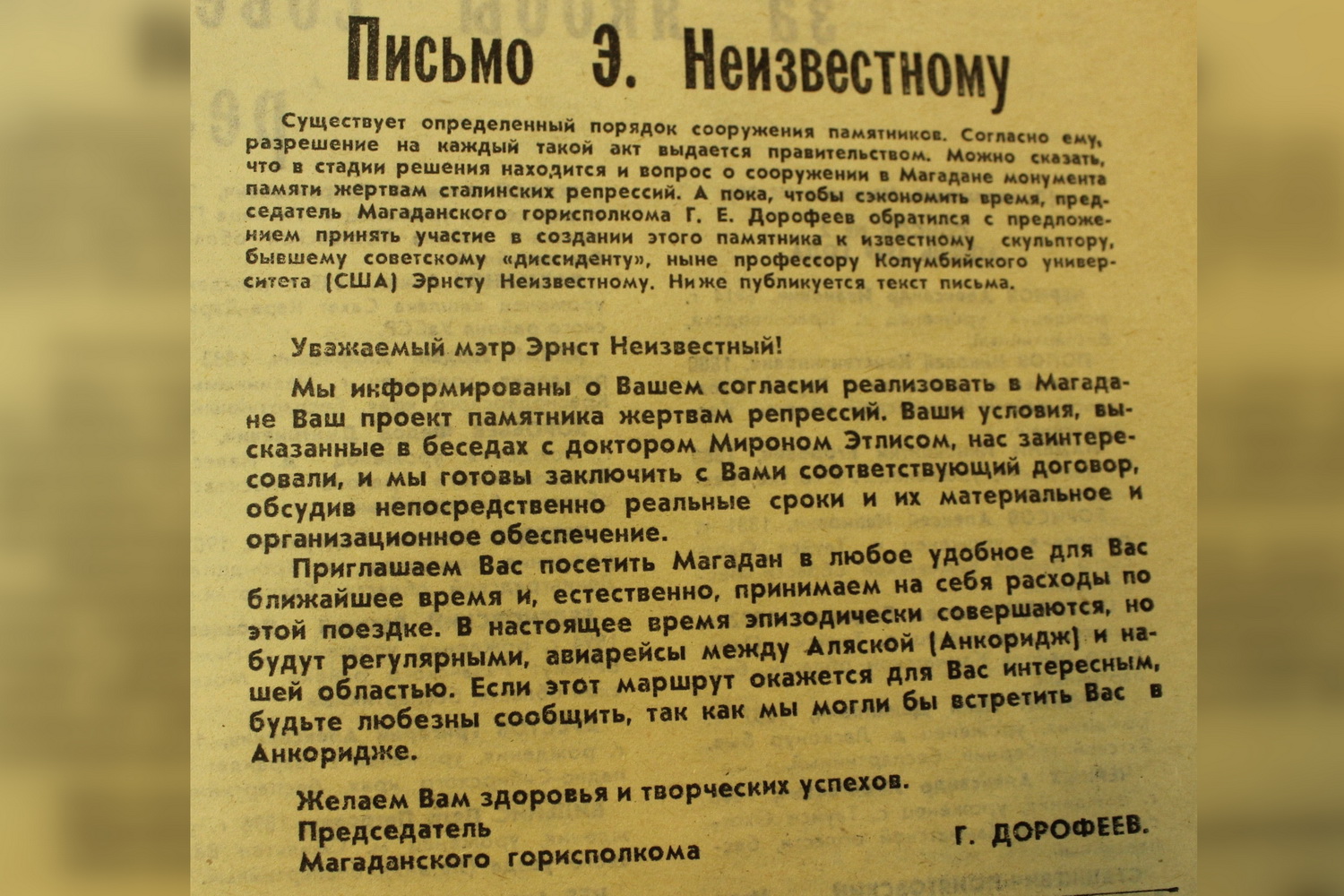
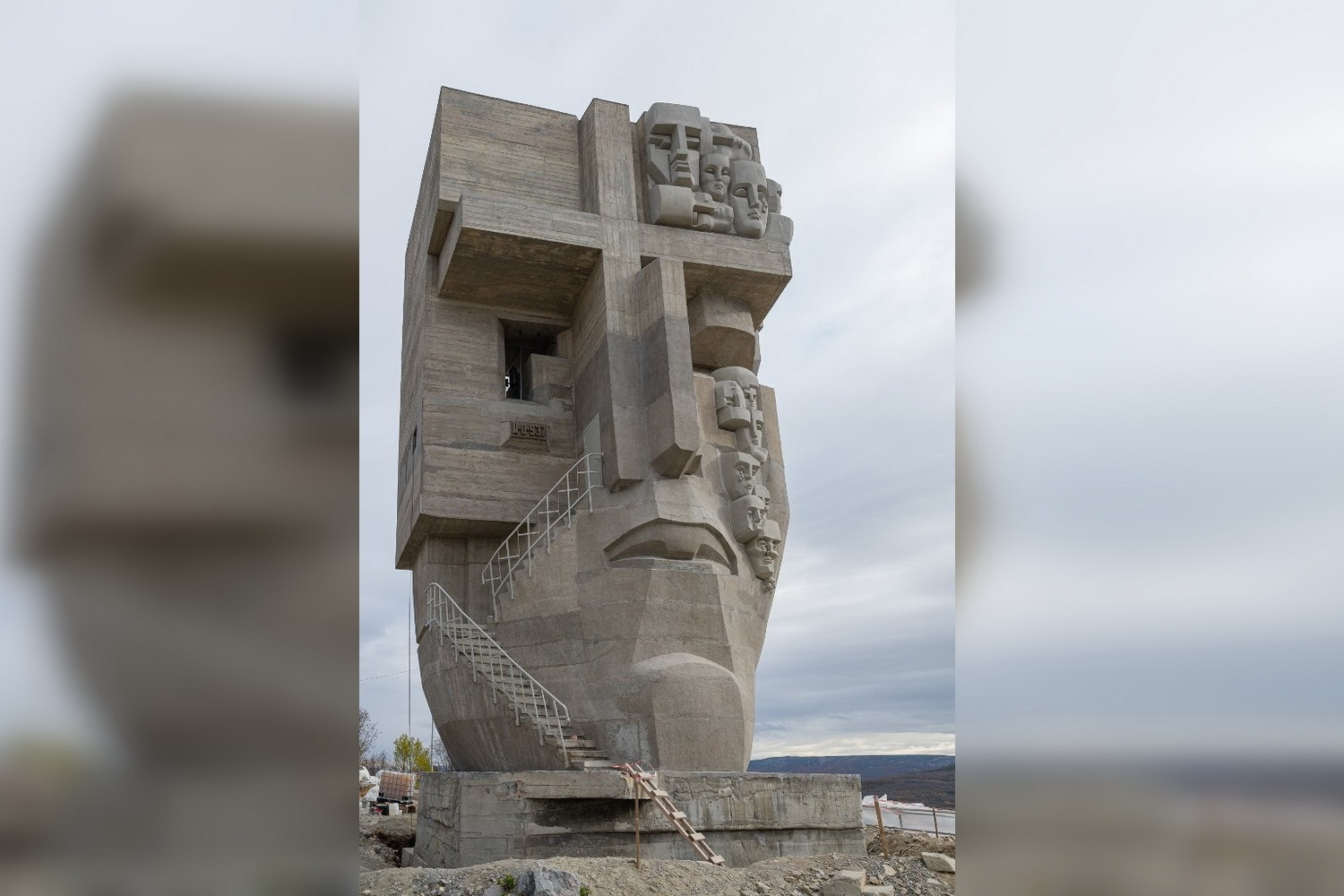
In the 90s, the authorities in the Magadan region were generally indifferent to the politics of memory, but they did facilitate an important event: the opening of the "Mask of Sorrow" in June 1996, designed by Ernst Neizvestny.
Seven years passed from the first discussion of the monument in 1989 to its full implementation. The local press covered the event with headlines like "The bloody tears of the murdered will yet be cast in metal" and "Not subject to oblivion."
Neizvestny's idea of a geographic triangle between Magadan, Sverdlovsk, and Vorkuta (he wanted to erect monuments in all three cities) was never realized. In 2017, a smaller version of "The Mask" was unveiled only in Yekaterinburg.
The Kolyma and Ural monuments share similar locations: both are located practically outside the city. The Magadan monument stands on Krutoy Hill. While it's technically within the city limits and relatively close to the center, there are no bus routes to the memorial, and the walk there requires some effort. Over the years, the monument hasn't acquired any symbolic status in the city. Once a year, on October 30th, the victims of the terror are remembered there, and that's all.
In 2014, when the mayor's office lacked funds to repair the memorial, a local deputy's firm took on the task of restoring the "Mask" as part of a "sponsorship." The monument's appearance was spoiled The building was painted with naval paint and lost its original appearance. Until 2018, no one cared; only after the appointment of a new governor did the authorities begin to restore the architect's vision. stretched out until the end of 2022.
Dmitry Medvedev, while serving as President of the Russian Federation, in 2008 during a trip to Magadan entrusted Flowers at the monument. Vladimir Putin, who visited Kolyma twice, in 2005 and 2011, ignored the "Mask of Sorrow."

***
The Magadan regional administration didn't preserve a single camp site or convert the ruins into museums—throughout the 1990s and 2000s, the former camps continued to deteriorate. However, in 2001, regional governor Valentin Tsvetkov initiated the construction of a massive cathedral in Magadan on the site of the House of Soviets, which had been unfinished during the Soviet era.
Initially, and throughout its construction, no historical or symbolic significance was mentioned for the building. But in December 2016, a small church "in honor of the new martyrs and confessors of the Russian Church" was consecrated in the lower aisle.
In January 2017, the government agreed to officially finance the religious site. When the paperwork was completed, it became the "Trinity Cathedral in Magadan, a memorial church to the victims of political repression." Following these manipulations, the newly minted monument was transferred to the regional museum.
The awkward location of the church dedicated to the canonized laymen and priests of the Russian Orthodox Church who served time or were killed in Kolyma is striking: the lower aisle is accessed not by the main staircase, but by a door beneath it, which must be found. Apart from a single fresco on the vault, the church space is devoid of any remembrance of the new martyrs. There are no plaques or signs with their names, and the inscriptions on the halos hanging from the ceiling are difficult to read.

In December 2016, in the cathedral have opened Church History Museum. Bishop John (Pavlikhin) promised that "a comprehensive exhibition on the history of Kolyma's development, including the history of the Dalstroy era, will be displayed: 'It's important to remember this, so that our land is never again shaken by such metamorphoses.'"
As of today, the "museum" has not moved forward. photo exhibitions, which has nothing to do with Soviet history.
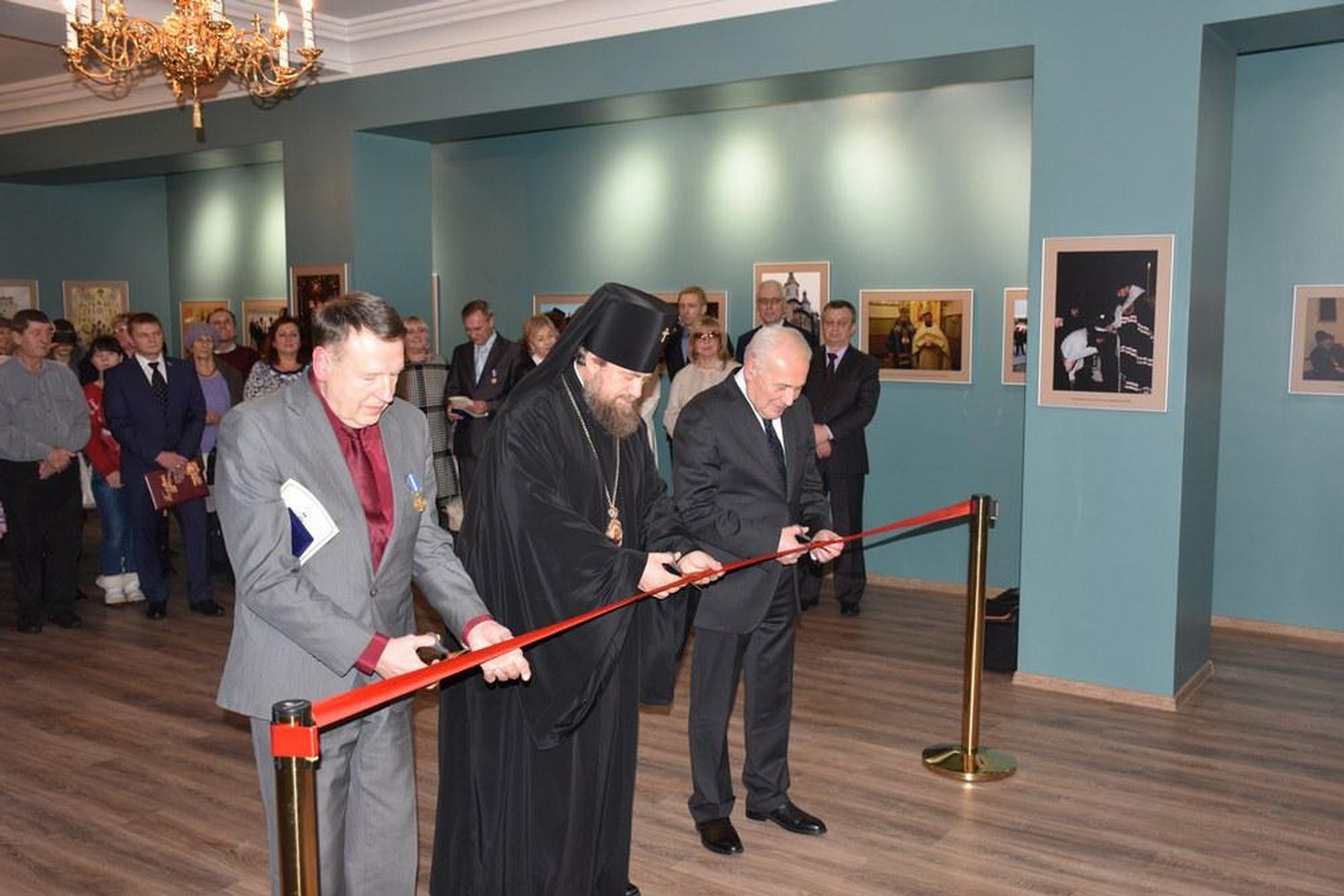
***
One example of private initiative from an official, unique in all these years, deserves mention: in 2018, Denis Revutsky, prosecutor of the Tenkinsky District of the Magadan Region, developed the concept for a monument to the victims of political repression in the village of Ust-Omchug. The sculpture was created by local blacksmith Oleg Zakutniy.
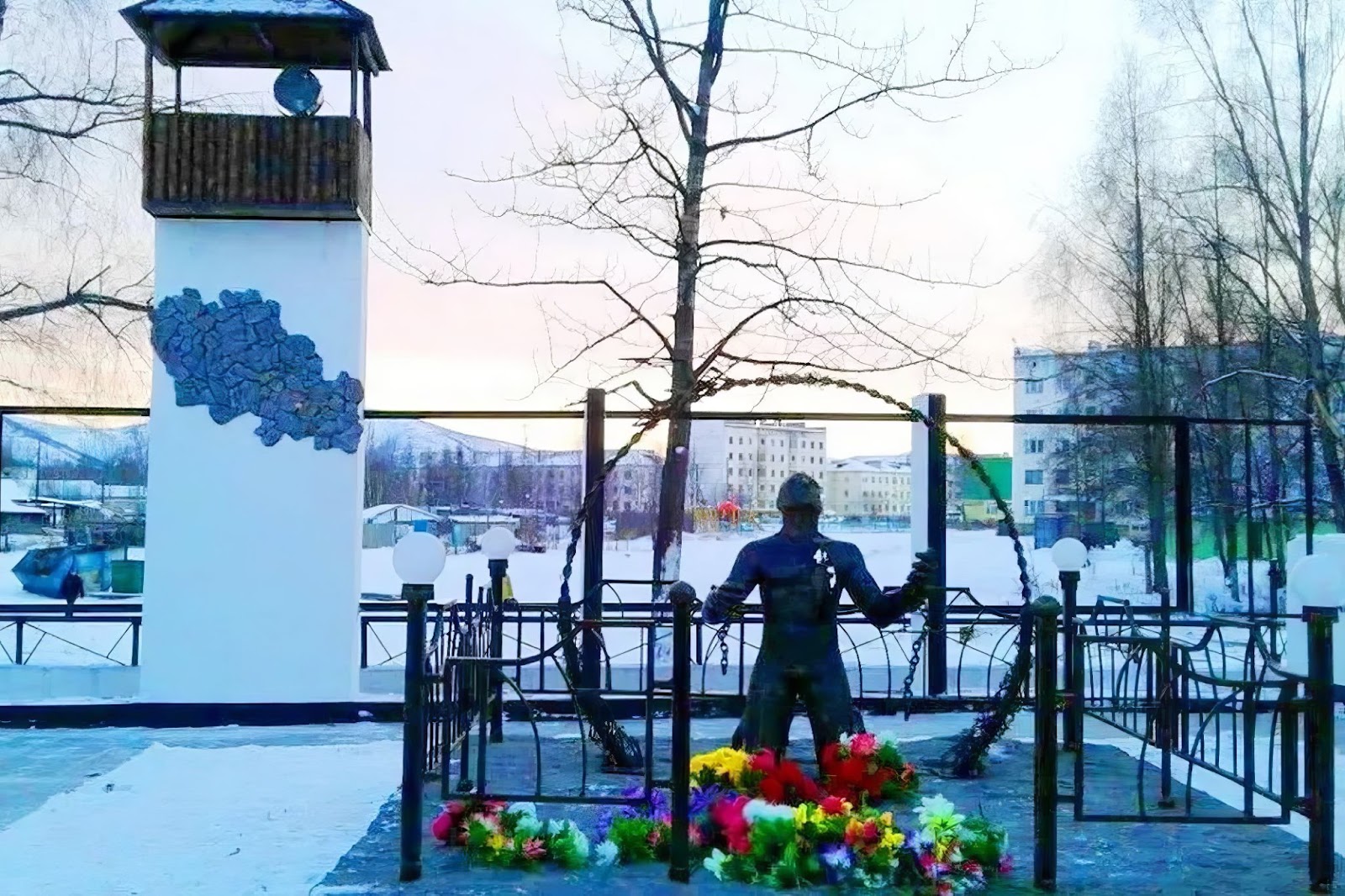
Revutsky himself is the descendant of an NKVD officer. In his concept for the memorial, the camp guards are also hostages of the Gulag system, although this interpretation is not evident in the monument itself.
"A former guard will be sitting on the bench—it's no coincidence that there's a watchtower there. And this guard, looking at both the monument and the watchtower, has his own thoughts. I and we all wanted people, when they looked at this monument… to think," говорил He's at the opening. But for some reason, the escort was never added to the composition.
Revutsky himself later left the prosecutor's office and became the head of the Tenkinsky district.
Forgetting Dalstroy: An Attempt to Rebrand Magadan
In the 2000s, publications on the "camp theme" in Magadan media significantly decreased. This was in no small part due to the deaths of two prominent promoters of the topic—local historian Alexander Kozlov and writer Alexander Biryukov, whose articles regularly appeared in the local press.
In 2010, the mayor of Magadan, Vladimir Pecheny announced New brand: "Golden Kolyma".
"Frankly, we're tired of stereotypes: 'Come to Kolyma'—'No, come to us,' the Gulag... We hold history sacred, we're not trying to rewrite the city's history, but the past shouldn't weigh on the future. Magadan has a bright future," he said.
The mayor himself apparently had little understanding of what the essence of the territory's rebranding was supposed to be. The "positive" campaign to "displace" the Gulag past began after his promotion to governor in 2013. Local media outlets were supposed to showcase the region's "fancy" side. news about increased gold production and “investment attractiveness”, as well as the annexation of the Magadan Region to Site "The Big Book of Love," where residents were invited to declare their love for their small homeland. "These Magadan residents' declarations could be the best rebranding of Kolyma," the governor's press service stated.
The "positive agenda" was still unable to displace the Gulag: in the general public's mind, Kolyma remained a "prison territory," although in fact there were four of them left in the city and region.
It was also under Vladimir Pecheny that an important symbolic event took place. The "revenge of the Chekists" of the late Putin era reached the Magadan region: in 2017, a memorial plaque in honor of the head of the KGB was unveiled on the building of the former KGB headquarters (now the bailiff service) on Dzerzhinsky Street in Magadan. Cheka.
The initiator was a man with an interesting career: he was appointed in the same year to the post of Human Rights Commissioner in the Magadan Region Oleg Mikhailyuk (from 1983 to 1986 - history teacher, from 1986 - KGB employee, by 2013 upon retirement - colonel, deputy head of the FSB).
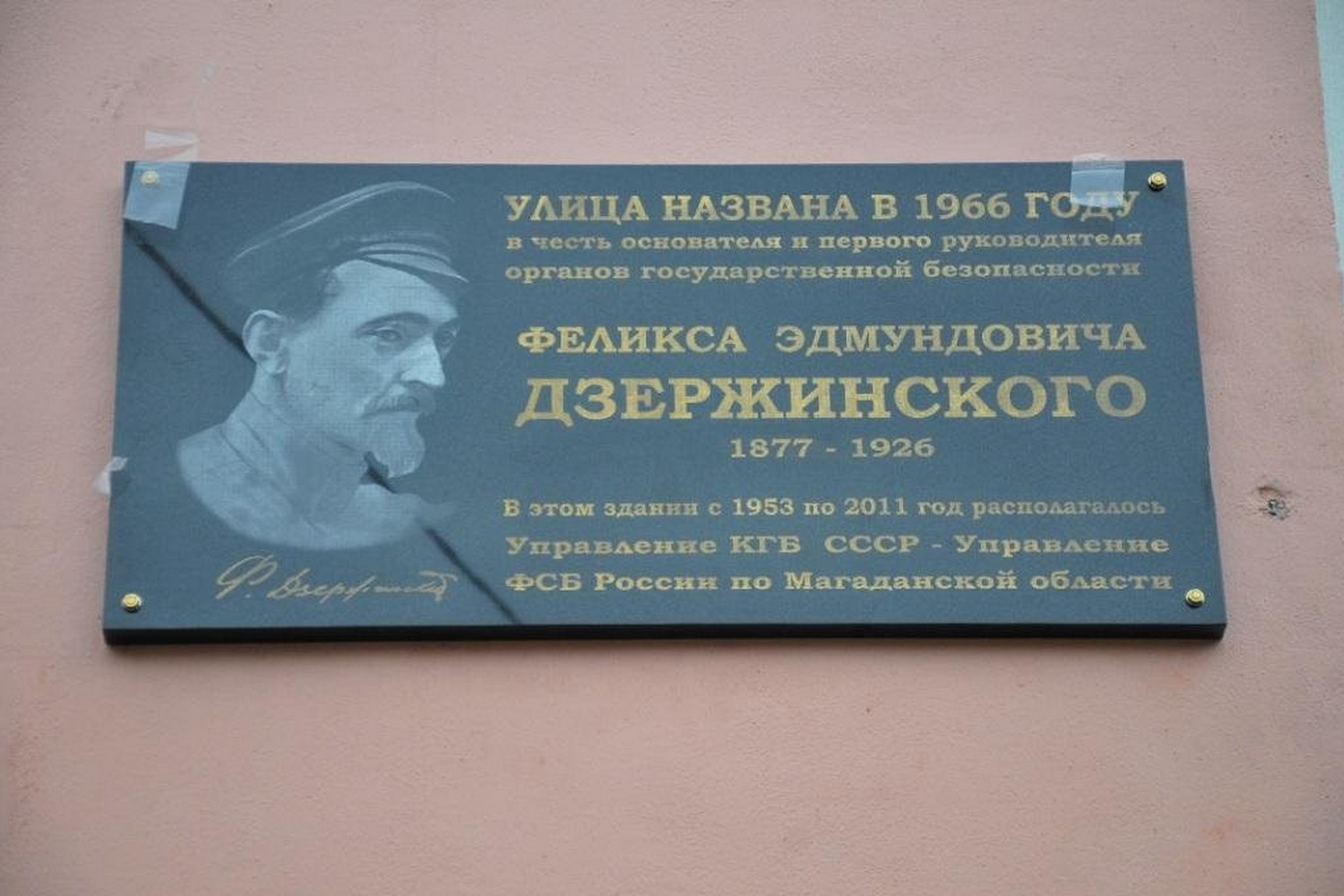
"I am confident that security agency employees will never be Ivans, ignorant of their kinship and the history of their homeland. Therefore, the [FSB] Veterans' Council unanimously supported the idea of an officers' meeting to perpetuate the memory of Felix Dzerzhinsky," сказал Mikhailyuk at the opening.
The city mayor, Yuri Grishan, also spoke then. declared, that “the history of Magadan was connected with the name of Felix Edmundovich Dzerzhinsky, and [his] memory was always honored.” This connection, apparently, is in the fact that portraits of the first Chekist remain to this day hanging in the offices of police chiefs.
In 2020, the FSB Veterans Council initiated the installation of another memorial plaque—one dedicated to World War II hero Mikhail Ashik (1925–2020). It appeared on the façade of the building where he lived. This Leningrader, however, is associated with Kolyma not through his military exploits, but rather through his work in the Ministry of State Security in the 50s and in the convoy troops in the 60s.
Arriving in Magadan in 1951, at the peak of the camps’ filling (more than 200 thousand prisoners), Ashik in his later memoirs said"Journalistic tales about how everything in Kolyma in those years relied on prison labor are an exaggeration": "There were prisoners, of course. There were quite a few of them near Leningrad, and the university in Moscow on Lenin Hills was built with their participation. But including the life of that camp site in the history of the university is as wrong as linking the development of the Kolyma region with the camps that existed there."
In the same 2020, along with the opening of the memorial sign, Ashik was awarded rank "Honorary Citizen of Magadan".
The turning point of 2019: Dud's film, an interview with Prokhanov, the glorification of Berzin, a bust of Stalin
The year began with a newspaper publication "Tomorrow" conversations The publication's editor-in-chief, Alexander Prokhanov, met with the new governor of Kolyma. Sergei Nosov raised the topic of Stalin's past several times, and each time, it was extremely unfortunate. The newly appointed head of the region was vague about historical facts, explaining, for example, that Sergey Korolev, who miraculously did not die in Kolyma, “did not mine gold: conditions were created for him, and he worked in his own direction.”
Particularly notable among the other statements was Nosov's statement that "we never, even during the times of Tsarist Russia, exterminated people for dissent. This, by the way, is the strength of our people."
Overall, the governor demonstrated a desire to smooth things over and rebrand: “They used to say, ‘Kolyma is cursed.’ I want them to say, ‘Kolyma is blessed.’” However, after harsh responses in the media at the federal level, ranging from Novaya Gazeta until "Moskovsky Komsomolets", he had to roll back and actually add take your words back.
"Regarding our attitude toward history: we have many bright, glorious pages, but we also have sad and tragic ones—that's a fact. And one of the most tragic is the history of the Gulag in our country. We must remember this, know this, so as to prevent something similar from happening again. The phrase, perhaps poorly or inaccurately formulated, was later taken out of context regarding Sergei Pavlovich Korolev," Nosov stated.
***
Released in April 2019 film Yuri Dud's "Kolyma—The Birthplace of Our Fear" was enthusiastically received "on the mainland" (as Magadan residents refer to the rest of Russia), with 29 million views in five years. On the Magadan "island," it was met with a lukewarm reception.
Sergey Nosov said, who "likes" Dud, but he was more interested in the film's current status in the villages visited by the film crew, and the governor did not comment on the historical portion. The government-run Magadanskaya Pravda newspaper, however, was offended by the film's title. The newspaper's response was titled, "For some, 'Homeland of Fear.' For others, simply 'Homeland.'"
"Let's be honest—no fear was born in the Magadan region. The decision to create a system of camps, to repress people whose loyalty the Soviet government was unsure of, and to use forced labor from prisoners was made in places far from Kolyma and much closer to the capital journalist's permanent residence," said Stanislav Tarasov, the author of the article, while praising Dud for his lack of "gloom and doom."
This opinion is shared not only in the Magadan region. For example, Dmitry Gorsky, publisher of the media outlet "V Lesakh" (In the Forests), who released the major special project "Kolyma," also repeats this thesis“The birthplace of our fear is, of course, Moscow.”
Local FSB veteran Petr Tsybulkin gave out A mind-boggling conspiracy theory about the film's "customers": "Lately, major corruption revelations have become increasingly frequent, so many officials, especially those in Moscow, have reason to fear. If they've even taken a hard line on their own, what can we say about those who have nothing to do with the 'office' or other law enforcement agencies? These are the people behind Dud's film, and their fear is associated with the word 'Kolyma.' Hence the title."
***
On October 11, 2019, a memorial evening was held in Magadan for the "bright personality and multifaceted character" mentioned at the beginning of Dalstroy, Eduard Berzin. Speeches by museum staff, local historians, and journalists boiled down to unbridled praise for him, the most succinct description of him. it could be considered In the words of history teacher Irina Shirokova: "One cannot speak of people of Berzin's stature using purely moral categories. These are people who are products of their era."
The veneration of Berzin clearly demonstrates the approval of the “effective management” component in the camp history: when in 2023 in Magadan they staged a “people’s radio play” with non-professional readers based on the book by Viktor Vyatkin "A man is born twice" (1963), the role of the director of Dalstroy was voiced by Mayor Yuri Grishan.
“To transform myself, I reread the novel again: I needed to feel the mood of the hero, what goals he set for himself as the builder of Magadan,” I told Grishan himself was born in Kolyma to a family of Ukrainians repressed in the 1940s.
The mayor never mentions his father and mother, who served time in prison, likely fearing they'll be labeled "Banderovtsy," especially in light of the current war with Ukraine. Even during the annual May 9th marches, Grishan doesn't bring a portrait of his father, who managed to end up in the war while serving in a reserve regiment.
From the eldest son, who lives in Ukraine, the mayor actually renounced.
***
At the end of 2019, the Kolyma branch of the Communist Party of the Russian Federation organized laying on flowers to the bust of Stalin. It was erected on the territory of the defunct fishing port by the owner of the pier (probably for the official 140th birthday of the leader, although it has long been proven that Joseph Dzhugashvili was born there). in 1878). The communists also held a festive concert and a gala reception, where they distributed party cards to those who had joined the party under the "Stalinist call."
The then second secretary of the Magadan regional committee of the Communist Party of the Russian Federation, Valentina Doroshevich saidthat Stalin should be honored in the Magadan region: “There are moments associated with political repression, but this is the history of Russia, it is not at all simple.”

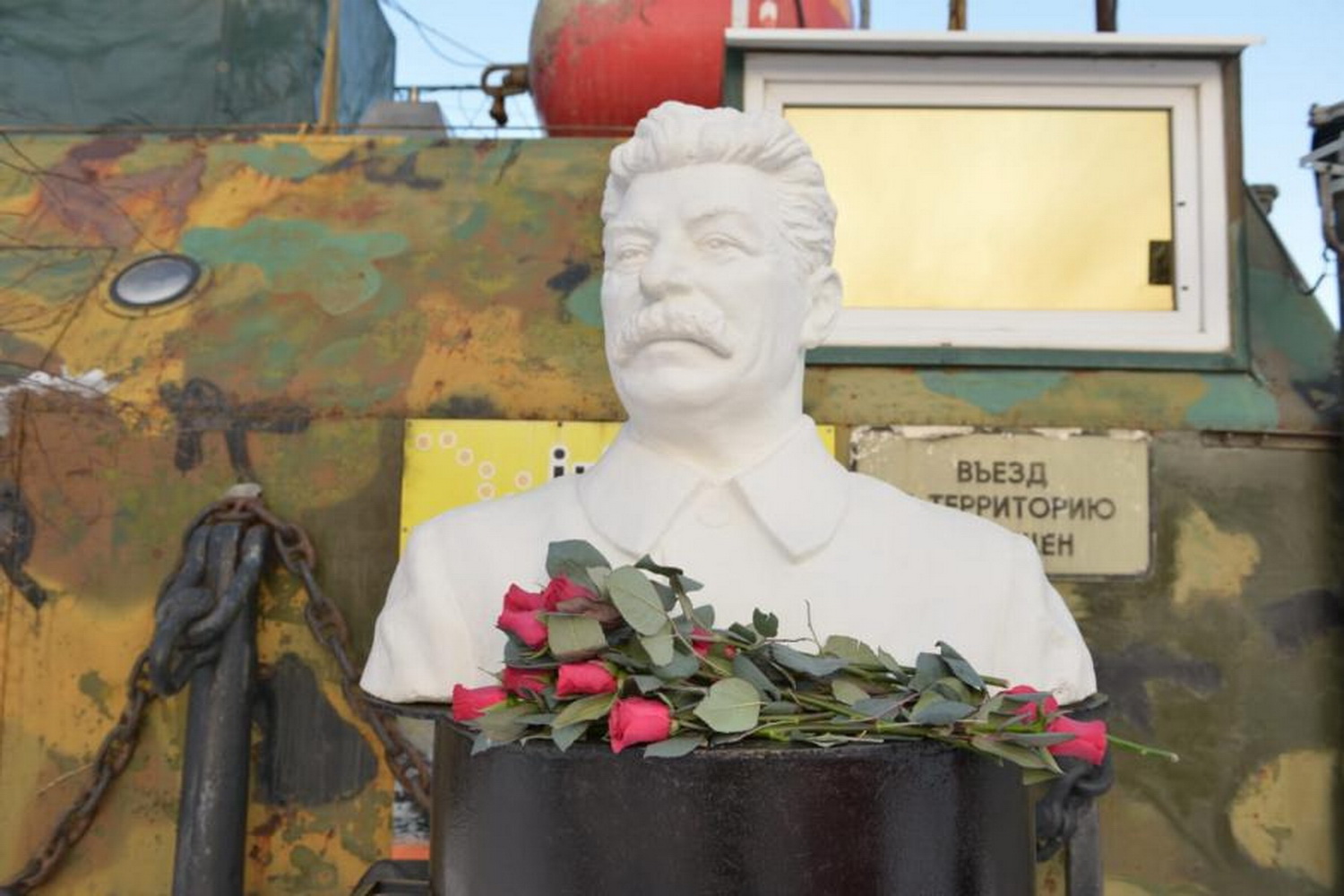
Opinion leaders in Magadan ignored the event or attempted to find positive aspects in it. For example, Alexander Navasardov, essentially the last active historian of the "Dalstroy" period in Magadan, noted Stalin's achievements, "although his work may also have its downsides, nuances, and so on."
“Compared to Nicholas II, Gorbachev and Yeltsin, Stalin is like a bird,” he said.
Artem Kovalev, Magadan's chief urban planner and deputy director of the regional museum, believed it was time to come to terms with this historical figure: "We all need to calm down and slowly figure out what was good and bad in history, and what lessons we should learn from it. Stalin is neither a saint nor a demon, and, in my opinion, we must avoid making sweeping judgments. The main thing is not to divide people, but to study history and open their eyes, using facts—both positive and negative."
Anatoly Shirokov: From a Fighter for Historical Truth to a Political Conformist
The career of historian Anatoly Shirokov (we mentioned him above, at the very beginning) allows us to fully trace the path of transformation of public opinion both in the birthplace of the camps and, perhaps, throughout Russia.
At the beginning of his research on Dalstroi, Shirokov was outraged by any suppression or inaccessibility of documents. "An official from the departmental archives, unable to find any legitimate reason to deny access, declared, 'By publishing this information, you will disgrace OUR STATE!' And he refused to release the documents. And this happened not in the 80s, but quite recently," he recounted in the preface to historian Biryukov's 2003 book, Kolyma Stories.
Shirokov defended his candidate's (1997) and doctoral (2010) dissertations on Dalstroi, publishing the latter in 2014 with ROSSPEN in the prestigious scientific series "History of Stalinism."
At the same time, the historian became rector (2007-2014) of the only university in Magadan (North-Eastern State University), joined United Russia and was twice elected to the regional Duma.
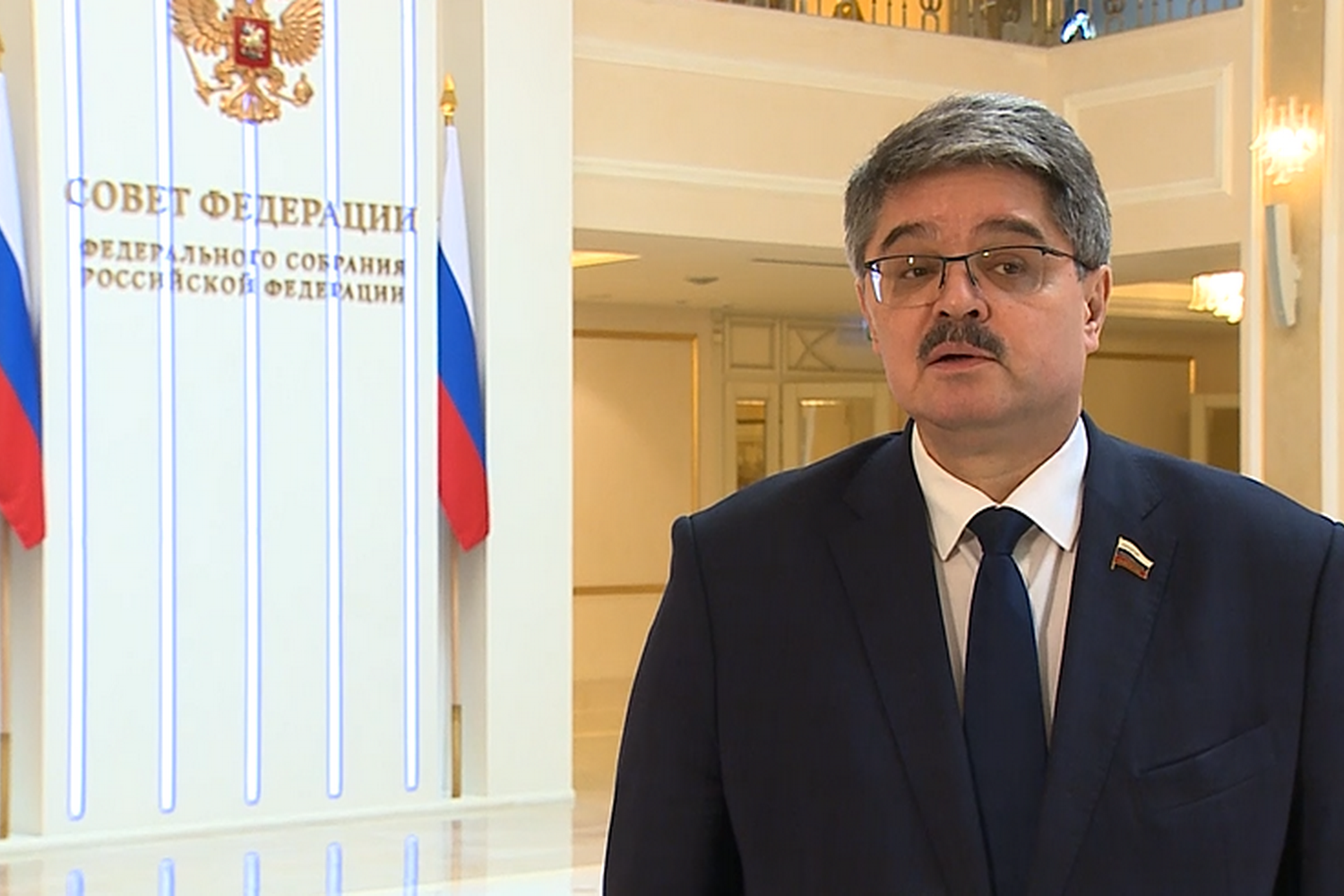
In 2014, Shirokov became a senator from the Magadan region and, as stated in the biography on his official website, supported "a course towards reviving the country after the liberal experiment of the 1990s, towards defending its sovereignty in the new historical conditions, which was taken by the Unity movement, and then by the United Russia party, created by V.V. Putin."
In public appearances, Stories "forgot" about its concept colonization North-East with the barbaric development of gold deposits and already, of course, did not speak in relation to Dalstroythat “free labor did not exist in the USSR; there were only different gradations of forced labor.”
On the contrary, in 2019 the senator took up the extraction For Magadan, the title of "City of Labor Valor" (from 1941 to 1945) was established by Putin. He compiled a historical report intended to help secure the status. It no longer mentions any slave labor in the camps.
"During the Great Patriotic War, more than 360 tons of gold were mined by Dalstroi enterprises, of which Magadan was, of course, the epitome. And Kolyma gold was, of course, used to strengthen the war-ravaged Soviet economy," claimed Shirokov, leaving out of the equation who mined this gold and what price they paid (during the war in Sevvostlag, according to official data) died 56 thousand prisoners).
In the new version of the story from the doctor of science to the victory worked "Kolyma residents and Dalstroy managers": "During the war, Magadan residents demonstrated massive labor heroism in mineral exploration and extraction. During this historic period, the Main Directorate for Construction of the Far North of the NKVD of the USSR (Dalstroy) made a decisive contribution to gold production in the USSR. The labor feat of its workers was recognized by Dalstroy being awarded the Order of the Red Banner of Labor."
Magadan failed to win the "Hero" award on its first attempt, but the title was finally awarded in 2021. "I am very pleased with this event. Magadan will now live in the 21st century as a city with a history to be proud of," commented Shirokov.
Even after four years he proud of This achievement. "It's crucial that Ivan Fedorovich Nikishov, the head of Dalstroy [1939-1948], was awarded a military order for his work during the war. This is a very significant award. If this had happened at the front, it would have been likened to organizing a major operation on a front-line scale. Plus, Dalstroy itself was awarded an order for its work during the war. Ultimately, all of this suggests that our city deserves a reputation beyond that of simply being a Gulag center and so on," he commented.
Naturally, the senator didn't like Dud's film: given the course toward overcoming the "liberal experiment of the 90s," talk of a "homeland of fear" is politically incorrect. Kolyma—"it's the wonderful, fresh sea air, it's the incredibly beautiful nature, the wonderful people I met here, who became my friends. It's also trials. Yes, of course it would be... But not fear! It's a completely different experience." говорил he said in an interview with a Far Eastern publication.
The author of a meticulous work on the “typical GULAG organization” formulated a new symbol of his faith so"They say: 'The Gulag in Kolyma.' There was never a Gulag here."
The New Reality After the "SVO"
After the war with Ukraine began in 2022, a new player emerged on the battlefield for the historical memory of Kolyma: the head of the Public Chamber of the Magadan Region (PCM) and longtime CEO of the Magadan State Television and Radio Broadcasting Company, Yakov Radchenko. Unconditionally supporting Russian invasion of Ukraine, Radchenko apparently decided to anticipate the “party policy” and stake out a place as the main revisionist of the history of Dalstroy.
In the summer of 2022, at his instigation, the chamber began collecting materials, that "to prepare information about how many innocent political prisoners, and how many criminals and collaborators, there actually were in the Kolyma camps during that period."
Since Ukrainians were the second-largest nationality in Sevvostlag after the Great Patriotic War, Radchenko's final review should have given a pre-prepared answer: "Banderites" are the same criminals, they were imprisoned "for a reason," and the number of political prisoners is exaggerated.
This was openly stated: the activists wanted to eradicate “the widespread dissemination of myths that almost all prisoners in Kolyma in the 30s-50s were innocent victims of Stalin’s repressions, leaving behind the scenes the fact that the majority of prisoners were convicted of real serious crimes, including military ones (Banderovites, Forest Brothers, Vlasovites).”
The activity culminated in a memo to Governor Sergei Nosov. It declared that "statements such as 'Kolyma is the center of political repression in the USSR' and 'Kolyma is the birthplace of our fear,' which have become widespread in fiction and journalism, are clearly exaggerated and not based on a solid historical foundation or archival documents."
Radchenko after that рассказал, that he is ready to go further in the field of “debunking myths.”
But his activity had already begun to wane. The OPMO's last raid on the topic of repression in April 2023 involved a review of the federal rehabilitation law. Recalling the "Banderites" and collaborators of the Great Patriotic War, Radchenko said, that “the demand for rehabilitation was high in the 90s, but now it is practically non-existent, so the question of repealing the law can be raised.”
After this, apparently having lost interest in the topic and not having gained many supporters (historians as a whole did not support his drive), the head of the State Television and Radio Broadcasting Company abandoned his attempts to revise history.
***
Another z-activist who tried to catch the “tailwind” was Igor Dadashev, a former journalist and literary director of the Magadan theater, who went from an amateur rock musician (who lived in America for two years) to a furious Stalinist.
In 2019, he released a half-hour film about one of the most brutal Kolyma camps, Butugychag, and attempted to "expose dark myths about the Soviet past." The arguments used were based solely on abstract logic, without any attempt to cite any sources.

In 2023, Dadashev decided to become the ideological curator of the "Light of the Camp Footlights" theater festival, which had already been held in Magadan. Only if the event's goals in 2018 were designated as “awareness of the tragic experience of our country and the memory of political repressions is a way to prevent repressions in the future,” then now for the application for a presidential grant there was written a mixture of a loyal note and a hymn to Dalstroy, which punished “collaborators.”
"An honest, objective examination of the difficult pages of our past, a public discussion on the development of Kolyma during the existence of the Dalstroy State Trust and the system of North-Eastern correctional labor camps, its main contingent—those convicted of criminal and political offenses such as murder, robbery, embezzlement of public funds, corruption, treason, espionage, defection to the Nazi occupiers during the Great Patriotic War, and the service of Soviet citizens in the Wehrmacht, Abwehr, national SS legions, A. Vlasov's Russian Liberation Army, and other units of Nazi Germany. All these activities must comply with the Constitution of the Russian Federation and the amendments adopted in the 2020 national referendum initiated by Russian President V.V. Putin, with the goal of protecting the Russian Federation and its citizens from unreliable, false facts and Russophobic propaganda," the project description states.
However, the grant for four million rubles was denied.
***
At the end of 2023, it became clear that Radchenko and Dadashev had misjudged the trend that would be set by the authorities, not the Magadan ones, but the federal ones. Perhaps they had acted too hastily.
Vladimir Putin in September instructed to create a “Museum of Memory” in Kolyma by 2030, which can be considered a surprise in light of the officially approved Stalinization (its bright example — new school textbooks by former Minister of Culture Medinsky).
To achieve this, the Magadan National Guard will seize the partially intact building of the former punishment cell and the land on which it is located.

The Moscow Gulag Museum is responsible for the concept, having begun to collect materials.
In previous years, employees have repeatedly conducted expeditions to the Magadan region, released a detailed "Atlas" of the Kolyma camps, initiated edition The complete works of Georgy Demidov, an important author overshadowed by Varlam Shalamov and Evgenia Ginzburg, are underway. All this gives hope for a balanced approach to the future project.
If, of course, the Museum itself survives by 2030.

