
La lumiere russe
Why did Pavel Yablochkov die in the dark?
Sergey Tashevsky

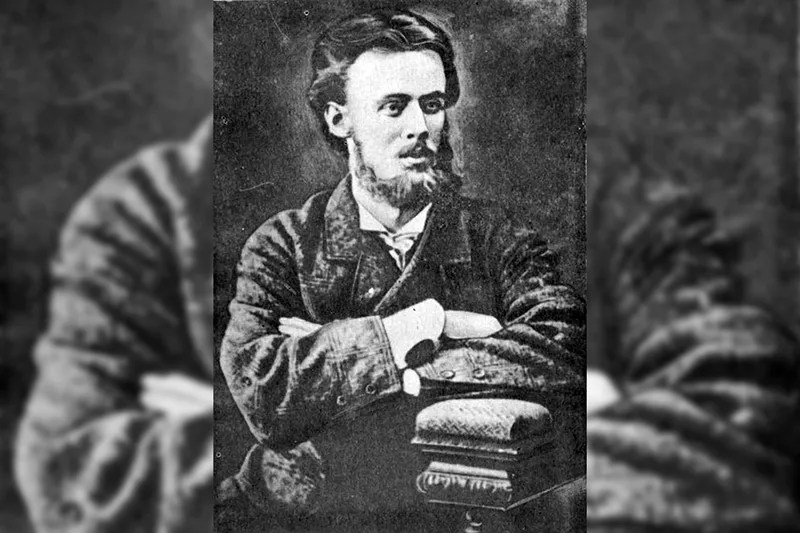
Ask any moderately educated person, and almost everyone will likely tell you that the Freemasons played a fatal role in Russian history. Such is the stereotype, ingrained by generations. But ask the same people about Yablochkov, the Russian inventor extraordinaire, and you'll likely be told with a benevolent smile that he brought Russia fame and international recognition. Most people don't even suspect that Pavel Yablochkov, who once illuminated almost all European capitals with his lamps, was not just a Freemason, but a venerable master and founder of the "Cosmos" lodge. This, apparently, was even more important to him than his triumph as an inventor (which, incidentally, didn't last very long). And his story is the story of a man who was trying to change something in the consciousness of his compatriots. He tried, but failed.
He was born in the autumn of 1847 in the village of Yablochkovo in the Saratov province, on the family estate. His father came from an ancient noble family, but, alas, impoverished, so the "estate" was just a word: a dilapidated house and a few dozen serfs. It is said that from early childhood, Pavel showed the makings of an inventor: he allegedly devised a simple protractor for land surveying, which was later used by peasants in neighboring villages, and attached a counter to a cart that counted the distance traveled (the forerunner of the modern odometer). In short, the boy was talented. However, the family absolutely lacked the money for his education. Therefore, his parents homeschooled their son themselves, fortunately for his father, who had once studied at the Naval Cadet Corps in St. Petersburg, but had retired early due to ill health. Now, of course, he dreamed that his son would follow in his footsteps and dedicate his life to military service.

But a military career didn't appeal to Pavel. Although he was a gigantic figure, nearly two meters tall, he was as awkward as Pierre Bezukhov, and military discipline disgusted him. Nevertheless, he was forced to graduate from the Nikolaev Engineering School, and then (at his parents' insistence) serve for almost a year in a sapper battalion in Kyiv. In 1869, after much reporting and exhortation, he was sent to the Technical Galvanic Institute in Kronstadt, where military specialists in electrical engineering were trained. Primarily (this was a fashionable military topic) miners, who detonated mines along wires. At this school, a whole world of electricity opened up to the young man, with dynamos, "voltaic piles," and other wonders. But Yablochkov didn't want to blow anything up, and so in 1872 he finally retired from the military to join the civilian service. He specialized in electrical engineering. He was appointed head of the telegraph service at the Moscow-Kursk Railway. It is said that he made his first inventions there, improving something on the telegraph. But what exactly is unknown. Telegraph machines of the time were so imperfect that literally everything could have been improved.
Yablochkov now lived in Moscow, and soon began attending the electrical inventors' circle at the Museum of Applied Science (later the Polytechnic Museum) and giving lectures there. Young scientists from the physics laboratory of Moscow University, also located nearby on Mokhovaya Street, also frequented the group. This was a community of young people, although not revolutionary-minded (there were certainly no "bombists" or populists among them), but who dreamed of somehow dispelling the darkness of ignorance in which, in their firm conviction, Russia dwelt. And—quite logically—they largely equated the light of knowledge with electric light, with the newly invented Ladygin lamps and arc lamps equipped with Foucault regulators.
Both were extremely finicky and short-lived. But Ladygin's lamp (regular incandescent lamps, from which the inventor hadn't yet thought of pumping out the air) burned out in ten to twenty minutes and emitted very little light. But arc lamps... They sparkled almost like a modern electric welder. An electric arc formed between two graphite electrodes, illuminating everything around them. And, of course, this arc quickly burned through the electrodes, so the light emitted no more than a few minutes. True, the French inventor Foucault devised a special regulator with a clock mechanism for this lamp that moved the carbon rods, so the arc lasted longer, but this regulator also had to be constantly adjusted manually.
Nevertheless, the arc lamp seemed to Yablochkov to be the device that "brings the light of the future," and he eagerly seized the opportunity to prove it. Precisely in his own department, the railway department.
In 1874, the administration of the Moscow-Kursk Railway, which was likely under a rather progressive leadership at the time, conceived the idea (incidentally, the first in the world!) of installing an electric searchlight on a steam locomotive. However, such a word didn't exist back then; they called it an "electric lantern." And since everyone in the department knew Yablochkov was interested in electric lighting, they immediately approached him.
The young engineer quickly acquired the best equipment he could use for such an experiment: a powerful battery and an arc lamp with a regulator. It's said that Ladygin himself helped build the searchlight housing, mirror, and lens. All this rather bulky apparatus was mounted on a special platform installed on the locomotive's nose. Yablochkov, wrapped in a cloak, sat there on a rickety iron stool, having to adjust the lamp's regulator and replace its graphite rods every ten minutes. In other words, the locomotive's searchlight was, in a sense, operated manually. But damn, it worked!
It was a good thing it was summer, August, and the nights were warm. The journey to Crimea (the train was "royal," a member of the royal family was heading to Livadia) took three days. And, accordingly, three nights. Yablochkov slept like a log during the day, and at night he couldn't sleep, adjusting the mechanisms and replacing the embers in the lantern. Moreover, somewhere near Kursk, the locomotive was replaced, and all the equipment had to be reinstalled. The locomotive shook, Yablochkov himself sometimes suffered electric shocks, and by the end of the journey he could barely stand.
Nevertheless, the young engineer's work was highly praised, and Yablochkov received a bonus. After receiving it, he decided it was time to quit the railroad. He and one of his electrical engineer friends, Nikolai Glukhov, conceived the idea of opening an electrical laboratory in Moscow and creating new devices there. They had just enough money to rent space and purchase the necessary equipment, but somehow they forgot that they also needed to live. After all, humans don't run on electricity! And although Yablochkov and his partner literally performed miracles in their experiments (inventing new dynamos, electric magnets, and arc lamps), their inventions attracted no interest from businessmen. And their money kept dwindling. But just when it was almost gone, Yablochkov had a true "eureka" moment that determined the rest of his life.
True, there are divergent versions here. According to one, it all happened when he and Glukhov were electrolyzing a solution of table salt, and two electrodes, lying parallel to each other in the bath, shifted and accidentally shorted out for a moment. A powerful spark arose between them, which lingered for a long time. And then it dawned on Yablochkov that the electrodes in an arc lamp could also be arranged parallel, with a layer of flammable insulation between them. Such a "candle" would burn out gradually, and no regulators were needed! According to another version, the idea came to him in a restaurant, when a waiter carefully placed a knife and fork in front of him in the shape of parallel lines. However, this is unlikely: at the end of the laboratory's existence, Yablochkov certainly didn't have the money to finance restaurants.
He hadn't even had time to fully flesh out his idea when it became clear that the laboratory was being evicted for debt, and the equipment was being seized by creditors. With nothing else to do in Moscow, Yablochkov went abroad in search of work. By autumn, he was already in Paris, where he found work at Professor Louis Breguet's firm (which manufactured telegraph machines, the very ones he had been improving in Russia). In the spring of 1876, with some help from his colleagues at the firm, Yablochkov finally perfected his "candle" and received a French patent for it.
At the time, this was a true revolution in electric lighting! His French colleagues immediately recognized this, investing heavily in Yablochkov's invention (under the terms of joint patent use in Europe). The first public demonstrations at an exhibition in London in 1877 caused a furor. Newspapers across Europe wrote: "You must see Yablochkov's candle"; "The invention of the retired Russian military engineer Yablochkov is a new era in technology"; "Light comes to us from the North—from Russia"; "Northern light, Russian light ("la lumiere russe"), is the miracle of our time." Indeed, this lighting seemed almost perfect: the "Yablochkov candle" burned continuously for two hours, producing an exceptionally bright "white" light, like lightning during a thunderstorm. True, each such "candle" required its own dynamo or powerful battery, but the inventor soon improved the system with capacitors and transformers, allowing multiple lanterns to be lit from a single power source. The lanterns themselves now contained several (sometimes even dozens) of "Yablochkov candles," which were activated one after another, allowing the lamps to operate continuously throughout the evenings and nights.
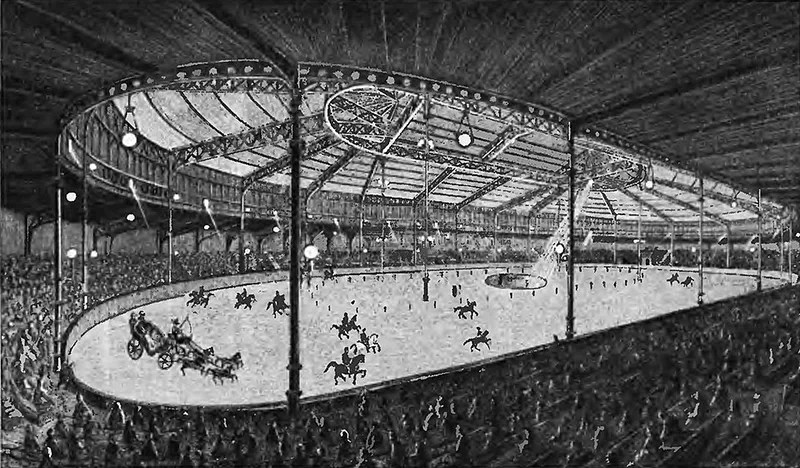
By the summer of 1877, Yablochkov candles were being used at the Paris Hippodrome, in the shops of the Louvre, on the Thames embankments, in Berlin offices, and so on and so forth. Within months, they had spread throughout Europe, and then appeared in San Francisco, Philadelphia, Rio de Janeiro, Delhi, Calcutta, and Madras. In short, all over the globe, with the exception of Russia.
Of course, having barely begun mass production of his lamps, the inventor brought them to St. Petersburg and demonstrated them by illuminating the Kronstadt barracks, which garnered favorable press coverage. But that was all. Neither businessmen nor the government showed any interest in his invention.
But in France, Yablochkov's affairs were going well. Immediately after his triumph in London, he was accepted as a full member of the French Physics Society, and around the same time, he was offered membership in a Masonic lodge.
It must be said that the ideas of the Freemasons, who dreamed of improving human nature through knowledge, were certainly very close to Yablochkov's heart. He himself had long believed that society could be transformed for the better through the promotion of knowledge and technological progress. In Paris, he met many bright and intelligent people from the Russian émigré community—scientists, writers, and journalists. And almost all of them, at that time, gravitated toward Masonic lodges. Therefore, already in 1876, he was accepted into the French lodge with the beautiful name "Labor and Faithful Friends of Truth"—as a rank-and-file member, an apprentice Mason, the lowest in the "Masonic hierarchy." Back then, he was still an unknown electrical inventor from Russia.
But within a few years, everything changed. The company Yablochkov founded together with his French colleagues began to generate superprofits; he became a millionaire, one of the most celebrated "technical geniuses" in Paris, practically a French Edison. Riding the wave of this fame, he decided to found his own lodge (along the English model—for some reason, this seemed more appropriate to him). This lodge, he envisioned, would include the most talented and educated Russian émigrés. Not necessarily Russians—there were also Georgians, Armenians, and Jews. But these were truly outstanding individuals, whose names today can be found in any encyclopedia. Among them, for example, were the historian and publicist Maxim Kovalevsky, the philosopher Eugene de Roberti, the writer Alexander Amfiteatrov, and many other luminaries. They gathered, took oaths, and participated in Masonic rituals, discussing paths to progress and the possibilities of changing the social climate in Russia. Artists, writers, historians, scientists, engineers—a total of about 40 people. The lodge was called "Cosmos," and its master, of course, was Pavel Yablochkov himself.
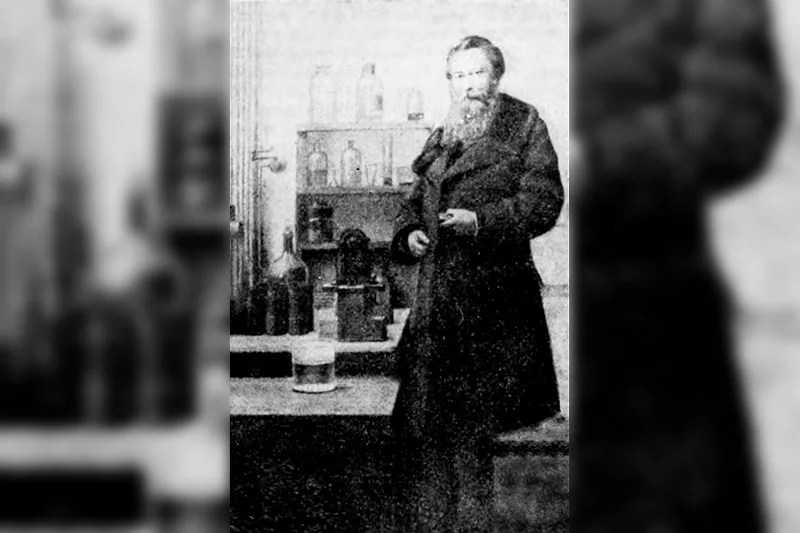
However, it didn't last long, from June 1887 until the fall of 1892, when Yablochkov finally left France and returned to Russia. By then, things weren't going so well for him. During his triumph, when "Yablochkov candles" were selling like hotcakes, he hadn't given a second thought to making money and, according to contemporaries, "treated money like a big child." He had almost no savings, and he spent all his income on new experiments, including some rather dangerous ones. For example, in the early 80s, he began experimenting with chlorine, and during one of them, he nearly suffocated from the fumes of this poisonous gas. His lungs never recovered, and now, at 40, Yablochkov suffered from shortness of breath with every step. And then a new disaster struck: the Edison lamp was becoming increasingly popular in America, and then throughout the world. The American inventor, although he hadn't invented anything new (he had merely improved on old designs), proved to be an excellent businessman. Moreover, his light bulb, though rather dim, could last for thousands of hours without replacement, and could be turned off and then on again. But Yablochkov's candles weren't. They were truly candles; once lit, they were meant to burn until the end. Therefore, their sales were declining, and new markets had to be found for them.
Russia, in theory, could have become one such market, but year after year, the inventor and his French company suffered setbacks there. Perhaps because foreigners were distrusted there? Perhaps, at some point, Yablochkov came to this very idea and took decisive action. He spent all his remaining money, about a million francs, to buy back his patent from his French partners and establish his own company in Russia. Alas, it was unsuccessful. Both St. Petersburg and Moscow trusted only foreign inventions, and they bought in large numbers the fashionable Edison lamps. No one was interested in "Russian light."
He also attracted no attention in Saratov, where the terminally ill and impoverished Yablochkov (who was then barely 45) moved in 1892. His family estate had long since disappeared (it had burned down in the 70s), so the scientist settled into rented accommodation, in the "Central Rooms." He converted one room into an office and continued to work there until his death on plans for the electrification of Saratov, but they remained a pile of useless papers. And from his funeral, on a cold, damp April evening in 1894, the few friends and family members returned as they had done before—by the flickering light of kerosene lanterns.