
Kristina Bitkulova: "A comedian must create context"
A stand-up comedian on jokes that pull you out of the sticky darkness
Author: Andrey Novashov

Very soon, the Votvot platform will feature "A Good Man," the third concert by comedian Kristina Bitkulova. In the mid-2010s, Kristina edited news for a state television channel, which she described in detail in first solo concert, recorded before the full-scale invasion of Ukraine. Her second concert, where she reflects on the war and her emigration, is also already online.
«Medusa» published A list of the best stand-up shows of 2024. Your concert "What a Difference" is also on this shortlist. But at your performance in Yerevan, you were surprised by how many people showed up and said that these jokes are actually designed for an audience of 20-25 people.
"I'm used to 20-25 people coming to my concerts in Yerevan, but this time there were so many more, so I was surprised. A friend gave me some advice: 'Kristina, you just need to become more popular, and then more people will come to your concerts.' I told her: 'I'll consider that.' Yes, of course, something needs to be done. I hope that little by little, with each new concert, each new city, people will learn about me. And when I have 100 people in each city, I'll buy myself some ice cream.


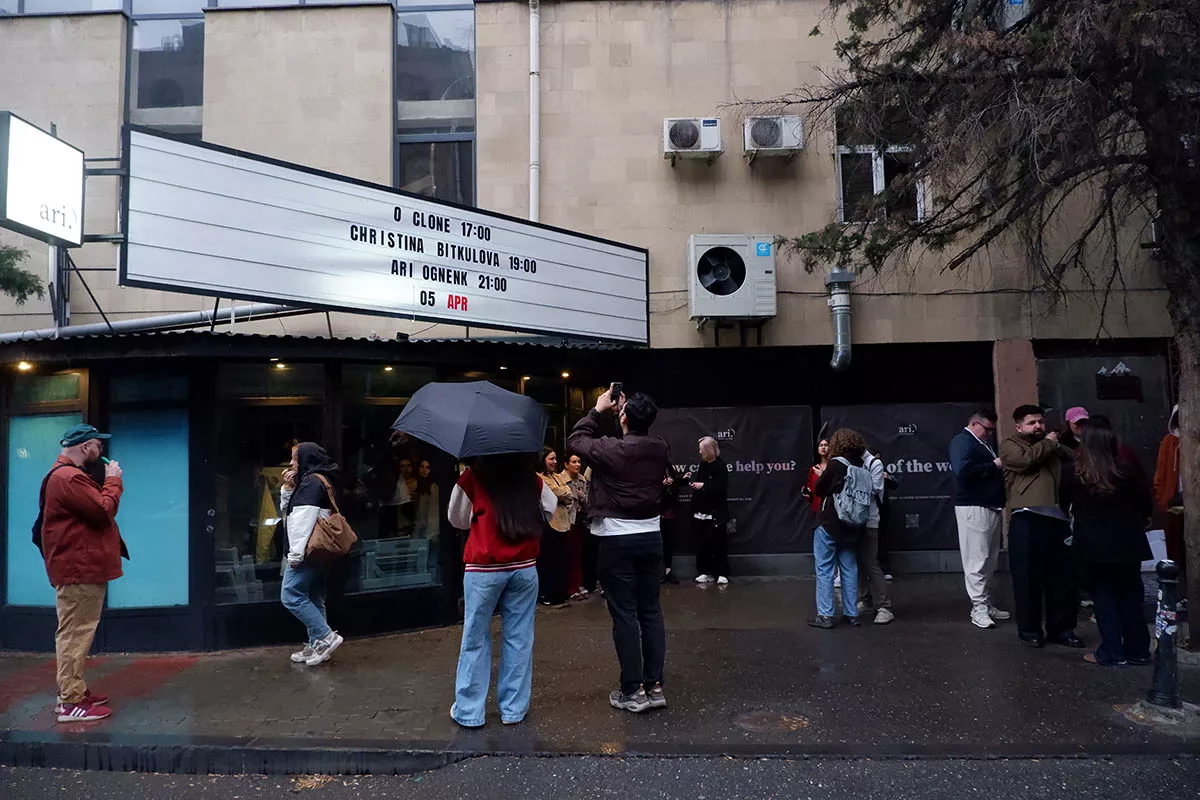
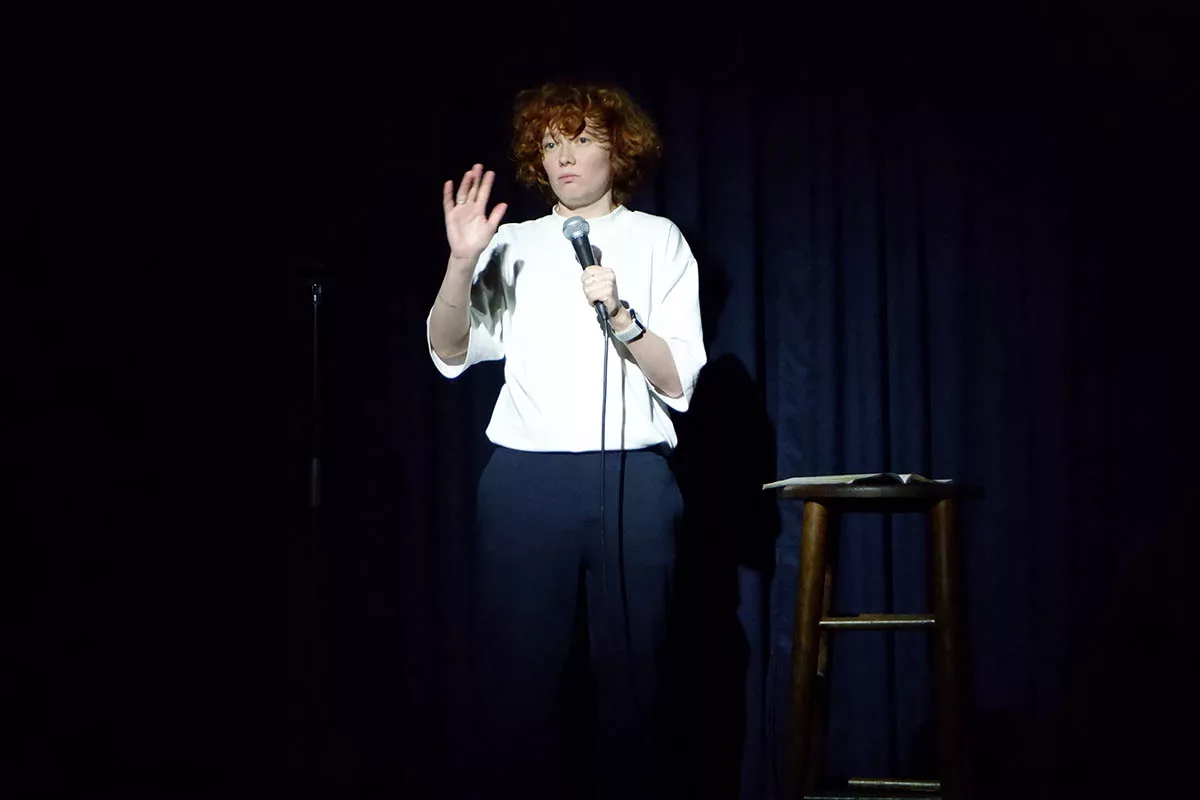
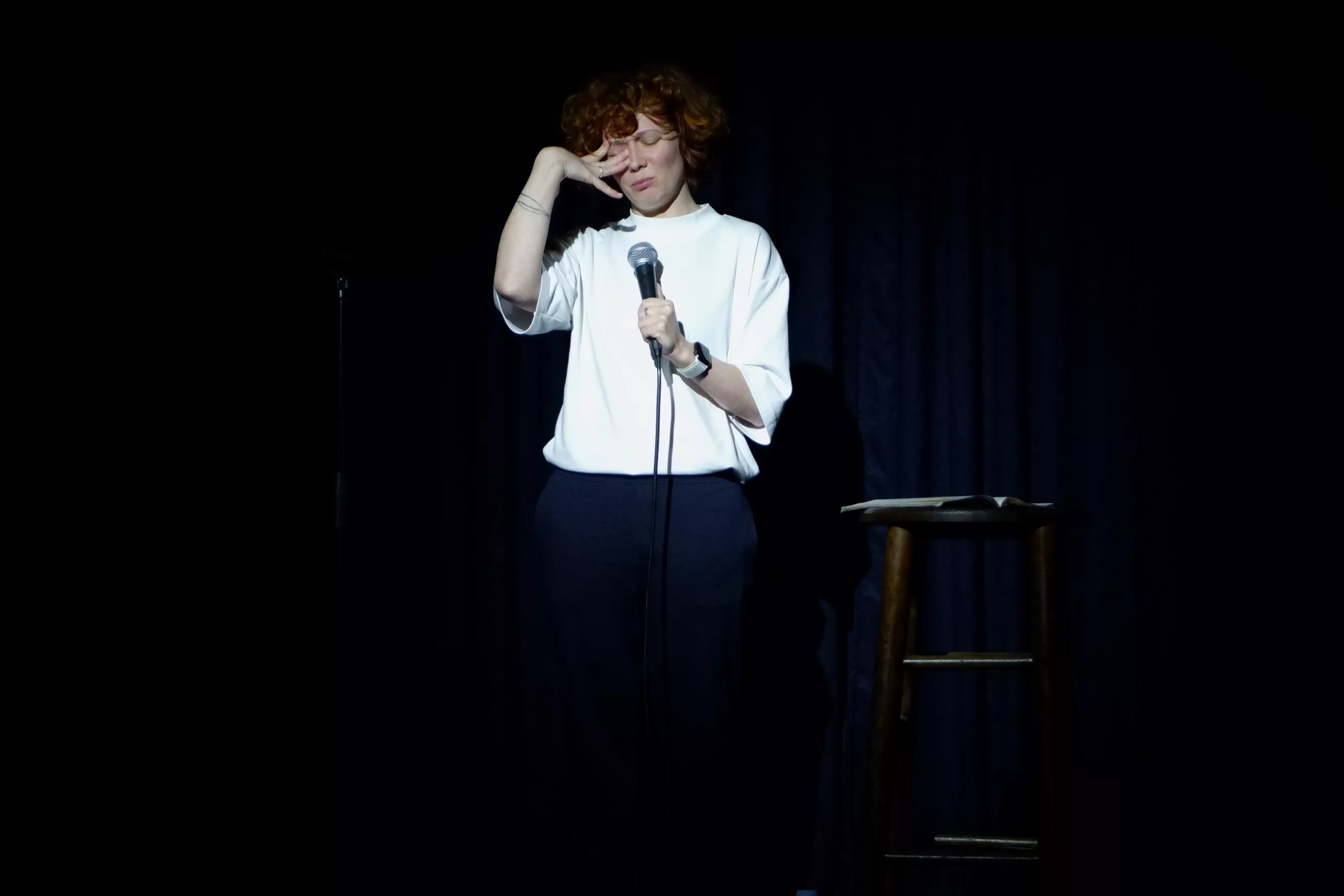
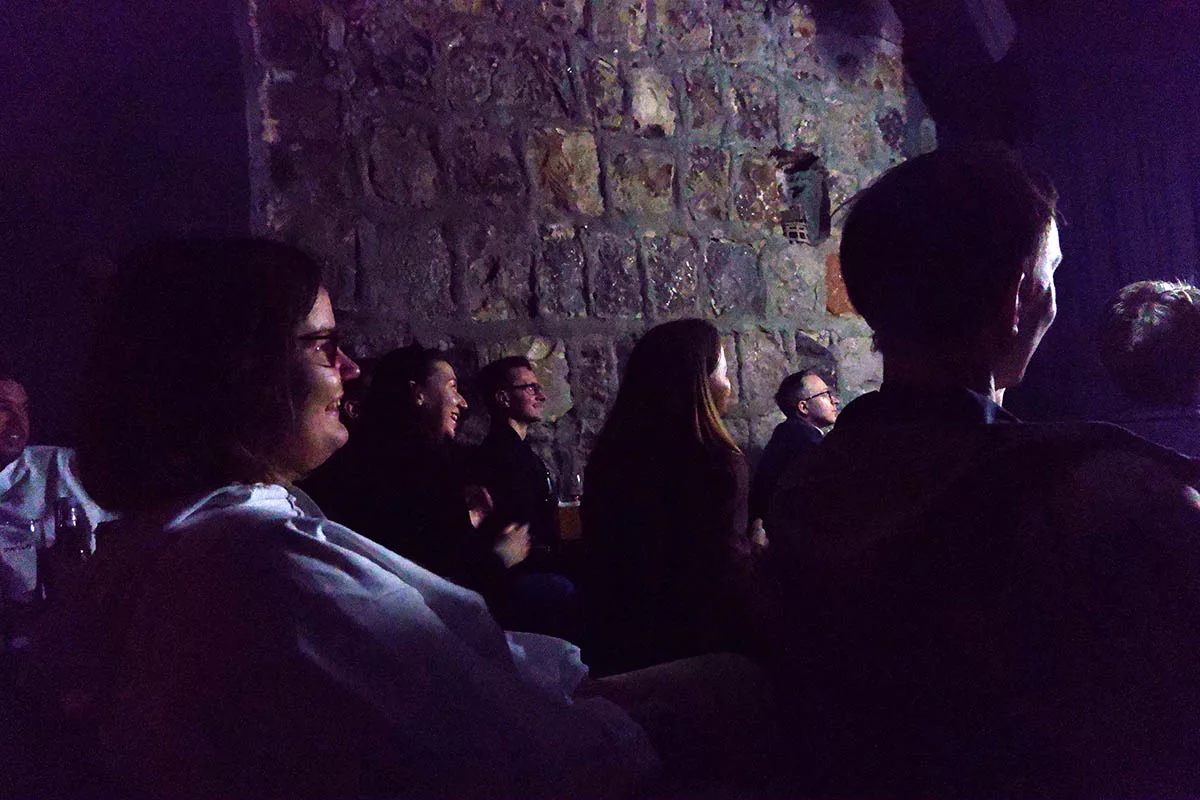
Kristina Bitkulova at the Yerevan stand-up comedy club "Ari." Photo by the author.
From Kristina Bitkulova's latest program: “It upsets me that, whether we like it or not, we will still become a beaten generation. Like our parents, I think, but in a slightly different way. Let me explain. My parents always told me: ‘Kristina, never throw anything away. Keep everything, everything. Kristina, what are you doing, throwing away cottage cheese containers? No, no, we’ll save them, dry them, and make you new wallpaper so that a hundred houses and a hundred grandmothers in the village will look at you and say: ‘Kristina, never throw anything away.’” And if I have, I don’t know, some imaginary children in the future, I think I’ll also f*** them up, but in the other direction. I’ll tell them, for example, ‘What, did you buy yourself something? Why did you buy yourself something? If a war starts, are you going to drag it to Lars or something? And don’t you dare buy yourself an apartment. Live at the airport, so it’s closer. And no, no bug-out bags. I want a bug-out backpack from you, so you always have it ready. And no bags full of bags. I want a bag full of documents from you. I moved a lot because my parents were in the military, and you will move a lot because your parents are anti-war. Got it?»
How did you get into stand-up?
— At the time, I was friends with the comedian Denis Chuzhiy. I really liked his show, but I didn't like the way he had the lighting set up. So I messaged him privately: "Damn, Denis, get your lighting set up properly!" And somehow we started talking and became friends. And when my therapist went on maternity leave, I had nowhere to pour out my thoughts and worries about my work on television. I started telling Denis my stories. He said: "Stop telling me, go and tell the audience from the stage." I went to an open mic. It was Ruslan Mukhtarov's "Checks." I got my three minutes and the "social approval of strangers." And that was it. I was blown away. This was in 2020, two weeks before the lockdown.
At the beginning of my so-called career, I talked about editing memorials for still-living celebrities on TV, and everyone laughed. I think a lot of people turn to comedy to normalize themselves. This became even more true after the outbreak of a full-scale war and emigration, when you have to somehow avoid going nuts. Now, stand-up is a way to reflect on everything.

How do new stand-up comedians decide if they should continue?
"We have a good criterion: laughter in the audience. If you speak not once, but five times, into silence, then it's probably best not to continue... Or you can speak into silence—for many, that's enough."
What's the difference between a comedian and the life of the party? Many people say, "You're so funny, you should be a stand-up comedian!" But there is a difference. I think a comedian can and should create context. There are five people in a group who have been friends their whole lives. Someone makes a joke about Lyokha, and in this group, no one needs to explain who Lyokha is, but on stage, you have to deliver a joke that the audience, seeing you for the first time, will understand. Besides, anyone can tell jokes, but try coming up with one yourself. It's not easy.
The documentary series "Russian Standup," filmed five years ago, recently premiered online. Its participants attempted to define what constitutes standup and what doesn't. What does standup mean to you?
For me, stand-up is a person's life story, an opportunity to see the world through their eyes. The form a comedian chooses—whether they'll sing like Bo Burnham or stick to classic stand-up—is up to the comedian. But it's still an opportunity to peer inside someone. Every comedian is a world unto themselves. And I'm interested in hearing how they think, how they see reality, from taxi drivers to politics. Ideally, it should be a paradoxical view of things. I liked the idea of the comedian Zhenya Sidorov that shoes are your own little piece of the floor. Cool! I would never have seen it that way.
The covers of some of the podcasts on your YouTube channel feature the slogan "Hello, Saratov!" But you're not from Saratov.
"Hello, Saratov!" came about like this. I really wanted to give a concert in Saratov because it has a beautiful theater venue, but I had few subscribers and little media exposure. For a long time, I didn't know what to do with it, so I started a podcast where I tried to build a following and gain enough fame to give a concert in the city. That's how my concert in Saratov began, when I finally did it. The podcast existed under that name for a while, and then simply became Kristina Bitkulova's podcast.
I haven't found my podcast format yet. I don't want to review political news, so I just tell you how I'm doing. Some subscribers find that entertaining.

From Kristina Bitkulova's latest program: “But by the way, I was recently on vacation. I didn’t know that there could be a vacation in emigration. I thought, like, ‘Well, that’s it, we’re here. There won’t be any vacation anymore.’ That’s why I left my swimsuit in Russia. I thought I was going to emigrate to survive. In emigration, I won’t have any more splashing, no joys. Only sucking pussies under a bridge for khinkali tails. I’m already confused about which pussies are which tails. If I’m lucky, maybe I’ll get this cold broth with these fatty round things, these frozen ones, which are poured from everyone’s plates into a trough like this. In the end, I went on vacation, but I didn’t get to rest. It’s impossible to rest on vacation, in emigration. I’m standing at passport control in the country where I came to vacation, they ask me: “What is the purpose of your visit?” But there is no purpose anymore. Only the journey. More like, "Poo-poo-pooo ...
In interviews with other media outlets, you mentioned attending rallies in Russia. You don't hide your anti-war and anti-Putin stance. But at your last concert in Yerevan, I didn't see any of the relocated artists I'd met in Armenia at rallies and at letter-writing evenings for political prisoners. Perhaps stand-up comedy today isn't articulating or focusing on issues, but rather, instead, glossing over them?
"He's definitely not talking about it. At least, I don't want to talk about it. Stand-up comedy was a hot topic during the first two years of the war. I think now both comedians and audiences are tired and used to it. It's terrible that we've all gotten used to war, but unfortunately, that's the way it is."
Unfortunately, there's a gap between the comedians who left and those who stayed. I don't know a single comedian who left who doesn't reflect on the war and emigration in some way in their performances. Comedians often talk about themselves, and if those who left weren't affected by what's happening inside Russia and the war, they probably wouldn't have left.
Unfortunately, I've become bored watching stand-up comedy filmed in Russia because it's impossible to reflect on the war and anything like that in Russia. I don't want to put on a white coat and say, "Go away!" Not everyone can, and not everyone wants to.

You worked in Russian television. I understand you're not some Konstantin Ernst. You weren't the one determining information policy. And those years were relatively uneventful. And yet, didn't you feel like a cog in the propaganda machine?
Every television worker is a small cog in the machine, one way or another. Especially if you work in news. I started working on TV in late 2014–early 2015, at the Mir TV channel. At some point, I realized something strange was going on. We were covering news from all over the CIS. There were protests in Belarus, which Mir TV channel ignored. I told the editor, "We're lying." "No, we're not lying. We're just not telling the whole story." Damn... Well, that's...
Am I ashamed that I worked on TV? No. Because I adore TV. Newsrooms, the director's console. I miss it very much. I really hope that one day I'll be able to return to it without feeling like I've sold out... Maybe I'll go to Spain, get a job on Spanish television, and edit bullfighting reports.
I'm still working as an editor. I edit my own concerts and Vitaly Kosyrev's comedy show "Russia Not Today." I really enjoy it because editing can add humor to existing footage. I'm a comedian and an editor—that's important, too.
When did you leave TV?
— The 2018 election campaign had just begun. And then it turned into some kind of madness. It was too much. Putin could only be shown from certain angles. Cut out all his coughing. I didn't want to do that anymore. It wasn't fun anymore, it wasn't interesting. And so I quit. I think I would have quit anyway, when there were post-election protests in Belarus, where I was born and lived until I was four, before my family moved to Russia. I was very upset about that period. Even after I left TV, I watched the Mir TV channel's reports and was downright angry that they weren't talking about it. It still bothers me a lot. It makes me sad.


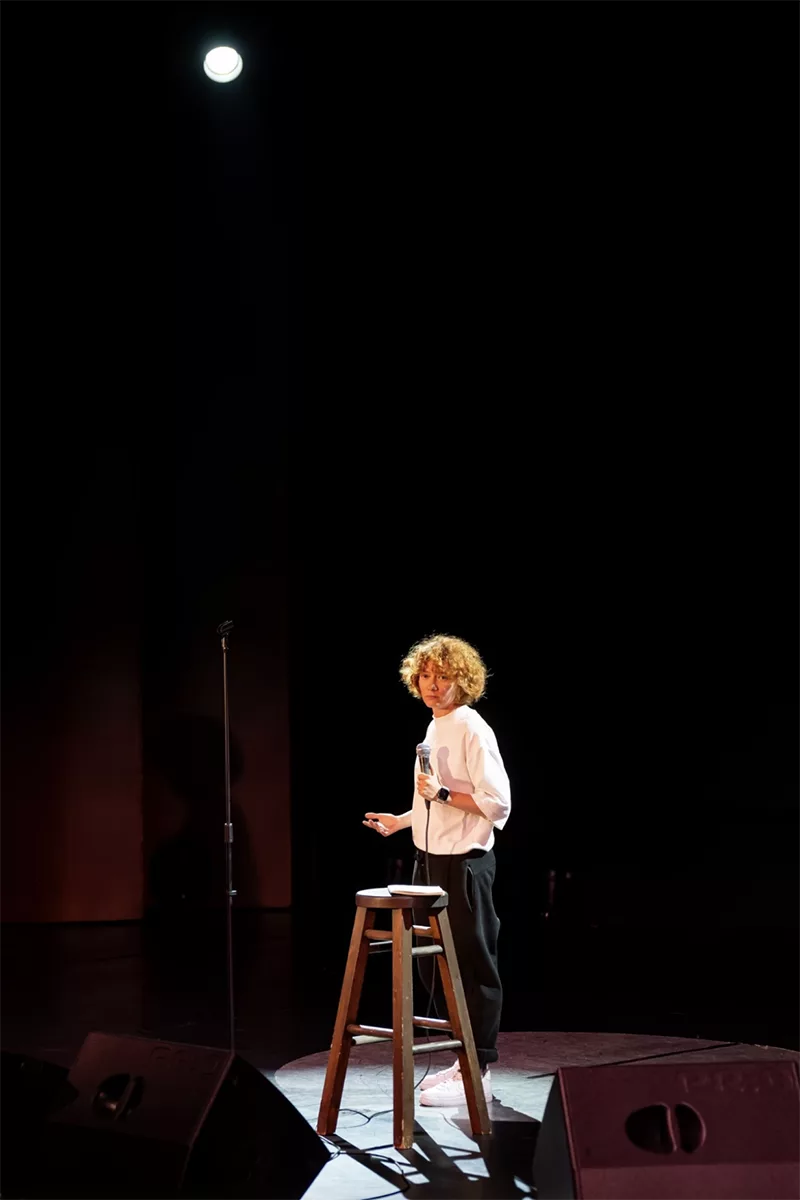
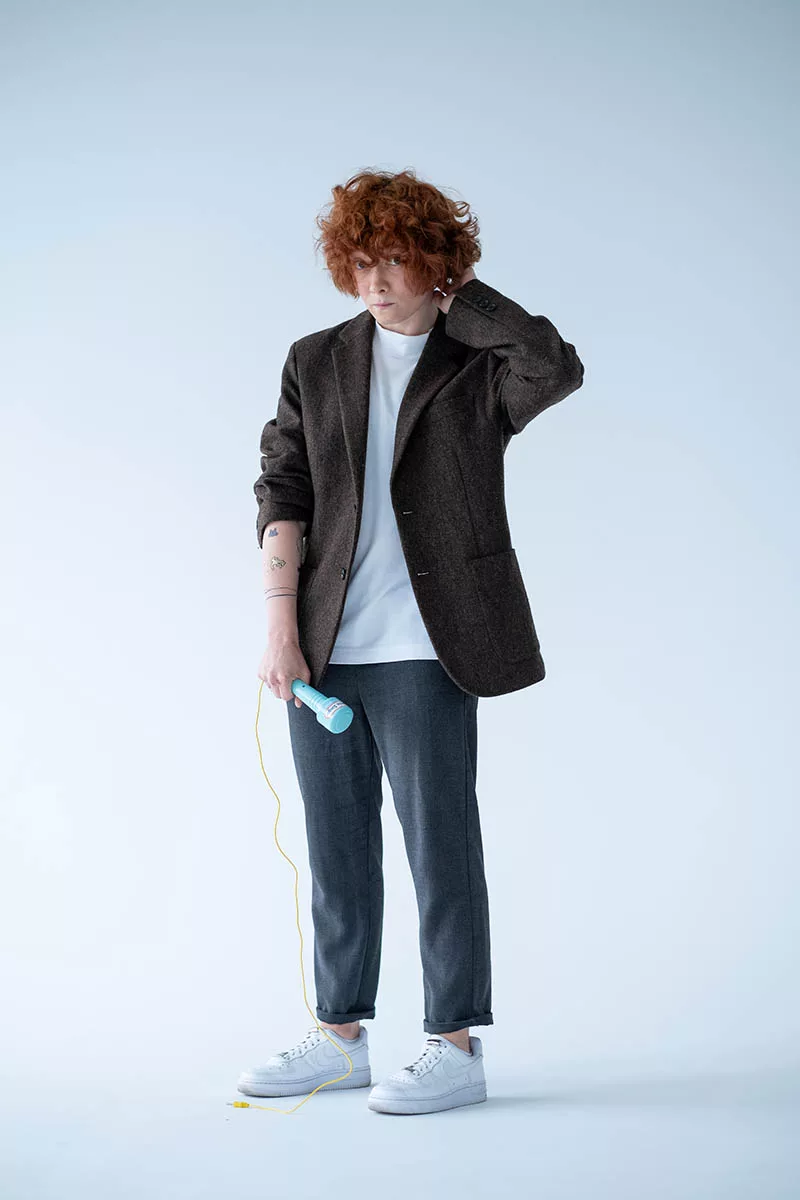
Photo courtesy of Kristina Bitkulova
Comedian Artemy Ostanin was recently brutally beaten in Belarus and placed under arrest in Russia. He faces up to six years in prison for his joke.
"On the one hand, I want to say he knew what kind of country he was living in, should have been aware of the risks, and shouldn't have provoked that rabid, vicious dog. On the other hand, no, of course he shouldn't. Because this whole thing is fucked up. It shouldn't be like this. Comedians shouldn't be beaten up or jailed for making jokes. You can just not laugh. And then the comedian will realize there's something wrong with the joke and won't tell it again."
The repression of Russian comedians began even before the full-scale war. How did you react to this while still in Russia?
— I reacted as if it were a new game. They tell you, "Now, if you joke about certain topics, you'll be punished." And it's like you're signing a contract. "Yes. OK. I know." And then you take responsibility. I continued to joke about everything, but stupidly. Like, no one knows me—I can. I even joked about the war when I was still in Russia in 2022.
There was a joke that my stomach was really hurting due to nerves. "But I'm Russian. I'll just endure it and keep quiet." Those who understood, understood.
Your colleague, a comedian from Tbilisi, said that an audience member was offended when they discovered she told the same story differently at her concerts. Do you think stand-up comedy should be documentary-style?
— I wish I could. I sometimes simplify things so as not to bore the audience. For example, I shortened and streamlined the story about my relative and the Wagner PMC that I told at a concert. But I can't completely make up stories. Everything I tell is based on actual facts. There are comedians who make up everything. That's perfectly acceptable. If the audience laughs, what can you say? But that's not my thing.
A stand-up comedy club in Tbilisi has closed. Why did this happen?
— Media comedians left Tbilisi for Belgrade, where many IT professionals have moved. Where the audience goes, comedians go. But it turns out I love Tbilisi more than a successful comedy career, so I'm staying for now. In Tbilisi, we were the poor souls of the emigrants. I think the comedians who relocated to Georgia were the ones who reflected on the war and emigration the most. I saw a cool image in an emigrant cafe with Russian cuisine. There, a young man with painted nails was eating jellied meat, drinking vodka, and crying. That's how it is in Tbilisi. We all miss our homeland there, drink vodka, and cry.
We don't have a club in Tbilisi right now. We perform in some bars. I think we'll soon be just performing in the square with a microphone and speakers. Of course, like almost all relocated people, we're not staying in Tbilisi forever. We're looking at Spain, but we don't have any exact dates or deadlines yet. In Spain, there are both Russian and English-language mics. But, like Denis Chuzhoy and Ruslan Khalitov, who live in Barcelona, I think I'll gradually transition to English-language comedy, to a new audience. In emigration, Russian is a ghetto. People in other countries aren't too concerned about the problems of Russian relocated people. In Tbilisi, mics in English are very rare, but they do happen. I've performed at them. Wow, it's not easy. But it's inevitable.

The famous question: "Is poetry possible after Auschwitz?" Now we can ask: "Is it possible to laugh after February 24th?"
I had these thoughts when the war started. And when Navalny was killed, it was really hard. Because both on the day the news of the murder became known and on the day of the funeral, I had microphones. I thought, “No. That’s it. We can’t laugh. We must now be in eternal mourning.” But I came to the microphones because I promised the organizers I would, and I try to be a good person. At the speeches, I saw people who valued getting together and listening to some silly jokes. I saw that it helped people, and it pulled me out of the sticky darkness… Yes, it’s difficult. Yes, maybe we can joke about what’s happening right now later, when it doesn’t hurt so much, but for now, just joke about kittens.
Did Ukrainians come to your concerts? If so, how did they react?
"The Ukrainians came to Israel, and for some reason I felt awkward. They expressed their gratitude. For the evening and for my anti-war stance. There was no hate directed at me from the Ukrainians."
I had some jokes, including one about how I was afraid the Ukrainians would hate me. Those very jokes were featured at the Israeli concert. After the concert, the Ukrainians said the jokes were funny.
One living émigré writer said, "Stand-up comedy is one of the forms literature exists in." Do you agree?
— I think so. We're like a podcast. People read less and want to listen more.
The first two concerts were literature for me. I had every word written out. It was like a poem recited from memory. Now I have a third concert recorded. And it has less and less structure and more improvisation. I have a list of themes, and I work through them during the concert. These are two different approaches. I'll see which one suits me best.

Which non-media stand-up comedians would you recommend not to miss?
"I can name two in exile and two in Russia. Sergei Glushkov, who's currently in Kazakhstan, has an undeservedly low number of views. He has a monologue called "Two Years Later." And Vitya Kopanitsa. True, his concert, "Like He's Alive," already has over half a million views. I'm very jealous that I didn't come up with these jokes."
Of those remaining in Russia – Sasha Mokin and Natasha Budnyak. She has a very short "Stand-up comedy on a commuter train"She's riding the commuter train and just telling jokes about the commuter train. Sometimes you just want to hear jokes.