Protest in Bashkortostan: How the small town of Baymak became famous worldwide
Today, protests in support of social activist Fail Alsynov, who was sentenced two days ago to four years in prison, continued in Ufa. On the day of the trial, a NeMoskva correspondent attended the largest Russian protest in recent memory. From Baimak, she dictated news reports over the phone. The internet was heavily jammed at the time, making it impossible to send messages. Now, she shares her impressions, videos, and photographs taken in Baimak.

Even for Ufa residents, Baymak is practically the edge of the world. The distance from the regional capital to the town is plus or minus 400 kilometers, depending on the route you take. To get there by morning, you'd have to leave just after midnight. That's if you drive. By bus, it takes a full 10 hours.
Baimak has a population of less than 18. Almost all of it consists of private farmsteads, with only a few five-story buildings in the area known as the center. "But we have our own Salavat Yulaev Avenue! That's why it's a city, not a village," locals joke.

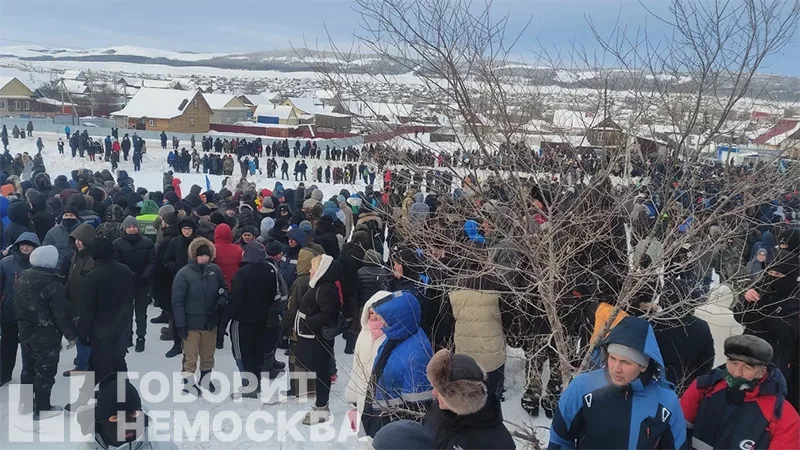
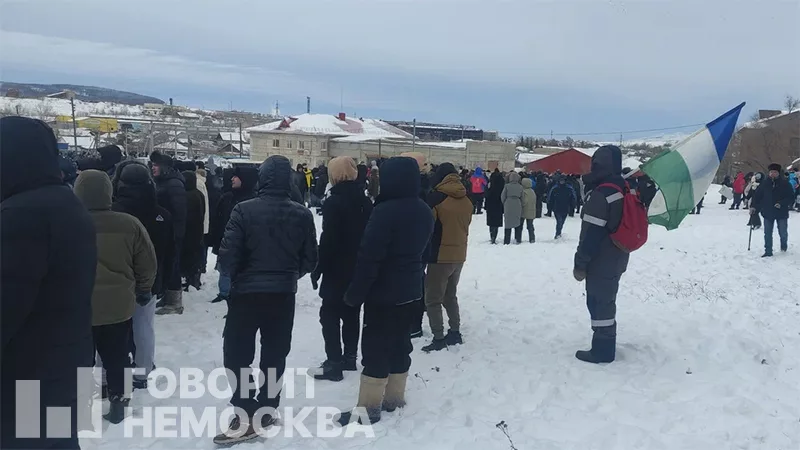
For a visitor, Baymak is a remote and rather depressing backwater. And it was this provincial town that, on Wednesday, January 17, became a center of attraction for many hundreds of people (estimates range from three to ten thousand), not only from various towns across the republic but also from neighboring regions. The occasion was the sentencing of Bashkir activist Fail Alsynov (Alchinov according to his passport), who the day before, on January 16, had been added to the list of terrorists and extremists.
Who is Fail Alsynov

Fail Alsynov is one of Bashkortostan's most prominent public leaders. He participated in campaigns to protect the Bashkir language and was one of the organizers of the Shikhans' defense. In 2014, he co-founded the national organization "Bashkort." The authorities designated the organization as extremist in 2020. Fail Alsynov is 37 years old. He is a historian by training and works for a private construction company.
"They came, they looked, and they left."
"There's no need to disguise ourselves as peaceful shepherds or good activists; that's not really the case. As Head of the Republic, I will defend the Republic. I'm very grateful to our people, grateful to the residents of Baimak, and to our society as a whole. Several hundred people from all over the Republic came to Baimak. Residents of Baimak came, looked around, and left," he said. quote from a rather lengthy commentary by the head of Bashkortostan, Radiy Khabirov, regarding what happened in Baimak on Wednesday, January 17.
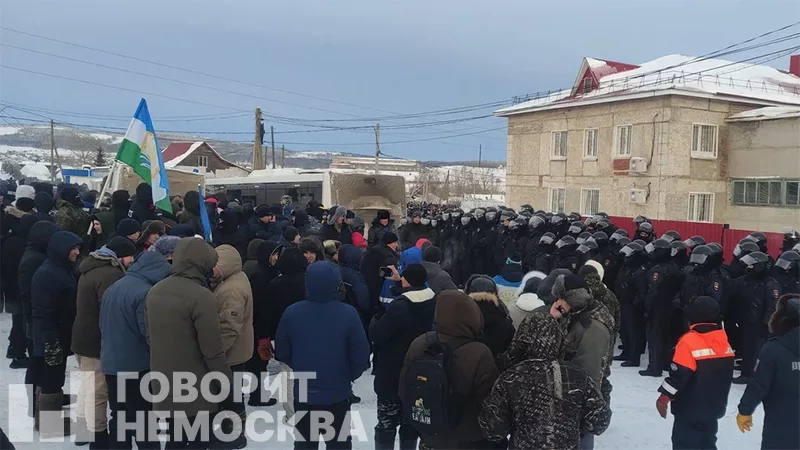
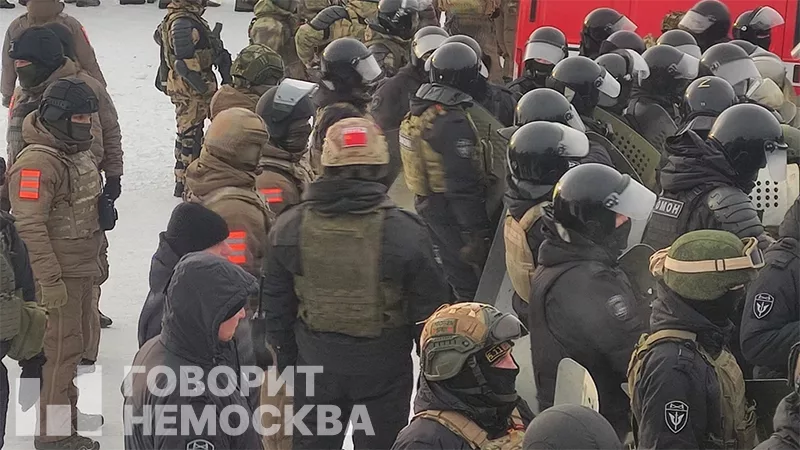
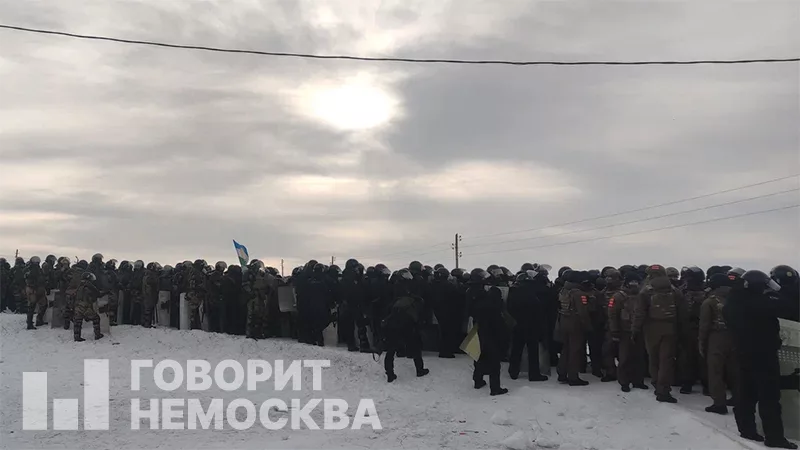
Several hundred people came, watched, and left, and for some reason law enforcement agencies are classifying this event as mass riots (Article 212 of the Russian Criminal Code) with the use of violence against government officials (Article 318 of the Russian Criminal Code). On the ground, it was a typical scene of a "screw-up" (a practice that has been forgotten in the recent absence of protests): a line of uniformed people, banging batons on shields, confronts those without uniforms and shields. However, unlike other intellectual protests in the capital, here one gets the feeling that those gathered are ready to defend themselves against the "cosmonauts" with whatever they have to. Even with stones. But it's winter, stones under the snow...

It all started when the sentencing was postponed from January 15th to the 17th. Around 5 people flocked to the small town of Baimak to support Fail. The authorities weren't expecting the outcry the activist's conviction would generate. They decided to try the activist 400 km away, not in Ufa, where Fail lives, but instead, but that didn't work. People organized themselves through WhatsApp chats and came to support Alsynov, believing the case against the environmental activist to be unfair.
What is Alsynov being tried for?

Fail Alsynov is accused of inciting ethnic hatred. The reason for this is his speech at a meeting in the Baimak district. That's why there was a formal reason for his trial in Baimak. The meeting was dedicated to environmental issues. Local officials and a private company's plans to prospect for gold in these areas have sparked public discontent. Besides environmental concerns, Alsynov also discussed the Bashkirs being deprived of their language, land, and elections. He claimed that "outsiders" were taking away their land. He used the term "kara khalyk," which experts translated as "black people" and interpreted as a negative characterization of migrants from Central Asia. Alsynov denies the accuracy of this translation and insists that "kara khalyk" refer to unskilled laborers, and that he has no complaints against other peoples, as long as they do not violate laws or local customs.
Then, Bashkortostan's head, Radiy Khabirov, signed the denunciation, which became the basis for initiating a criminal case against the activist and, of course, was filed with the rest of the investigative materials, making them available for review and copying by the accused himself. Many in Bashkortostan are convinced that Khabirov sought revenge against Alsynov for organizing environmental protests.
Cordons and a milk tanker with flat tires
The roads to Baimak were already closed by 8 a.m. The first checkpoint was the traffic police at the entrance to Baimak, asking drivers to present their licenses, insurance, and vehicle documents. They stopped almost all of them, but not all of them. After inspecting the occupants, they allowed them to proceed. My cell phone still had internet service.

The second checkpoint is the turnoff onto Revolyutsionnaya Street, where the courthouse is located. They won't let you through, only a detour. And then there are more checkpoints, and more and more. The street where the courthouse is is completely blocked off: traffic police crews are on both sides, tractors and excavators are parked across the road in the side streets, and in one spot, a milk tanker with flat tires.
The small parking lot nearby was already full. Later, someone in the media would write that the protesters were being transported by buses. Let's say that's a slight exaggeration: there was only one minibus parked there. Passengers said that chipping in and renting one car for the whole group was easier than each person driving their own (and some didn't even have their own). Mobile phone service still worked.

By 8 a.m., the courthouse is surrounded by a fence made of lightweight metal structures, with uniformed and ununiformed personnel everywhere. Buses line the right side of the building. It's still too dark to make out details, but you can already make out that the pile in front of one of the buses is made up of various pieces of equipment—it's being quickly cleared out: bulletproof vests, helmets, and whatever else the special forces of the Interior Ministry troops wear.Let's clarify right away: the police, riot police, the National Guard, and Grom were all involved in the cordon, but since everyone had the same mission, we don't see any point in delving into the specific unit affiliation of each security officer. — Ed.).

The mobile phone stops receiving internet, only calls remain.
They were expecting a suspended sentence
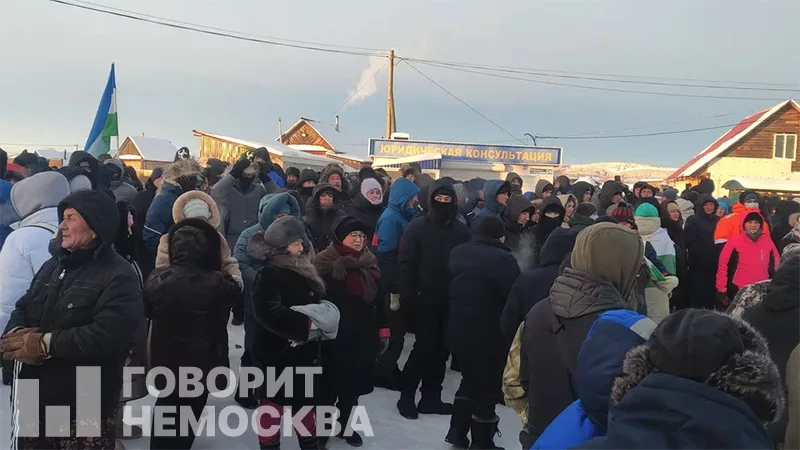
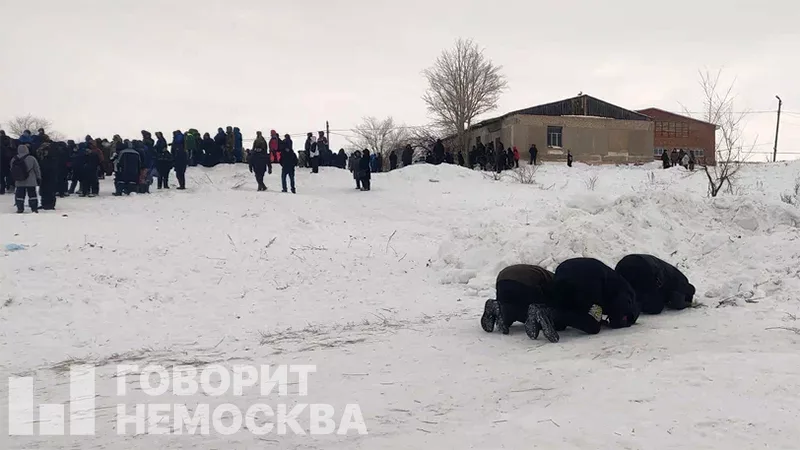
The sentencing is scheduled for 9:30 AM. People began gathering well before, and by 9:00 AM, there were clearly more people in the square than on January 15th. Security forces are cordoned off, and the public is waiting. From time to time, chants of "Freedom for Fail Alsynov," "Fail, we are with you," and "There will be more of us" can be heard from various directions. The chants gradually increase in volume, supported by ever-increasing numbers, and then gradually fade, leaving people in anticipation—of the next wave of slogans and the development of the situation.
Colleagues would later recount what transpired in the courtroom. The judge appeared about five minutes after all the participants (and observers) had assembled. The verdict was read out in no more than 10 minutes: four years in a general-security penal colony, while the prosecutor had requested a penal colony-settlement. Alsynov was allowed to call his family, and only then was he handcuffed and led out of the courtroom. "The guards weren't at all harsh; the convict was treated quite humanely," commented a journalist present at the verdict.
The entire internet already knew that Alsynov had been sentenced to prison, but not the people in the square, who were hoping for a suspended sentence. Perhaps this was precisely the main purpose of the jammers—to delay the moment when the protesters realized their expectations had been deceived. Alsynov was already being led away through the corridors in handcuffs, but people continued to believe he would soon appear on the steps, perhaps with a suspended sentence, but at least free.
Collisions

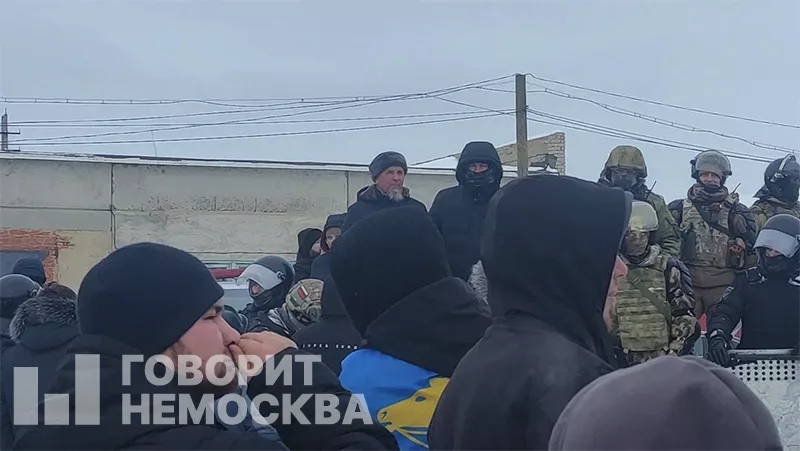
The gates through which prisoners are escorted out were blocked in advance by four rows of police officers in black: batons, bulletproof vests, helmets. The cold instantly turned the breath on the visor's glass into frost. Someone then scraped this frost off with their fingernails, like you do on a bus when you need to see which stop you're passing.
The protesters learned after 10:00 a.m. that Alsynov would be leaving the courthouse in a police van, but not everyone immediately. The news spread through the neighborhood from those who had the foresight to call friends with internet access.
It's hard to say what exactly triggered the initial clash. Behind the courthouse, slightly to the right of the gate, there's a small fenced-in area. It turns out that's where the transport for the detainees was stationed. The entrance to the area was cordoned off, as required.
And whether this cordon began maneuvers to clear the way for the paddy wagon with the convicted person (that is, security forces with shields tried to push back the protesters), or provocateurs began to act, or perhaps something else happened, but it was in this place, just above the court gates, that the first “contact” and the first arrests occurred.
8 hours in the cold
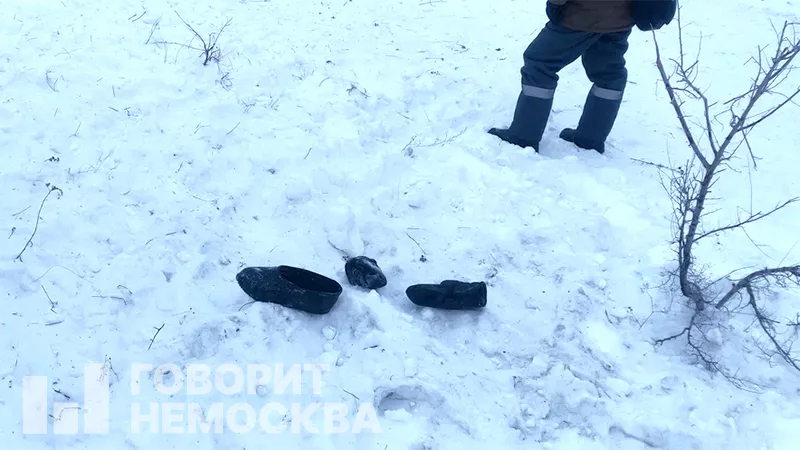
Were the arrests harsh? The answer depends on your perception. For those who first witnessed three or four riot police beating a person with rubber truncheons and then carrying him away, holding him by the arms and legs, the scene is perhaps brutal. Others, who have at least once witnessed someone resisting being kicked in the head with heavy boots, will call the arrests in Baimak ordinary. Incidentally, there were no kicks to the head, but there were fractures and cuts. Those with fractures were taken away in an ambulance. There were also injuries among the security forces.

There were several clashes. Each time, they began with the cordon attempting to clear a path for a police van. Each time, frozen chunks of snow were thrown in response. During lulls, the chanting resumed. Smoke bombs, flashbang grenades, loudspeaker entreaties—yes, all of this was filmed by numerous witnesses.
"The country is at war, and you're destabilizing it from within because some bloggers are giving you this task—that's the version of events the security forces voiced right there on the square. A day later, it will become the main narrative of the federal media, for whom the events in Baimak were practically nonexistent for the past 24 hours."
However, the hope of seeing Alsynov freed never left people. Somewhere around midday, a rumor spread from nowhere that the sentence would be reviewed—right here, right now. Even the time was "known"—15:30 PM. How this was possible, no one could explain, but everyone wanted to believe it was possible.
"He's not a terrorist, he's not an extremist, he's for the environment," the pensioner tries to convince the security forces, standing on a piece of foil. She also assures those around her that the sentence will be reviewed soon. When asked where she got this information, she replies innocently: "I feel it in my heart!"

At some point, a lull set in. The security forces stopped maneuvering and simply stood at the positions they had managed to occupy. It began to appear that they were awaiting reinforcements (and not a review of the sentence).
The people, who had stood in the cold for several hours, were already visibly tired. They were dispelling their weariness with chants. Among other things, they were demanding Khabirov's resignation. Suddenly, a cry rang out over the square: "Khabirov has been dismissed!" The "news" was reported by a man who had taken up a perch near the epicenter of the clashes: he had climbed onto the skeleton of a cargo trailer and was talking on the phone. The news temporarily stirred the crowd. True? A lie?
What's next?
Around 15:00 PM, reinforcements arrive. By then, many have stood in the cold all day. Slowly and reluctantly, the square in front of the courthouse begins to clear. However, the tension in the crowd remains. Those remaining in the square are tense to the breaking point.
The most violent "contact" occurs at this moment. They begin to disperse the protesters with tear gas. Security forces are also getting their share of the abuse. Many were standing against the wind and didn't think to lower their visors.
The convicted man's father helped the security forces quell the outbreak. He called on the crowd to disperse. Alsynov's friend, Ilyas Baiguskarov, also supported him.

"What happens next? More arrests? Let's go, that's enough." These words, though not immediately, had an effect.
Around 16:00 PM, the protesters cleared the way for the police van carrying convicted Fail Alsynov, dispersed from the square, and went home. Their expressions suggest their feelings.
An appeal awaits. That means a new trial, this time in Ufa.
Will our judicial system be willing to backtrack a bit? Experience suggests it's not very good at it. Especially when it comes to suppressing protests. We'll find out the answer soon. And what follows is yet to come.