
From an influential clan to a terrorist watchlist
The rise and fall of one of the most powerful clans in the North Caucasus—the closed Sufi community of the Batalhadzhins.
Isabella Evloeva, Varuzhan Sargsyan

Over the past couple of decades, the Batal-Hadji religious brotherhood has become the most influential force in Ingushetia and one of the most prominent communities in the North Caucasus. Its members held high government positions and controlled some businesses in the republic. The clan's standing changed after an act of blood feud—the assassination in Moscow of the head of the Ingush Center "E." The so-called "military wing" of the brotherhood was added to the list of organizations designated as terrorist in Russia. Several Batal-Hadji members were accused of assisting the terrorists who attacked Crocus City Hall. Currently, some of the community's close associates are imprisoned or in hiding abroad, while others are trying to "wash away their sins" by participating in the war against Ukraine as part of the Chechen special forces unit "Akhmat." In fact, the head of Chechnya is the only political heavyweight currently speaking out in defense of the community. But it's unlikely he does so out of altruistic motives.
"NeMoscow" in collaboration with an independent publication Fortanga tells the story of the rise and fall of one of the most closed and powerful clans in Ingushetia and the North Caucasus.
Brotherhood in our days and attitudes towards it
The Batalhadzhin leadership is a closed community, comprising only the direct descendants of the clan's founder, Batal-Khadzhi, and their family.
— There is no procedure for joining the brotherhood. It is possible [for someone who is not a descendant of Batal-Hadji] only if a representative of the community is getting married, then his wife will also become a member of the community,” explains clan member Abdullah Belkharoev (who emigrated to the United States due to persecution related to his activities) virda).
Estimates of Batal-Khadzhi's following vary today. Media outlets typically cite figures ranging from 5 to 15. However, according to Belkharoev, this figure was valid for the early 2010s; currently, there are at least 25–30 followers (considering the population of Ingushetia in 2024). made up 527 thousand).
Abdulla Belkharoev emphasizes that despite their closed nature and the presence of their own internal foundations, the Batalkhadzhins have always considered themselves representatives of the people of Ingushetia, “never separating themselves from the people, never creating separate mosques or schools.”

Children from the clan did indeed attend public schools and universities, where they made friends with members of other families, a public figure from Ingushetia confirmed in a conversation with NeMoskva. (he asked to remain anonymous for security reasons – editor’s note). However, they do have their own religious leaders and their own separate mosques—most often, the Batalkhadzhins pray separately from the rest of the Ingush.
Moreover, due to the isolation of the traditions that emphasize the brotherhood's distinctiveness, many in the Republic view them with hostility. For example, in the past, Batalhajins even avoided handling utensils used by people not from the vird, and ate meat, prepared only by members of their clan. Over time, the rules have relaxed, but the memory of them still influences people's attitudes, says the interviewee.
Memories of clashes between clan members and other Ingush are also vivid. These were often caused by domestic matters, says a former brotherhood member. (He also wished to remain anonymous; several years ago he left the community and fled the country, fearing persecution by his former fellow tribesmen – editor’s note). The interviewee calls the community a "sect" and disagrees with the assertion of unity between the Batalkhadzhins and the entire Ingush people: "They consider only their own people Muslim. They don't consider crimes against the Ingush people, or anyone else, to be sinful."
"In the past, they were often accused of involvement in high-profile crimes. Rumors and accusations fueled mistrust. [There were rumors that] they were behind kidnappings and the theft of expensive cars. For example, everyone in the republic knew that they stolen [Satirist Mikhail] Zhvanetsky’s car,” says a social activist from Ingushetia.
An additional source of hostility, he says, is the internal caste system: the Batalhajins have a dominant family - Belkharoevs (or Belkhoroevs(Both spellings of the surname are common), who can be called a kind of "royal family." The rest, that is, the ordinary followers, are in a subordinate position: they are obliged to contribute money to a common fund, which is under the control of the main family, and sometimes perform work for it, such as cleaning houses.
"Such traditions are unacceptable to the rest of Ingush society, which traditionally has not had class divisions, and all of this combined creates a general distrust and rejection," the expert concludes.
Islam Kartoev, who left the vird, also He claimed, that its members typically give 10% of any income to the "elite" of the brotherhood. In addition, they pay "fines" to the community for offenses against it and property taxAccording to Kartoev, the clan views this as a payment of zakat—the Islamic income tax—and claims the money is spent "on supporting those in need and charitable causes."
Current members of the vird deny the extortion.
"There are contributions during Eid al-Adha and Ramadan, but they are not mandatory. If someone refuses to pay, they will not be penalized; no one will touch them," says vird representative Abdullah Belkharoev.
He calls the claims of criminal activity by the brotherhood “exaggerated” and considers them part of an information attack by security forces and clergy from among SalafisAccording to Belkharoev, people can even be expelled from the community for participating in illegal activities.
19th century: the beginning of the brotherhood
Sufi The Batalhajin brotherhood belongs to the Qadiri tariqa, founded in the 11th century by the Persian theologian and imam Abdul-Qadir Gilani. You may have seen followers of this teaching more than once: in the North Caucasus, it is common to perform dhikr while moving in a circle. Videos with "zikrists", as they are called, are quite popular in the Russian segment of social networks - it is a dynamic and captivating spectacle.
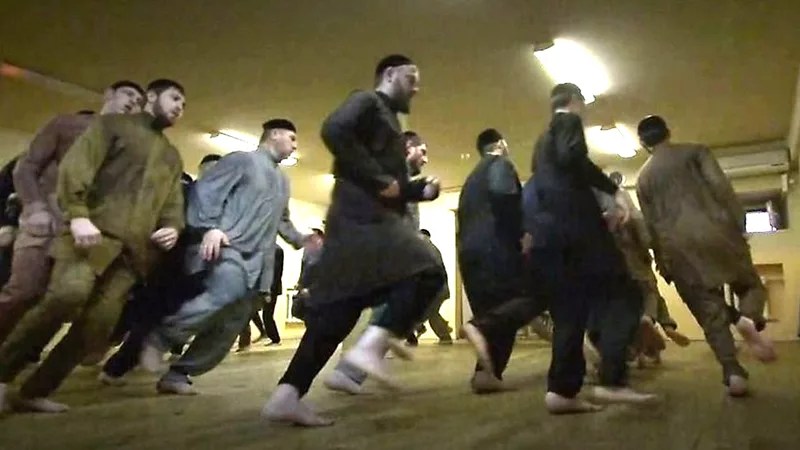
The brotherhood is named after the Ingush sheikh of the Qadiri tariqa of Batal-Khadzhi Belkharoev. He spent the first part of his life in Chechnya, where was a follower of the preacher Kunta-Khadzhi Kishiev, who founded a unique movement - Hadji MuridiyaHe then gained knowledge in the center of the Muslim world – Mecca and Medina.
In the second half of the 19th and early 20th centuries, Batal-Khadzhi preached Islam in Ingushetia, seeking to increase the number of followers of the religion (at that time, the Ingush were mostly Christians or pagans). He founded a closed community of family members, whose members later began calling themselves Batalkhadzhins.
The tsarist authorities exiled Batal-Hadji twice. They were concerned about his growing influence, accusing the sheikh of spreading "false teachings" and inciting unrest. During his last exile, Kaluga province Batal-Khadzhi fell ill and died at the age of 93. His body was transported to his ancestral village of Surkhakhi, near the border with Chechnya, where he was buried. Today, the village is considered the "capital" of the community.
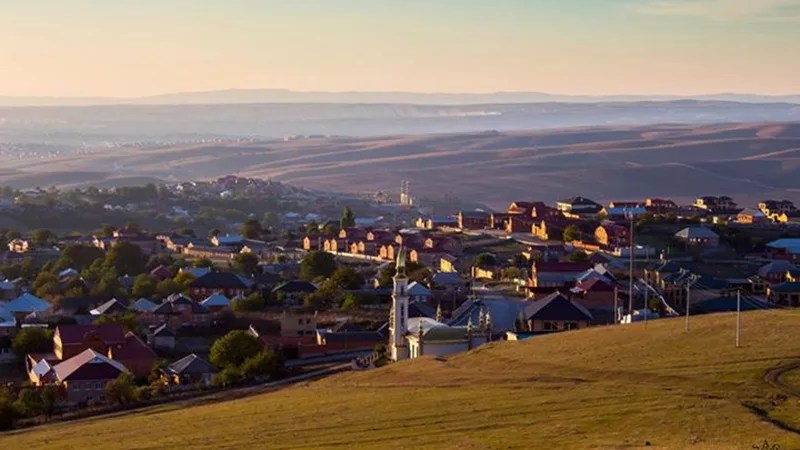
The teachings of Batalhaji, as claims one of the leaders of the vird and the grandson of Sheikh Yakub Belkharoev, formed the “basis of the life of an entire ethnic group,” that is, the Ingush.
“Everything I said and did Holy Ustad "Batal Belkharoev, it came from the name of the merciful Allah, from the titanic prophetic activity of the Messenger Muhammad, from the storehouse of wisdom of God's revelation—the Quran. Unfortunately, our poor language and feeble mind are unable to fully comprehend, comprehend, and express all the qualities possessed by the Great Ustaz of Surkhakhi," Belkharoev wrote. In the text, which, incidentally, is posted on the republican government's website, he emphasized that the foundation of Batal-Khadji's teachings lies in the "strict fulfillment" of the requirements of the Quran and Sunnahs of the Prophet Muhammad.
Modern followers revere Batal-Hajji as a saint, ascribe absolute authority to him, and believe he possessed supernatural powers (including the ability to determine who deserves Hell and who deserves Paradise). This is the key characteristic of the Batal-Hajji faith. The spiritual leader is perceived not simply as a mentor, but as an intermediary between Allah and the people, according to a former clan representative. According to him, a member of the community can replace the hajj (the pilgrimage to Mecca, performed by every Muslim if possible) with circumambulating the founder's grave, and doubts about his holiness make a person "worse than a kafir" (an unbeliever).
This goes beyond traditional Sufi teachings, where sheikhs are revered but do not wield absolute power, notes a religious figure from Ingushetia who wished to remain anonymous.
"The key characteristic of this religious movement is the cult of personality of its leader, who occupies a position close to prophethood. This contradicts the foundations of Islam, where Muhammad is the last prophet," he explains.
From the 90s to the 2010s: Easy Money or Legitimate Business?
During the Soviet era and the widespread atheism of the time, the Batalkhadzhins had few opportunities to openly declare themselves. It was during this era that the vird began to be called a "sect." The Soviet system kept it under a tight rein, recalls a former member of the community:
Back then, even the most influential people within the clan worked as simple drivers and tractor operators. After the collapse of the USSR, their "golden days" began.
The clan began to gain strength amid the geopolitical changes of the early 1990s, but its rise, says a former member of the brotherhood, dates back to the reign of Murat Zyazikov, who led Ingushetia since 2002 (he is now the Russian ambassador to Cyprus). In 2008, Zyazikov was replaced by Yunus-Bek Yevkurov (now Deputy Minister of Defense of the Russian Federation), who further strengthened the Batalkhadzhin clan's position by appointing members of the vird to senior positions in government agencies.
Thus, until the beginning of the 2020s, members of the community, including brothers Yakub and Yahya Belkharoev, were members of the People's Assembly of Ingushetia. Yakub also headed the Social Insurance Fund. Mustafa Belkharoev served as head of the republic's Audit Chamber.

At the same time, the clan's financial power grew. Conversations about how the Batalkhadzhins became rich continue in Ingushetia to this day, with illegal businesses often cited as the source of their money.
On approval According to former vird member Islam Kartoyev, the Batalkhadzhins "were subordinated" to law enforcement: "They had tentacles everywhere. If their man was caught with a weapon, drugs, or murder, everything was settled." Kartoyev himself admitted that he also "not entirely legally" traded gold and timber in Khabarovsk Krai.
Later, already in the 2020s, the media wrote The Belkharoev family's main source of income is smuggling gold mined in Magadan mines. The publications also mention the 1990s: supposedly, back then, the Ingush occupied a leading position in the Magadan region's business sector. Some of them became involved in the criminal trafficking of illegally mined Kolyma gold throughout the former USSR.
The Batalkhadzhinites were often accused of involvement in high-profile crimes. One such incident occurred in August 2013. Security Council Secretary Akhmed Kotiev was killed when his car was shot at by unknown assailants on the highway near Magas. A month earlier, reported A high-ranking official sent a report to Yevkurov on the Ingush opposition website "Zamankho," in which he called the Batalkhadzhinites an organized crime group that "engages in murder and extortion." (a copy of the document is at the editorial board’s disposal – editor’s note).
"A well-established organized crime group operates within the Republic of Ingushetia, whose members refer to themselves as 'religious sectarians.' They are involved in murder, kidnapping, extortion, and other crimes, including outside the Republic of Ingushetia," the letter stated. Kotiev also listed the names of members of the "criminal group" who are actively engaged in "involving young people in illegal activities."
The attackers on Kotiev, according to authorities, were liquidated A year later. The story left a nasty mark, but no one directly blamed the Batalkhadzhins for the assassination attempt, and their influence continued to grow.
The murder also didn't change the relationship between the vird and the then-ruler, Yunus-Bek Yevkurov. Moreover, in 2017, Batal-Khadzhi's burial site in Surkhakhi was included into the Unified State Register of Cultural Heritage Sites of the Peoples of Russia. Yevkurov attended the ceremony and announced the inclusion ziyarat The inclusion in the register is “confirmation that in Russia all religious movements are treated with equal respect and those who stood at the origins of the Islamic religion are respected.”
Brotherhood member Abdullah Belkharoev recalls at least 20 blood feuds blamed on the Batalkhadzhins, but maintains that the community's reputation has been entrenched because its members prefer not to respond to media reports. He says criminal elements within the vird are being combated, and "99% of community members are engaged in legitimate businesses."
Today, this business is primarily associated with road and housing construction, which means winning large government contracts. According to Belkharoev, almost all of Magas Built by the vird. By the early 2010s, members of the brotherhood owned the largest development companies in Ingushetia—for example, the Southern Construction Company, founded by entrepreneur Tukhan Zyazikov, says one of our interviewees, a journalist specializing in the North Caucasus republics. (He also asked to remain anonymous for security reasons – editor’s note).
After the persecution of the community began, Zyazikov, like many other members of the clan, was arrested.
2018: A Turning Point
The Batalkhadzhins' political line was often twofold. On the one hand, they were considered Kadyrov's supporters in Ingushetia, while on the other, they could demonstrate their support. Ingush protests"As Ibrahim Belkharoev did during the protests against the transfer of land to Chechnya. He showed up at protests, brought food to the participants, and demonstrated his loyalty to the protesting population. "I don't think this was a sincere message," says an activist from Ingushetia who spoke with NeMoskva.
He calls Ibrahim Belkharoev's actions "an attempt to score political points" in the region.
According to him, when clashes broke out between Kadyrov and protest leaders, the head of Chechnya would visit the Batalkhadzhin family village, meet with clan representatives at the mosque, and then head to the activists. Thus, the community functioned as a "home base" for Kadyrov.

The turning point in the clan's modern history came on December 31, 2018. That evening in Nazran fired a car in which one of the Batalkhadzhin leaders, the great-grandson of the sheikh Ibrahim Belkharoev and his driver Abubakar Aushev were located. 46-year-old Belkharoev was killed on the spot, Aushev survived (later, in 2022, he will call one of the leaders of the BOBR detachment, fighting in Ukraine as part of the Chechen special forces). A week later, the relatives of the murdered man announced the A reward of 30 million rubles for information about the assassination attempt.
Ibragim Belkharoev had a good relationship with Ramzan Kadyrov and was considered an important intermediary and supporter of the Chechen leader's interests in Ingushetia. His murder and the subsequent events, our expert journalist comments, weakened the clan.
The community then considered Ibragim Eldzherkiev, head of the Ingush Ministry of Internal Affairs' Center for Combating Extremism (Center "E"), to be the culprit. Less than a month later, in January 2019, an assassination attempt was made on him. One of his security guards was wounded and a second was killed, but the high-ranking police officer himself was unharmed.
The next assassination attempt took place in Moscow in November 2019. Then, Ibrahim Eldzherkiev and his brother, a doctor at a Moscow clinic, were killed. How писал According to the Baza Telegram channel, the killer was brought in by car, opened fire, and then fired control shots to the head before fleeing. On the day of the murder, in the Batalkhadzhin ancestral village of Surkhakhi, staged magnificent fireworks display.
Kureysh Kartoyev, a member of the brotherhood, claimed responsibility for the crime. "He [Ibrahim] didn't do anything to Eldzharkiev; he shouldn't have been killed. Ibi Belharoyev had helped them his whole life, giving alms. <…> When I learned he did it, I killed him out of revenge. Not out of arrogance, not on orders from the leaders of the Batalhadzhin clan and those who are in prison today. He didn't do it for money, and he didn't do it for terrorism," cited Kartoeva Ingush edition "Fortanga".
In the summer of 2023, Kartoev threatened blood feud against other members of the Eldzharkiev family. He also claims that security forces tortured his uncle, planted weapons on his brothers, and planted drugs on his sister. According to "Fortangi" has now left Russia using forged documents and is on the international wanted list.
The murder of Ibrahim Eldzharkiev and his brother marked a turning point in the mass persecution of Batalhajins.
2020s: Mass persecution
In 2020, Yakub Belkharoev was stripped of his mandate as a member of the People's Assembly and expelled from United Russia. reason embezzlement occurred in the Social Insurance Fund branch he once headed. In November 2022, he sentenced to nine years in prison for nine counts of embezzlement totaling more than 23 million rubles. The sentence was supposed to expire in 2027, but in early December excited A new criminal case has been opened—five counts of embezzlement on an especially large scale for illegal payments to family members. 68-year-old Belkharoev faces another ten years in prison.
Security forces opened a new "hunting season" for the Batalkhadzhins in October 2024. It was then reported that four members of the vird were wanted on suspicion of assisting the participants. terrorist attack in Crocus City HallOur journalist interlocutor says that there is most likely no ideological connection between the terrorists in Moscow and the followers of Batal-Hadji.
"It's important to consider the unique internal and religious structure of the wird. The Batalhajin people's own rules and customs make them insular and ideologically distant from outside groups, especially those who might have been involved in the crime at Crocus. To claim that they consciously sided with the criminals is to misunderstand the clan's unique nature," comments NeMoskva's source.
"The attack involved a chain of 50 people who were reselling weapons. [Security officials] followed the chain to the Batalkhadzhins and stopped there, eliminating the rest of the links. I suggest the security services be more creative and accuse Kalashnikov of creating a weapon for terrorist attacks," Abdulla Belkharoev adds sarcastically.

The participants and organizers of the Eldzharkiev brothers' shooting have also become the focus of security forces' attention. Over the course of several years, 11 Batalkhadzhins were detained, including Khasan Polonkoyev, a well-known Ingush developer and businessman. считает his group leader. The trial began in February 2023 and is still ongoing. Those arrested have become defendants. under various articles in two cases - actually, in the murder case and in the creation case "The fighting wing of the Batal-Khadzhi vird".
Abdulla Belkharoev asserts that no "military wing" exists, but was invented by the security forces as part of their fight against the clan. In his view, the Eldzharkievs' murder was merely a pretext for mass persecution, the true cause of which is the clan's friendship with the head of Chechnya, which the Ingush FSB dislikes, and the excessive independence of the Batalkhadzhins in today's Russian reality.
"They have the potential for instant mobilization in crisis situations. To prevent anything like that from happening, they came up with a 'military wing': to scare people with charges [for aiding terrorism]," a NeMoskva source reasons. "The Weird is an uncontrolled, self-regulating community that poses a threat to the center. Apparently, someone at the top was told about this, and it was decided to weaken the brotherhood."
One of the clear signs of loss of loyalty was exception from the register of monuments of federal significance of the Batal-Khadzhi ziyarat in Surkhakhi.
According to Abdulla Belkharoev, since the beginning of the repressions, around fifty members of the vird have been convicted under various laws, and another two hundred have fled Ingushetia due to the threat of persecution. Emigrants from the community now live in Turkey, Europe, the United States, and elsewhere.
Abdullah himself figured in an investigation into arms smuggling from Thailand to Russia in the first half of the 2010s. According to law enforcement, he was responsible for supplying resources to the "military wing" and helped establish criminal connections, specifically establishing partnerships with Thai escorts who, for a fee, participated in arms shipments. Investigators believe the Glock pistol used in Eldzherkiev's murder was smuggled to Russia through this very network. According to According to Kommersant, Abdulla Belkharoev actively cooperated with the investigation. In an interview with NeMoskva, he denied this, but preferred not to discuss the case in detail, commenting briefly: "There was a special procedure [for examining the case]. He admitted his guilt."
In some cases, criminal prosecution is justified, but random people also end up in the crosshairs.
So, they are known situation, when the Batalkhadzhins tossed Weapons and ammunition. In November 2024, searches were conducted at the homes of several defense witnesses in the Ibragim Eldzherkiev case, including Musa Mutsolgov and Khadzhimurat Belkharoev. A clan representative, speaking to NeMoskva, claimed that security forces failed to present documents or leave copies of the reports, threatening Belkharoev with fabricating a case against his son. A Makarov pistol with ammunition was found on Mutsolgov's grandson. The editorial board has a video in which the young man admits to finding the weapon two years ago while grazing cattle and, "aware that his possession was illegal," kept it. According to a relative of the detainee, the confession was coerced: "He's reading from a sheet of paper, and it's obvious." Now, Mutsolgov and Belkharoev, previously prepared to testify in court, are refusing to testify, fearing for their safety.
According to Abdulla Belkharoev, the security forces' current actions are more of a "politically motivated operation to eliminate a threat" than legal action. Their goal is to weaken the clan as much as possible, preventing the restoration of its influence. This is one of the reasons why they are also detaining business representatives who "strengthen the influence of the Batalkhadzhins."
Abdullah wants to return to Ingushetia, but believes it will only be safe after a change in the country's leadership and the FSB. At the same time, he maintains that "the community remains intact": the majority of Batal-Khadzhi's followers, unaffiliated with the clan's leadership, continue to live in Ingushetia and are "generally untouched."
"Dear Elder Brother, Respected Ramzan Akhmatovich!"
During the crisis, the only political heavyweight to stand up for the vird members was Chechen leader Ramzan Kadyrov. The origins of the two families' closeness date back to the 19th century and the friendship between Kunta-Khadzhi Kishiev and Batal-Khadzhi Belkharoev. Akhmad Kadyrov, the first president of Chechnya, is included — like most officials and religious figures in Chechnya—he was a member of the Kuntakhadzhins. He also maintained friendly ties with the Batalkhadzhin leader, Sultan Belkharoev, who died in 2015.
As a sign of friendship between the vird and Kadyrov, in 2014, at the initiative of the head of Chechnya, a mosque named after Batal-Khadzhi was even built in the Achkhoy-Martanovsky district of the republic.

Batalkhadzhinites on social media to the head of Chechnya address the phrase "Dear Elder Brother, Respected Ramzan Akhmatovich!", which emphasizes the special attitude of the vird towards the politician.
The media has repeatedly reported on joint military actions by Kadyrov and the Batalkhadzhins. For example, on May 9, 2016, members of the brotherhood attacked journalists on the border between Chechnya and Ingushetia. The authorities were aware of this, and there are traces of an order for the attack. led to the State Duma deputy from Chechnya, Adam Delimkhanov, but no one was ever punished.
Kadyrov openly "stood up" for the Batalkhadzhins during one of the peak periods of persecution, in the fall of 2022. At that time, security forces conducted almost daily searches and detentions of the community's supporters. Reported Among those detained were the aforementioned head of the republic's Audit Chamber, Mustafa Belkharoev, People's Assembly deputy Mikail Aliyev, influential businessman Khamatkhan Zyazikov, and others. The brotherhood members were accused of illegal possession of weapons and other crimes. Kadyrov said, who considers the purpose of the arrests to be the persecution of the Batalhajinites, and called the phrase “Batalhajin terrorist community” absurd.
"For me, the Belkharoevs, followers of the venerable Batal-Hadji, have always been and will always be close brothers. I advise those instigators who advocate religion from abroad and label the Belkharoevs with all sorts of labels to make videos about shaitans burning the Quran," the head of Chechnya declared.
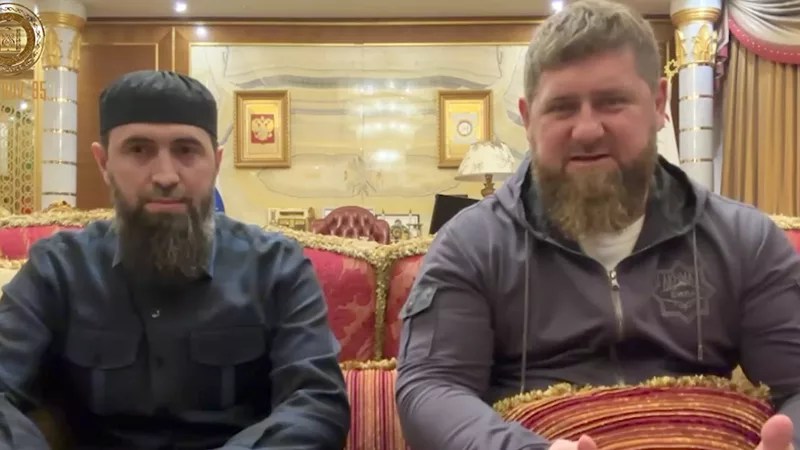
Against this background, the first ones began to appear intelligence about the training of vird members at the Russian Special Forces University in Gudermes for participation in the war against Ukraine. The brotherhood itself initially denied this. However, in December 2022, Kadyrov said About the creation of the BOBR unit within the Akhmat (Batalkhadzhinsky Rapid Response Unit) special forces. The video he published features two people, one of whom is the aforementioned Akhmed Belkharoev.
According to Abdulla Belkharoev, the detachment consisted of approximately 30 people. After completing their contracts, all returned from Ukraine to Ingushetia and no longer participate in combat. Since being sent to the front, they have been part of the BOBR detachment. Reported Only one death is a unique figure for active participation in the current war.
Read also. A personal army for a rainy day. Why did Ramzan Kadyrov create the Russian Special Forces University and what role might it play in the future?
Some of the Batalkhadzhin leaders are now in Chechnya, under a personal guarantee of safety from Kadyrov, claims Abdulla Belkharoev.
"Kadyrov interceded and truly helped the Batalkhadzhins. To avoid problems, most of the family members are in Chechnya. Ramzan Kadyrov has ensured their safety and given guarantees that nothing will happen to them," says NeMoskva's source.
However, "this partnership should not be confused with altruism," comments one of our anonymous North Caucasus experts.
During the protests in Ingushetia in 2018–2019, Kadyrov relied on the Batalkhadzhins. He sees them as a useful resource, allowing him to strengthen his influence in the region and pursue his own interests.
Kadyrov values control not only over Chechnya but also over neighboring regions, especially Ingushetia. His interests can be viewed in territorial, political, and security terms, the source believes. Supporting the Batalkhadzhins is his way of maintaining influence over a portion of Ingush society and creating a parallel security structure capable of competing with the locals.
Apparently, the intercession of the Chechen leader can't always solve problems. By using repressive measures, the state demonstrates that even participation in the war won't protect one from persecution if the security forces themselves are the target of attack.
"The state can turn a blind eye to arms trafficking, drug trafficking, car theft, and even murder if it doesn't affect the interests of law enforcement. But as soon as they cross the line—attack a government official—a brutal campaign unfolds against the group, from which there is no defense," the expert comments.
In his view, the brotherhood's history demonstrates that Russian authorities systematically weaken influential clans in the Caucasus to prevent the emergence of alternative centers of power, and even the most powerful groups lose their status if they violate unspoken rules. The security forces maintain a monopoly on violence: anyone who challenges the system inevitably becomes its victim, since an attack on them is tantamount to an attack on the state.